Was Muawiyah Behind the Killing of Ali? An Analysis of the Bloody Relationship Between the Umayyads and Jews in the Killing of the Commander of the Faithful
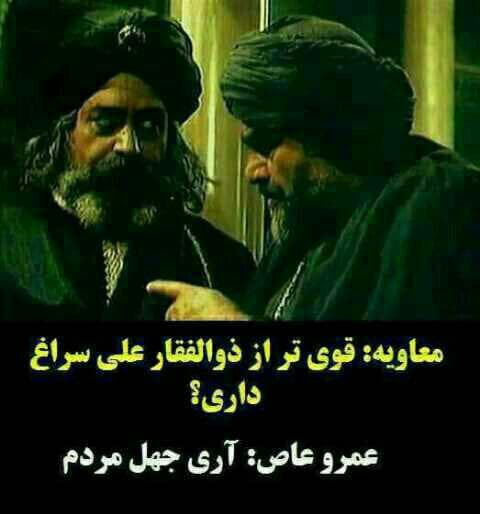
The Lust for Power: A Valley of Destruction in Islamic History
The lust for power and rule is the greatest valley that drives people toward ruin and destruction. Except for the Infallibles and those who act under their command, anyone who steps toward power and government inevitably enters this dangerous and destructive path; for the desire for power is so intense that it makes those who possess it blind, deaf, and mute. They see, hear, and say nothing except what serves attaining power and preserving rule.
In such a situation, anyone who emerges as an opponent must be removed, even if that person is the ruler’s brother or mother. On this path, no religion or creed matters for attaining government and power; only caliphate and domination matter. The endless fire of the lust for power is so burning and deadly that it destroys everything within it, even religion and humanity, because the lives of innocent and honorable people have no value before this merciless fire.
In Islamic history, this issue is clearly seen in the policies and actions of certain rulers who would not relinquish power at any price, even if it required bloodshed and the violation of Muslims’ rights.
Muawiyah: Riding on People’s Ignorance, Killer of the Caliphate and Enemy of Truth
Those in power always use all their ability to present themselves as the most qualified people for government and caliphate. People’s ignorance is likewise always the best instrument for reaching this goal. Thus Muawiyah, riding on people’s ignorance and driven by the lust for power and rule, not only engaged in bloodshed and trampled Muslims’ rights in order to gain power, but openly went to war against God. Yet today many who call themselves monotheists and beat the drum of religion regard Muawiyah as one of religion’s great figures and, following him, insist on killing Muslims and shedding their blood. They overlook that Muawiyah was among the most bloodthirsty and satanic tyrants on earth. Muawiyah had no reason; in place of reason, he set cunning and devilry. (1)
Muawiyah, the Killer of Uthman
Muawiyah, a beneficiary of Saqifah and a product of the caliphate of the previous three rulers, made every effort to attain the caliphate. He was not even satisfied with governing Syria. His lust for power burned so fiercely that he did not spare even his ally Uthman ibn Affan, who was an Umayyad, and deliberately sent him to his death. In a letter addressed to him, the Commander of the Faithful said: “By God, no one but you killed your cousin.” (2)
Muawiyah failed to aid Uthman until he was killed. Al-Baladhuri writes in Ansab: “Muawiyah did this so that Uthman would be killed and he could summon the people to himself.” (3) Muawiyah killed Uthman to preserve and gain power. Uthman, who stood in the way of his accession, was removed by this stratagem. But contrary to his expectation that he himself would take charge of Muslim affairs after Uthman’s caliphate, the people pledged allegiance to Ali ibn Abi Talib, and Imam Ali’s outward caliphate began.
Was Muawiyah the Killer of Imam Ali?
The pledge of allegiance to the Commander of the Faithful Ali was contrary to Muawiyah’s wishes. Having hoped for the caliphate through Uthman’s killing, he now entered politics through the deceitful pretext of avenging Uthman and launched two great wars in pursuit of that vengeance.
Ultimately, the Commander of the Faithful Ali ibn Abi Talib was martyred in the mosque’s mihrab by “the most wretched of the latter people.” What is commonly held is that Ibn Muljam, Imam Ali’s killer, was among the remnants of the Kharijites and martyred him in revenge for Nahrawan and in pursuit of the theory and slogan, “Judgment belongs only to God.” Yet with some reflection, it appears that Muawiyah and Amr ibn al-As were the principal accused parties behind Imam Ali’s martyrdom. These two are the principal accused in his martyrdom.
Attention to the following points is necessary:
- Muawiyah was certainly seeking the killing of Imam Ali, because the fire of his lust for power and dream of caliphate drove him to kill Uthman, though Uthman was his ally. Muawiyah always fled direct war with Imam Ali. At Siffin, to avoid direct confrontation, he raised Qurans on spears and proposed arbitration. This matters when we know that Imam Ali was martyred while preparing for war against Muawiyah; therefore assassination was Muawiyah’s only solution for confronting him. Secret assassinations were part of the Umayyad practice. This family was highly skilled in complex, covert assassinations. Muawiyah and the Umayyad party always relied on assassination. His famous statement after the assassination of Malik al-Ashtar was: “God has armies made of honey,” meaning that God has troops of honey.
Secret Assassinations: The Umayyad Practice of Removing Opponents and Muawiyah’s Role in Killing Imam Ali
To attain his goals and realize his dream of caliphate, Muawiyah took only one path: the assassination of the Commander of the Faithful Ali. He had no solution other than the physical elimination of opponents. This was seen not only in the case of Imam Ali but widely in Umayyad political history. The Umayyads, especially in Muawiyah’s era, relied on assassination as a principal instrument for achieving political goals and often removed political opponents through hidden plots. In this connection, figures such as Ka‘b ibn Abi Sufyan, Abd al-Rahman ibn Awf, Sa‘d ibn Abi Waqqas, and Ziyad ibn Abih were killed by poison and poisoning.
The most important example of these secret assassinations, however, is the martyrdom of Malik al-Ashtar, who was martyred at Muawiyah’s hands by poison. Imam Hasan al-Mujtaba likewise suffered a similar plot of poisoning and martyrdom.
This method of secrecy and assassination was recognized not only in Muawiyah’s era but from the beginning of Umayyad history as one of their usual means of establishing and preserving power. In this light, examining Ibn Muljam’s character, especially in relation to Muawiyah, clearly indicates that he could have played the role of an operative carrying out Muawiyah’s order in this historical crime. This theory is reinforced by the history of political assassinations and the Umayyad approach to eliminating opponents.
Ibn Muljam: Killer or Secret Agent? Behavioral Contradictions and Hidden Connections
Historical reports do not state that Ibn Muljam had a house in Kufa. They do not report any household, wife, or child for him in Kufa, either before or after his death. He was in the house of Qatam or Ash‘ath.
The Kharijites are widely known for intense worship: worshippers and ascetics without insight. Yet no trace of asceticism or worship is seen in Ibn Muljam, and the conduct recorded of him by history makes him resemble the Umayyads more than the Kharijites. In Qatam’s house on the Night of Decree, Ibn Muljam drank wine with Qatam (4); when he attacked the Imam, he wore silk (5); and on a night in Ramadan he committed adultery with Qatam. What is famous about the Kharijites is the intensity of their asceticism. They considered major sins forbidden and regarded killing the unrepentant perpetrator as obligatory.
How can someone believe that the perpetrator of a major sin is an unbeliever outside the religion, while he himself brazenly drinks wine in Ramadan, commits adultery, and wears silk, forbidden to men? On the night he committed adultery with Qatam, Ibn Muljam gave her one hundred thousand silver dirhams (6). This report clearly shows that Ibn Muljam possessed great wealth and spent it in one night without hesitation, while at the Battle of the Camel, when the Commander of the Faithful distributed the Basra treasury among Muslims, each person received five hundred silver dirhams.
Ibn Muljam: Kharijite or Umayyad Agent? Worldly Motives and Hidden Connections in the Killing of Imam Ali
It is clear that Ibn Muljam’s motive in this great crime was not attaining heavenly stations or paradise; he was wholly pursuing worldly gain. One seeking the afterlife who commits such a crime should, as a rule, show the greatest asceticism and supplication on that night. It is clear that Ibn Muljam coveted great wealth through Imam Ali’s martyrdom; thus it must be said that he was not a Kharijite. The Commander of the Faithful’s words prove this claim, for when the sword struck his blessed head, he said: “The son of the Jewish woman, Abd al-Rahman ibn Muljam al-Muradi, killed me.” (7) In a narration, the Prophet says to Imam Ali: “Indeed, your killer resembles a Jew; rather, he is a Jew.” (8)
Behind the Umayyad Conspiracies: Did Ibn Muljam Carry Out a Jewish Mission?
Two important questions confront us: 1. What was the nature of Ibn Muljam’s and the Umayyads’ relationship with Jews? 2. From whom did Ibn Muljam expect a reward, and how did he acquire so much wealth?
If the second question is answered, the first will also become clear. When we recognize the deep connection of the Umayyads with Jews before Islam, during the Prophet’s time, and after the Prophet’s martyrdom, and recall the cooperation of these two hostile groups in conspiracies and killings, it becomes clear that Ibn Muljam was an agent of the Umayyads and Jews.
The Messenger of God called people to recite and adhere to the Quran and to abandon the Torah and Gospel, while Umar (9) continually sought to read the Torah because he knew Hebrew, and the Prophet forbade him from reading it. Abu Hurayra says that the People of the Book read the Torah in Hebrew and interpreted it in Arabic for Muslims, and the Prophet said: do not affirm or deny the People of the Book; say, “We believe in God and what was sent down to us and what was sent down to you.” (10) Regardless of this report’s absence from an authoritative Shiite source, it clearly shows the extensive connection of Jews with some Muslims. Umar says that he asked the Prophet about learning the Torah (11), and elsewhere says: “Messenger of God, the People of the Book tell traditions that captivate our hearts, and we made efforts to write them down.” It is highly significant that a person who prohibits writing prophetic traditions takes care to write Jewish traditions. Al-Suyuti writes that Umar went to Jews and listened to the Torah from them (12). Examining the Umayyads’ relationship with Jews requires an independent discussion, but it suffices here that such relations had penetrated the Umayyads and their allies from the Prophet’s time, to the point that Umar consulted Ka‘b al-Ahbar about his succession in his final hours, and Ka‘b nominated Uthman or Muawiyah for the caliphate after Umar (13).
The Jewish and Umayyad Conspiracy Against the Commander of the Faithful: A Hidden Truth
Jews and the Umayyads had long held deep, enduring resentment toward the Commander of the Faithful Ali. Imam Ali was the one whose courage and divine power ruthlessly crushed, on the battlefield, the arrogant figures of Quraysh and the Umayyads, such as the Tarqs and Abu Jahls. When the Prophet was conquering Jewish fortresses one after another, it was the hand of the Commander of the Faithful that brought Jewish leaders to humiliation and destruction. Given such a history, collusion by these two groups to eliminate him would not be far-fetched.
Amid these developments, Ibn Muljam, who was from Egypt, had close ties with Amr ibn al-As. Amr ibn al-As, who held power in Egypt at the time, even employed Ibn Muljam as a teacher of Egyptian children. This strongly reinforces the hypothesis that Ibn Muljam, probably sent to Kufa by a special order from Amr ibn al-As and Muawiyah, not only had a special mission to kill Imam Ali, but was assigned it while Imam Ali was preparing for war against Muawiyah.
Finally, in view of all the evidence and indications raised in this discussion, it can confidently be said that Muawiyah, in the shadow of his policies and through hidden hands, brought about the greatest crime in Islamic history. Attributing Ibn Muljam to the Kharijites may in fact have been a cover for his direct connection to the Umayyads and Muawiyah’s aims, since history has always shown that the Nasibis called every opponent a “Kharijite” on any pretext in order to grasp power.
Conclusion
In examining whether Ibn Muljam or Muawiyah was Imam Ali’s killer, it can clearly be said that Muawiyah is identified as the principal agent in Imam Ali’s killing. Although Ibn Muljam is recognized as the direct executor, historical and political evidence indicates that Muawiyah, using the Umayyads’ secret and terrorist policies, especially during his caliphate, played the central role in planning this crime. History shows that the Umayyads made no accommodation with opponents in preserving power, and their physical elimination through complex plots and secret assassinations was one of their common methods. Moreover, Ibn Muljam’s close connection with Amr ibn al-As and Muawiyah indicates that he may have been under a special mission for this act.
The historical background of the intense enmity of the Umayyads and Jews toward Imam Ali, together with Muawiyah’s conduct in Uthman’s killing, avenging him, and pursuing bloody policies to reach the caliphate, shows more strongly that Muawiyah was the principal accused in this crime. The fact that Ibn Muljam, in Ramadan and in circumstances when religiously he should have displayed asceticism and supplication, committed major sins such as drinking wine and adultery, testifies that he was not only not a Kharijite but was probably connected to the Umayyads’ hidden hands and their missions to eliminate Imam Ali.
In the end, it appears that Muawiyah, using ignorance and division among Muslims, especially through his hidden currents, succeeded on his path to the caliphate at any price, even through bloodshed and assassination, in bringing about the greatest crime in Islamic history and advancing his aims through figures such as Ibn Muljam.
Notes: Adapted from Hal Qatala Muawiyah Aliyyan, Najah al-Ta’i. 1. Usul al-Kafi, vol. 1, hadith 3. 2. Al-Ghadir, vol. 9, p. 149. 3. Sharh Ibn Abi al-Hadid, cited in Al-Ghadir, vol. 9, p. 150. 4. Al-Manaqib, Ibn Shahr Ashub, vol. 2, p. 195. 5. Bihar, vol. 42, p. 229. 6. Al-Tadhkira, Sibt Ibn al-Jawzi, p. 185; Al-Manaqib, Ibn Shahr Ashub, vol. 3, p. 95. 7. Bihar al-Anwar, vol. 42, p. 283, chapter 127. 8. Bihar al-Anwar, vol. 42, p. 197, chapter 126. 9. Though Umar was not an Umayyad, he was their ally, giving them Syria and choosing Uthman as his successor. 10. Bukhari, vol. 5, p. 150. 11. Kanz al-Ummal, vol. 1, p. 370, hadith 1626. 12. Asbab al-Nuzul by al-Suyuti, vol. 1, p. 21. 13. Sharh Nahj al-Balagha, Ibn Abi al-Hadid, vol. 3, p. 115.
Author: Hamed Sarem
Related articles

Comments
No comments yet.