
The Martyrdom of Awn and Muhammad: The Manifestation of the Practical Tawhid of the Wise Lady of Banu Hashim
Author: Hamed Sarem
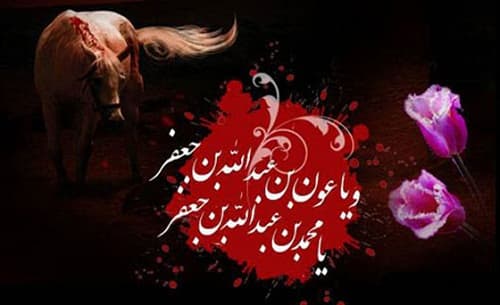
In a note, al-Naba al-Azim examined the personality and rank of Zaynab al-Kubra, peace be upon her, as the heroine of tawhid in the event of Karbala, and explained similarities between Abraham, the Friend of God, and this great lady.
A mother's love is known to all. The love and affection that a mother has for her child cannot truly be described. This affection has become a proverb for expressing the intensity of mercy, compassion, and kindness. When people want to say that no one can be kinder than a mother, they say, in effect, "a nurse kinder than the mother"; and when they want to express the height of tenderness and love, they say, "kinder than a mother."
No mother can easily detach her heart from her child and the fruit of her heart, nor can she easily bear the pain and suffering of her child. A mother always embraces pain and hardship with all her heart so that her child may be at ease. Yes, it is as though the mother's whole being is sacrificed for her child and devoted to the comfort of her beloved.
Karbala, the Land of Tawhid and Those Who Affirm God's Oneness
In Karbala, everything is at its peak. The highest degree of moral virtues and moral vices can be seen in Karbala. If we want to see human beings who have become more astray than animals, we must look at Karbala; and if we want to find human beings before whom angels prostrate and around whom they circle, we must go to Karbala and become dwellers of the lonely tents of the Master of Martyrs.
Yes, in that encampment all praiseworthy traits are at their peak: love, compassion, kindness, and other virtues. In the encampment of Imam Husayn, peace be upon him, devotion to God Most High and tawhid stand at their summit. All loves are for loving God. All the loves and hatreds of the soldiers of Imam Husayn, peace be upon him, are for God and in the path of God.
In that army, whose soldiers included men from the companions of the Messenger of God, sincere supporters of Sayyid al-Shuhada, valiant young men of Banu Hashim, and women and children, everything loses its color before the will and pleasure of God Most High; and whatever has any color has a divine color. For the Imam and commander of the dwellers of the camp of truth is Aba Abdillah, peace be upon him, the very one about whom he and the rest of the People of the House of infallibility have said: "Through us God is worshipped" and "through us God is known." God Most High is worshipped only through us and known only through us. Imam Husayn, peace be upon him, is the one whose being is the place of knowing and recognizing God. Sayyid al-Shuhada, peace be upon him, is the Imam of those who affirm God's oneness and the leader of the monotheists; his army is the army of tawhid. Karbala is entirely tawhid, and the soldiers of Imam Husayn, peace be upon him, are the soldiers of tawhid.
Steadfastness in Tawhid
Tawhid is not merely uttering sacred words. Tawhid means being a monotheist in action and seeing none other than God Most High. Tawhid means loving God and God's infallible friends with one's whole being. Tawhid is not mere claim. Tawhid must be proven in practice, by offering the best and most beloved things to God. God Most High has not promised Paradise merely to those who call "Allah" their Lord; rather, He has given glad tidings of Paradise to those who, after this verbal confession, remain steadfast in the path of tawhid with their hearts.
"Indeed, those who said, 'Our Lord is God,' and then remained steadfast, the angels descend upon them, saying: 'Do not fear and do not grieve, but rejoice in the Paradise that you were promised.'" (1)
"Indeed, those who said, 'Our Lord is God,' and then remained steadfast, the angels descend upon them, saying: 'Do not fear and do not grieve, but rejoice in the Paradise that you were promised.'" (1)
Command in the Army of Tawhid Is Not Measured by Being Male or Female, Nor by Age
Karbala is the valley of steadfastness in the path of tawhid. The Imam of the monotheists, Sayyid al-Shuhada, has commanders in his army of tawhid who stand at the highest ranks of tawhid. Command in the army of tawhid is not measured by being male or female, nor by being old or young. The criterion for command in the army of that Imam of tawhid is how much steadfastness one shows after saying "Our Lord is God."
Zaynab al-Kubra, Commander of the Tawhid of Karbala
Zaynab al-Kubra, peace be upon her, is one of the commanders of Aba Abdillah's army of tawhid. She came to Karbala with all those who were dearer to her than anyone else. She accompanied her master and leader by her own choice and brought her children with her. Although in asceticism, worship, and night devotion she should not be compared merely with Mary daughter of Imran; rather, her worship and night devotion should be likened to the worship and night devotion of her mother. About that mother, her infallible son said: Imam Hasan, peace be upon him, said: "There was no one in the world more devoted in worship than Fatimah, peace be upon her. She would stand in prayer until her feet became swollen." (2) Yes, Zaynab was an unparalleled likeness of her mother. And in the knowledge of gnosis, if her noble mother was "Muhaddathah," she too was "a scholar without being taught, and one who understood without being instructed." (3) In tawhid, she was like her great forefather Abraham, the Friend of God and breaker of idols, and in the path of tawhid she brought her child to the place of sacrifice.
The Prophet Abraham and Zaynab al-Kubra at the Sacrificial Place
If Abraham, peace be upon him, was a father and had to sacrifice paternal love in the path of tawhid and take his child to the place of sacrifice, Zaynab al-Kubra, peace be upon her, was a mother, and her love was motherly love. What love in this world is greater than a mother's love for her child? Zaynab al-Kubra, peace be upon her, brought two of her children to the place of sacrifice. If Abraham, the Friend of the All-Merciful, was himself commanded to sacrifice his son and did so with paternal love, the two sons of Zaynab al-Kubra had to be martyred at the hands of the Umayyad enemies, who embodied shirk; an enemy in whose being there was no trace of mercy, the Umayyads whose hearts burned with the rancor and hatred of Badr and Hunayn.
In this struggle, when Zaynab al-Kubra, peace be upon her, saw the Master of the monotheists of the world alone, she brought her two children, Abraham-like, toward the place of sacrifice. She wiped the dust from their heads and faces, dressed them in new clothes, and applied kohl to the beautiful eyes of her beloved ones, as though offering both of her children with her whole being to the Master of the monotheists. (4)
A mother's love for her child never ends. But when the heart of Zaynab al-Kubra, peace be upon her, is filled with love for God, a mother's love for her child loses its color, and what appears from Zaynab al-Kubra, peace be upon her, is practical tawhid. Without doubt, that veiled noble lady is an embodiment of "Indeed, those who said, 'Our Lord is God,' and then remained steadfast," for she remained steadfast in the path of "Our Lord is God" to the point that she sent two of her children, Abraham-like, to the place of sacrifice.
When she saw the body of her Imam and brother in the killing ground, in that indescribable state, she displayed another manifestation of tawhid and made no complaint or protest. Rather, on behalf of her grandfather the Messenger of God, her mother Fatimah al-Zahra, and her noble father and brother, she humbly and submissively said before the Truth: "My God, accept this sacrifice from us." (5)
From Karbala to Syria she was the manifestation of tawhid. She was a reminder of Abraham the idol-breaker, and like him she stood in the fire of calamities, revealing a manifestation of tawhid in every affliction. Ubayd Allah ibn Ziyad wanted to humiliate her, unaware that God is Mighty and that all might belongs to God: "All might belongs to God." Monotheists may fall in dust and blood, but they are never abased or humiliated. He turned to Zaynab al-Kubra, peace be upon her, and asked, "What did you see in Karbala?" He heard an answer that showed tawhid and steadfastness, an answer that made all the Umayyad unbelievers understand that tawhid cannot be defeated, a miracle-like statement: "I saw nothing but beauty."
With this statement, Zaynab al-Kubra made clear that she had sacrificed all her loved ones, all of herself, and everything she possessed for her Beloved, God the Truth. What moment is more beautiful than the moment when a human being sacrifices everything for the Beloved? Thus Karbala, in the eyes of Zaynab al-Kubra, was tawhid and worship of the One: sacrificing everything one has for God Most High. Tawhid is manifest in all the movements of Zaynab al-Kubra, peace be upon her. Therefore Karbala is the land of the monotheists and the valley of those who worship the One; whoever is a monotheist has his heart in Karbala and his longing in the visitation of Karbala.
The Martyrs Defending the Shrine Are Commanders of Tawhid
The sacred dome and shrine of Zaynab al-Kubra, peace be upon her, is also a school for teaching and learning tawhid. As long as that shrine stands, its light breaks the darkness of disbelief and shirk. Therefore one should not be surprised that her dome is surrounded by the remnants of the party of Abu Sufyan. It is natural that the children of Hind, the liver-eater, cannot bear the sight of that luminous shrine, because in the shrine of Zaynab al-Kubra stands the banner and standard of tawhid. Today, monotheists and worshippers of the One have taken Zaynab al-Kubra as their model and, for the protection of that luminous shrine and the preservation of worship of the One, have chosen for themselves the name "defenders of the shrine." In truth, they are defenders of tawhid, and their martyrs are martyrs of tawhid.
Yes, today the children of the polytheists of Banu Umayyah attack the shrine of the great commander of the tawhid of Karbala under the pretext of tawhid and worship of the One. But Zaynab al-Kubra already answered their master Yazid: "Plot your plot and exert your utmost effort. By God, who honored us with revelation, the Book, prophethood, and election, you will not reach our extent, you will not attain our end, and you will not erase our remembrance."
Yes, today the children of the polytheists of Banu Umayyah attack the shrine of the great commander of the tawhid of Karbala under the pretext of tawhid and worship of the One. But Zaynab al-Kubra already answered their master Yazid: "Plot your plot and exert your utmost effort. By God, who honored us with revelation, the Book, prophethood, and election, you will not reach our extent, you will not attain our end, and you will not erase our remembrance."
Notes
1- Fussilat: 30
2- Bihar al-Anwar, Beirut edition, vol. 43, p. 76
3- al-Ihtijaj ala Ahl al-Lijaj by al-Tabarsi, vol. 2, p. 305
4- Rivayat-e Karbala: Sognameh-ye Imam Husayn va Yaranash, p. 159
5- Allamah Sayyid Abd al-Razzaq al-Muqarram, Maqtal al-Husayn, p. 379
2- Bihar al-Anwar, Beirut edition, vol. 43, p. 76
3- al-Ihtijaj ala Ahl al-Lijaj by al-Tabarsi, vol. 2, p. 305
4- Rivayat-e Karbala: Sognameh-ye Imam Husayn va Yaranash, p. 159
5- Allamah Sayyid Abd al-Razzaq al-Muqarram, Maqtal al-Husayn, p. 379
Author: Hamed Sarem
Comments
No comments yet.