
An Interesting Account of a Mother and Son Becoming Shi'a Through a Miracle of Imam Reza
Author: Hamed Sarem
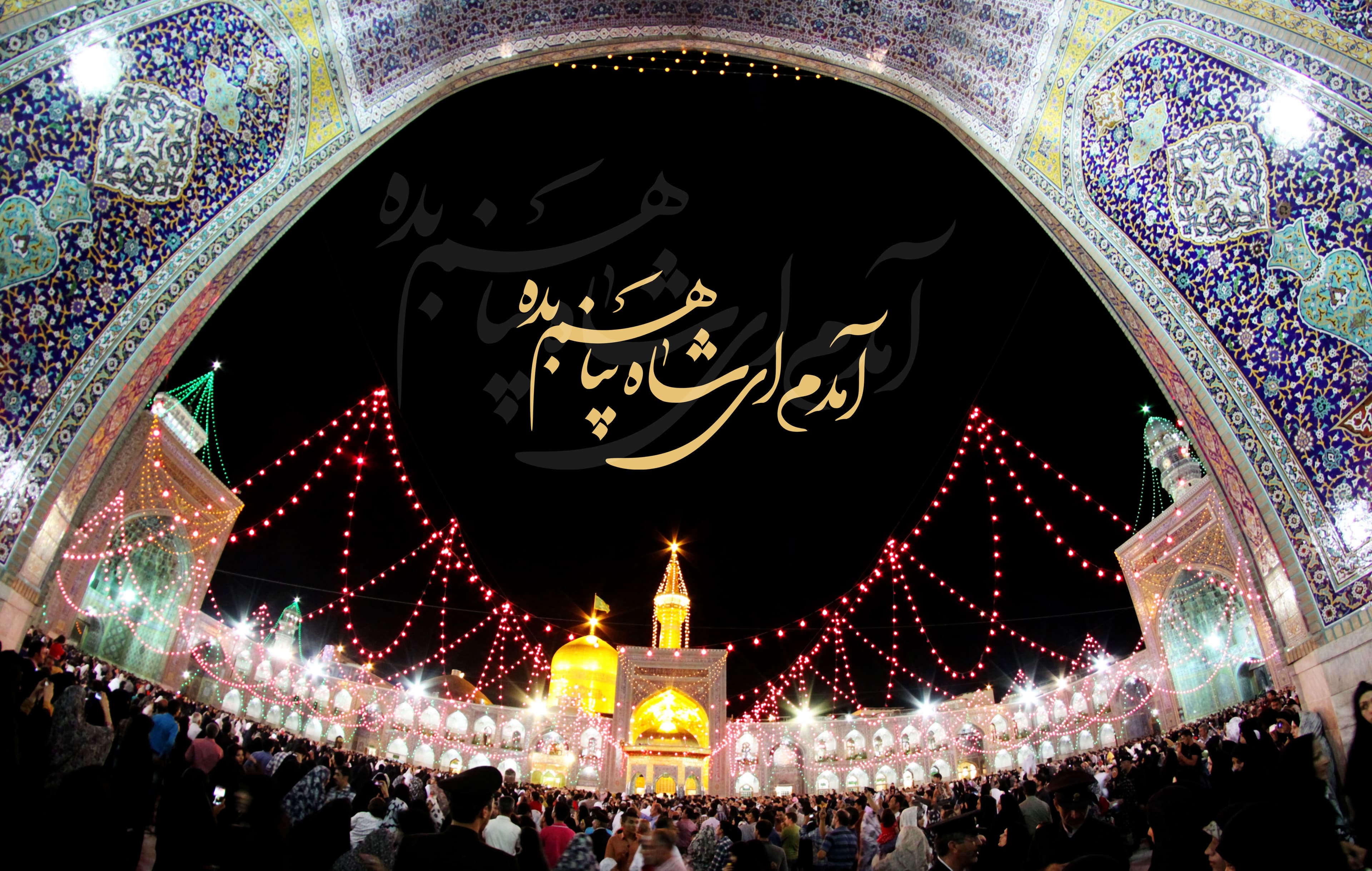
Muhammad ibn Umar Nuqani says: One night, while asleep in darkness, I suddenly awoke and saw, in the direction of the shrine of Imam Reza...
Human beings were not created free to commit whatever act they desire; rather, they were charged with submitting before the Imam and moving toward him in this world. Though “free” and “possessing choice” are close expressions, they differ profoundly. A free person is one to whom all affairs are delegated, able to live however desired and choose any direction. A person possessing choice has been given the capacity to choose, but this does not mean choosing whatever he wishes: he is obliged to move in the direction God commands, with the choice to obey or rebel.
Moving toward the Imam Is the Duty of All Servants
For this reason Imam Sadiq, peace be upon him, said: “Neither compulsion nor delegation, but a matter between the two matters.”(1) He denied compulsion and declared delegation invalid. Delegation—leaving all affairs to servants so that people may act however they please—is false. The matter between these two is choice. Within this choice, all are obliged to move toward the Imam appointed by God.
People are of two groups: some move toward the Imam and are saved, while others rebel against God’s command and perish.
God’s greatest test in existence is moving toward the Imam whom He has appointed. Thus, in the great visitation text of al-Jami'ah al-Kabirah, addressing the infallible Imams, we read: “...the gate by which people are tested; whoever comes to you is saved, and whoever does not come to you perishes...” You, the Household of the Prophet, are a gate through which people are tested; whoever comes toward you will be saved, and whoever does not will perish.

The Blessings of Imam Reza’s Migration to Tus
Some rose against the Ahl al-Bayt out of enmity and hatred, knowingly and deliberately. Though they knew their end was hell, they persisted in obstinacy. Others did not know the truth, while tyrants prevented guidance from reaching them. They forced the pure Imams into dissimulation so that their luminous words would not reach all Islamic lands. Shi'a therefore endured great hardships to establish the truth of the Ahl al-Bayt.
Imam Reza’s forced migration to Khurasan prevented this plot from being realized in his time. His journey enabled many to encounter him closely, request reports from him of his pure forefathers and the Noble Prophet, and witness the many miracles recorded during the journey. Thus the truth of the Ahl al-Bayt reached many people, and large groups were guided and recognized the path of truth.
The Close Relation of Monotheism and Imamate
In Nishapur, when its traditionists asked Imam Reza, peace be upon him, to relate a tradition, he gave a report on the close relation between imamate and monotheism. It declares monotheism without the imamate of the pure Imams, especially Imam Reza, useless; entry into the impregnable fortress of monotheism, security from divine punishment, and inclusion among the people of monotheism are made conditional upon accepting their imamate. It became known as the “Golden Chain,” because its narrators from Imam Reza to God were the infallible Imams and the Noble Messenger.
It is striking that shortly before Imam Reza’s journey to Tus, Shi'a were massacred by Harun. In Medina, the houses of Banu Hashim were plundered under Harun; even Imam Reza’s own house was looted. Severe repression ruled the Islamic lands, and many descendants of the Prophet were killed solely because of that relation. Soon afterward Abbasid policy changed, and they summoned Imam Reza to the succession because of their deception and stratagem.
On this journey, Imam Reza related an exalted tradition concerning imamate and introduced acceptance of imamate as a condition of the phrase “There is no god but God.” Ali ibn Musa al-Reza stated this truth before a multitude of pen-bearing traditionists in Nishapur: one who does not accept the imamate of the Ahl al-Bayt in fact has no monotheism, and his death will be upon unbelief.
This report existed, and exists, in other forms in Shi'a and Sunni hadith collections: “Whoever dies without knowing the Imam of his time dies a death of ignorance.”(2) But the Imam stated it more clearly and emphatically: first as a sacred hadith, from Gabriel and from God; then he made imamate a condition of the holy and wholesome phrase “There is no god but God.” Disseminating these reports was among the blessings of his journey.
It was as though in every city where Imam Reza set his blessed foot, a ray from his brilliant sun began to shine, guiding many who had been deprived of guidance because of the injustice of unjust leaders.
The Illumination of Imam Reza’s Sacred Presence in Marv
Nishapur was illuminated by the hadith: “I heard the Messenger of God say, I heard Gabriel say, I heard God, majestic is His majesty, say: ‘There is no god but God is My fortress; whoever enters My fortress is secure from My punishment.’ When the mount passed on, he called to us: ‘With its conditions, and I am among its conditions.’”(3) Yet Imam Reza’s manifestation was not confined to Nishapur. In Marv, the eighth Imam delivered an eloquent sermon on imamate, dispelling darkness, ignorance, and prejudice with his divine words. Citing the Qur'an, he explained that imamate is a rank that can never be realized by election or human choice, but must be by divine designation. Those who assign caliphate to election, consultation, or consensus have made the gravest error, because they have not known imamate; assigning it to council and popular choice is denial of God’s glorious word, and denial of God’s word is unbelief.
Forming a council and appealing to consensus means that God has remained silent on this matter. Forming the Saqifah means that God left the ruling of this matter to people, issued no ruling about it, and left people to themselves.
Imam Reza demonstrates the invalidity of this belief with an argument from the Qur'an: anyone who believes God has issued no ruling on imamate has in fact denied the Qur'an. Upon Imam Reza’s arrival, on a Friday, people were discussing imamate.
Abd al-Aziz ibn Muslim says: I entered upon my master, Imam Reza, peace be upon him, and informed him of the people’s discussion of imamate in the central mosque. Imam Reza smiled and said: “O Abd al-Aziz! The people became ignorant and were deceived in their religion. God did not take His Prophet from this community until He had perfected religion for him and sent down the Qur'an, in which is the detailed explanation of everything: lawful and unlawful matters, limits, rulings, and all that people need. God said: ‘We have neglected nothing in the Book.’(4) At the end of the Prophet’s life, during the Farewell Pilgrimage, there was revealed: ‘Today I have perfected for you your religion, completed My blessing upon you, and approved Islam for you as religion.’ Thus imamate is part of the complete religion. The Prophet did not depart this world until he explained the landmarks of their religion and made the path clear for the community... He left nothing needed by the community without explaining it. Whoever supposes that God has not perfected religion has rejected God’s Book; and whoever denies God’s Book is an unbeliever...”
Imamate Is One of the People’s Necessary Matters
At the beginning of this very lengthy sermon, the Imam states that God perfected religion and that imamate and succession after the Prophet are part of religion. Since God perfected religion and completed His blessing, He must have explained this necessary and important matter, which creation always needs; otherwise religion would be incomplete and God’s statement about perfecting religion would be false.
This is especially so because the greatest disputes and bloodiest wars after the Prophet concerned imamate and succession. To say nevertheless that God issued no determination on a matter of such importance, whose disagreement produced great wars and tribulations, is to say religion is incomplete in this regard. Whoever believes that God and His Messenger issued no ruling on imamate and succession after the Prophet denies the verses on perfection and completion of religion and the verses stating that everything is present in the Qur'an; one who denies the Qur'an is an unbeliever.
With a very simple explanation and through Qur'anic verses to which opponents claim adherence, the Imam stated the true belief concerning caliphate and declared that all who occupied the seat of caliphate through council or consensus are usurpers, deniers, and beliers of the Qur'an. This sermon was among the blessings of Imam Reza’s luminous journey to Tus and remained a treasure from the sciences of the Ahl al-Bayt concerning the Imam’s rank. Although the journey was imposed by al-Ma'mun’s oppression, it enabled Imam Reza to state the truth as it is in different cities and settings.
The Uninterrupted Light of Imam Reza after Martyrdom
The effects and blessings of the eighth Imam, Ali ibn Musa al-Reza, have continued until today after his martyrdom. For an Imam, being dead or alive makes no difference; in every state, lights of guidance radiate from him. Today his magnificent and noble shrine is the qiblah of the hearts of Shi'a and lovers of that great one, illuminating the Shi'a community and guiding many astray people toward the path of truth. In every age, miracles and wonders appear from that noble shrine, strengthening Shi'a hearts and completing the proof against deniers of the compassionate Imam’s imamate.
Guidance through the Noble Grave of Imam Reza
Muhammad ibn Umar Nuqani says: “One night, while I was asleep, in a dark and gloomy night I suddenly awoke and looked toward the shrine of Imam Reza. I saw a light emerging from that noble one’s sacred resting place and rising until it filled the shrine of Imam Reza; everywhere became bright, as though it were day.
At that time I doubted Imam Reza’s imamate, did not believe in it, and did not consider that majestic Imam to be upon the truth. I told my mother about this event; she too opposed imamate. She said: ‘It is nothing; it is the work of Satan.’
On another night, darker than the first, I saw the same light filling the shrine. I informed my mother and brought her to where I was so that she too might see what I saw; she then saw what I was seeing.
I considered this a great matter and praised God because I saw this miracle, but my mother did not believe in him. I intended to visit Imam Reza’s shrine. When I arrived, its door was locked. I supplicated God: ‘O God, if the truth is with Imam Reza, let this door open.’ I pushed it and it opened. I said to myself that perhaps it had been open, so I shut it firmly so that a key was needed to open it. Then I said: ‘If the truth is with Imam Reza, let the door open.’ I pushed it and it opened. I entered, performed the visitation and prayed, and was guided to the true religion...” (5)
This was another instance of guidance by Imam Reza after the martyrdom of that compassionate Imam. His sacred presence is always illuminating, but the blind-hearted never see the divine light of that noble sanctuary and place frequented by angels. Imam Reza’s light of guidance reaches his lovers during life and after martyrdom.
In every state, in life and after martyrdom, the Imam remains—as Imam Reza said in the sermon of Marv—“a light in darknesses: the Imam is a shining full moon, a luminous lamp, and a guiding star amid gloom and darkness.”(6)
Notes
1. Al-Kafi, vol. 1, p. 160, chapter on compulsion, decree, and the matter between the two matters.
2. Basa'ir al-Darajat, p. 510, chapter on rare reports concerning the Imams; and Al-Kafi, vol. 1, p. 377, chapter on one who dies without an Imam...
3. Bihar al-Anwar, vol. 3, p. 7, chapter on the reward of monotheists and knowers...
4. Translation of the late Fayz al-Islam.
5. Uyun Akhbar al-Reza, vol. 2, p. 279.
6. Al-Kafi, vol. 1, p. 198, chapter gathering reports on the Imam’s merit and attributes.
Author: Hamed Sarem
Related articles

Comments
No comments yet.

