Why Are Believers in the Hidden Imam Superior to the Angels?
Author: Hamed Sarem

Faith in the Hidden Imam is a rank that even the angels could not attain, but the Shiites can.
God Almighty has required from His servants a pure faith, free from every kind of suspicion or taint. A faith motivated by anything other than worship of the Sacred Essence of the Truth is rejected and is not accepted by the Lord. The worship God has required of His creatures is of two kinds: outward worship and inward worship.
Outward worship means the acts that every legally responsible person is obliged to perform. Examples include establishing prayer, avoiding forbidden acts, refraining from violating the rights of others, assisting afflicted and needy fellow believers—which is among the obligations God has required of His servants—and many duties incumbent on every Muslim.
Inward worship means that a person's heartfelt beliefs should be as God Almighty wishes: that one believe in divine unity as God has presented it, and hold belief in the manner the Truth wishes. Therefore, possessing true and sound beliefs is inward worship.
At first, it may seem that outward worship—that is, worship through the limbs and faculties—is very difficult: that it is difficult for a person to fast for God during hot, long days, or to set aside one fifth of one's possessions for God, His Messenger, and the Imams as khums, and so on. But believing in God and other teachings involves no hardship or burden; believing in God does not require toil or difficulty.
Inward Worship Is More Important Than Performing Acts of Worship
But the truth is that inward worship is far more important before God than outward worship. If someone falls short or is negligent in inward worship, that person's outward worship will have no value. In other words, if someone does not believe in God, or believes but is not a monotheist and worshipper of the One, that person's charity or fasting will have no value whatsoever.
A deficiency in inward worship completely destroys outward acts of worship and deprives them of value. But if a person is complete in inward worship, deficiencies and shortcomings in outward worship are made up for. Belief in divine oneness is one example among the body of beliefs every Muslim must hold. Therefore, anyone who considers himself or herself religious must know which essential beliefs are required of them.
Faith in the Unseen: An Important Feature of Inward Worship
Because inward worship holds a lofty position, God has assigned it particular features. One of these is belief in the unseen. Some objects of belief are visible to us, or are treated as visible, such as belief in the Prophet and the Seal of the Prophets. Although in this age no one can claim to have met him in Mecca or Medina, the definitive report of history—such that none of the Muslim sects doubts it—places this belief in the category of what is visible, and believing in it is not difficult. But some beliefs are not visible to us, and our belief in them must be belief in the unseen. If belief in the unseen that God has required is absent, our worship and deeds will have no value before God.
The Religion's Emphasis Through Faith in the Unseen
God Almighty affirmed His religion through faith in the unseen and said in His Book: “Guidance is for the God-fearing—those who believe in the unseen” (1). The important quality and characteristic of the pious is faith in the unseen. Faith in the unseen brings a greater reward to the believer, for it is free of every flaw and deficiency. If someone pledges allegiance to a ruler or caliph who is present and professes obedience, it may be supposed that the person pledged allegiance to the ruling caliph for gain, wealth, or fear of being killed. But faith in the unseen is pure and free from all these defects.
One who believes in the Hidden Imam and pledges allegiance to him wholeheartedly does not do so out of deception or the pursuit of benefit and wealth, nor will that allegiance to the Hidden Imam arise from fear of him. Rather, allegiance to an Imam who remains behind the veil of occultation by divine wisdom and expediency arises from firm belief in and sincere love for that Hidden Imam. Belief in the Hidden Imam and pledging allegiance to him are free from every suspicion, just as God says: “When they saw the severity of Our punishment, the disbelievers said, ‘We believe in the One God, and we disbelieve in what we used to associate with Him.’ But their faith, when they see Our punishment, will be of no benefit to them” (2).

A Faith Higher Than the Faith of the Angels
The faith God accepts and values is faith in the unseen. Therefore, faith in an Imam who remains in occultation with God is of great value and has a reward far greater than faith in an Imam who is present.
Worshipping God while pledging allegiance to an Imam who is hidden because of his enemies is undoubtedly sincere worship of God. Belief and faith in the Hidden Imam are a rank that even the angels could not attain. For although God's proof, Adam, was in the occultation of nonexistence, during his absence there was no oppression by enemies against the angels who believed in him, and Adam's absence came from the Lord. But the Shiites’ Hidden Imam was overpowered, his possessions were plundered, and the blood of his Shiites was shed in torrents by his enemies. For this reason, the reward the Shiites of that Hidden Imam obtain is far greater than the reward attained by the angels.
Whoever believes in following that Hidden Imam shares in the reward of striving alongside him. Believers in the Hidden Imam receive abundant reward for dissociating themselves from his enemies and loving the friends of Imam al-Mahdi, peace be upon him; the reward of these Shiites is greater than that of the angels whose proof was in the occultation of “nonexistence.”
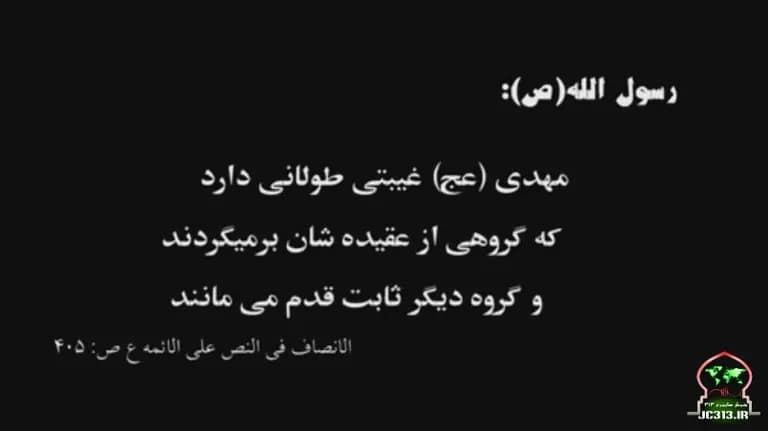
Only the Shiites have been able to possess faith in the unseen, be characterized by the description of the pious, and overcome the doubts and doctrinal attacks of enemies during the difficult times of occultation.
Shaykh al-Saduq writes: Some opponents spoke to me concerning this verse and stated that the meaning of God's saying, “those who believe in the unseen,” is that they believe in resurrection, the gathering, and the conditions of the Day of Resurrection. I said to him: Your interpretation is ignorant and your statement misguided, for Jews, Christians, and many polytheists and opponents of Islam also believe in resurrection, gathering, reckoning, reward, and punishment. God Almighty does not praise the believers with a praise in which the groups of unbelief and atheism also share. Rather, God Almighty has described and praised the believers with a quality that is particular to them and in which no one else shares.
Notes
Adapted from Shaykh al-Saduq’s Kamal al-Din, vol. 1, pp. 22–24.
1. Surat al-Baqarah, verses 2 and 3.
2. Ghafir, 84.
Author: Hamed Sarem
Related articles

Comments
No comments yet.