
“Tashyīd al-Maṭāʿin: A Scholarly Analysis Refuting the Claim of Legitimacy of the First Caliphs” (8) (Imam Hasan, peace be upon him: Exposing Abu Bakr, Without Taqiyya or Justification)

Imam Hasan, Peace Be upon Him, Called Abu Bakr a Usurper: Neither Room for Taqiyya Nor Opportunity for Justification
Abstract
Within the theological framework of Twelver Shi‘ism, the concept of «mata‘in» is not a personal polemic but a rational, documented instrument for establishing the legitimacy of divinely ordained Imamate and invalidating the legitimacy of the earliest rulers. Focusing on the censure voiced by the two Hasans, peace be upon them, regarding Abu Bakr’s usurpation of the caliphate and on the critique of the allegation of taqiyya, this article demonstrates that the Imams, peace be upon them, never practiced taqiyya when articulating the rank of Imamate and their own virtues. A close examination of the responses of the late Sayyid Muhammad Quli in Tashyid al-Mata‘in reveals the dimensions of the deception and distortion of ‘Abd al-‘Aziz Dihlawi in Tuhfat Ithna ‘Ashariyya, and proves that Imam Hasan’s objection from the Prophet’s pulpit was voiced under conditions free from fear and threat—where neither room for taqiyya remained nor any opportunity to justify usurpation. Finally, the article emphasizes that the cry of the two Hasans, peace be upon them, was a clear mirror of truth-seeking and a document exposing the disgrace of the usurping caliphate.
Keywords
Imamate | Mata‘in | Censure by the Two Hasans | Usurping Caliphate | ‘Abd al-‘Aziz Dihlawi | Tuhfat Ithna ‘Ashariyya | Tashyid al-Mata‘in | Taqiyya | Theological Deception | Legitimacy of the Caliphate
Preface
The question of Imamate and the legitimacy of the earliest rulers has always been regarded as one of the fundamental discussions of Imamī Shiʿi theology. Within this intellectual framework, a documented critique of the conduct and political and religious qualifications of the earliest rulers is presented not as a personal polemic, but as an essential part of the argument for the truth of the divinely ordained caliphate of the infallible Imams, peace be upon them. Focusing on an examination of one of the most important instances of the criticisms made by al-Ḥasan and al-Ḥusayn, peace be upon them, against Abū Bakr, and on an analysis of the objections to the allegation of taqiyya, the present study seeks to clarify the inseparable link between such criticisms and Imamate, while reassessing the historical and intellectual distortions found in the views of ʿAbd al-ʿAzīz al-Dihlawī. The research method is based on documented narrative and theological analysis, and its ultimate aim is to establish that Imam al-Ḥasan’s statement, peace be upon him, in objection to Abū Bakr’s caliphate, was made without taqiyya and in an open defense of the truth.
Introduction
In the intellectual framework of Imamī Shiʿi theology, the concept of «maṭāʿin» (criticisms) occupies a fundamental position inseparable from the discussion of Imamate. What is meant by maṭāʿin in this framework is not merely personal disparagement and condemnation, but documented, rational, and systematic critiques of the religious, moral, and political qualifications of the earliest rulers. In Shiʿi discourse, these critiques are not marginal; they stand at the heart of the proofs of Imamate and play a key role in establishing the truth of the divinely ordained caliphate of the Commander of the Faithful, ʿAlī, peace be upon him, and invalidating the caliphate of usurping rulers. In this sense, maṭāʿin are a manifestation of critical and evaluative thought in the rationally oriented Shiʿi tradition: a means for assessing justice, uncovering truth, and rejecting the legitimacy of dominions formed not on the basis of designation and infallibility, but upon ignorance and political domination. Earlier studies, especially those focused on ʿAbd al-ʿAzīz al-Dihlawī’s theological work, Tuḥfa-yi Ithnā ʿAshariyya, have examined his attempt to separate the two domains of Imamate and maṭāʿin—an attempt that has not only failed, but itself attests to the depth of the conceptual and doctrinal connection between these two domains. In response to this approach, the late Sayyid Muḥammad Qulī, in his valuable work Tashyīd al-Maṭāʿin, demonstrates with scholarly precision and firm expression that infallibility, knowledge, and designation are the pillars of divine Imamate, and that criticizing the conduct and beliefs of the earliest rulers is not a peripheral polemic but a necessary element of a rational defense of the principle of Imamate. (See the article: «The Concomitance of Infallibility and Knowledge in Shiʿi Imamate and the Place of Maṭāʿin in Critiquing the Legitimacy of the Caliphate».) From the standpoint of reason, and especially from the perspective of Shiʿi theologians, maṭāʿin are not merely a collection of criticisms; rather, they are a mirror of the disgrace of the men of Saqīfa and eloquent evidence of the invalidity of their caliphate. Thus, al-Dihlawī’s effort to reject and weaken the maṭāʿin amounts to an effort to preserve an intellectual foundation that presupposes the legitimacy of usurping rulers. Al-Dihlawī, having fully understood the implications of the maṭāʿin for the invalidity of the caliphate, resorts in response to various polemical, baseless, and frivolous arguments. Yet the important point is that, in confronting these maṭāʿin, he raises no objection whatsoever to the chains of transmission of the reports. This clearly shows that the narratives cited enjoyed full credibility in the view of him and those who shared his outlook. The first criticism under discussion is no exception to this rule: al-Dihlawī raises no objection to its chain of transmission, but concentrates all his effort on weakening its import. This insistence itself testifies that, if the report’s meaning is established, the legitimacy of Abū Bakr’s caliphate completely collapses. In fact, al-Dihlawī’s attempt to undermine the import of the report plainly confirms that this historical account, if its import is accepted, proves that Abū Bakr’s rule did not possess divine legitimacy, and that no seeker of truth should acknowledge the legitimacy of such a rule.
Silence upon the Usurped Pulpit: A Child Who Mirrors Prophethood
The first criticism to which al-Dihlawī sought to respond was this: «One day Abū Bakr ascended the pulpit of the Messenger of God (may God bless him and his family) to deliver a sermon. Imam al-Ḥasan and Imam al-Ḥusayn (peace be upon them) said to him: يا أبابكر، انزل عن منبر جدنا.»
To evade this criticism, al-Dihlawī advanced the following argument. He writes: «The statements and acts that issued from them during childhood are either, in the Shiʿi view, valid and documented, with legal rulings consequent upon them, or they are deemed invalid because of their young age, and no ruling is consequent upon them. On the first assumption, the abandonment of taqiyya—which is obligatory according to the Shiʿa—would follow.»
The summary of Dehlawi’s objection is as follows: either it must be said that the words of Imam Hasan and Imam Husayn (peace be upon them) have no اعتبار due to their young age, or, if their authority is accepted, it follows that those two great figures abandoned dissimulation (taqiyyah).
In response to the first assumption—namely, the claim that their statement is invalid due to their young age—it has been demonstrated in detail in the article, “Imam Hasan (peace be upon him) pulled Abu Bakr down from the pulpit: a sign of the usurpation of the caliphate in the earliest period,” that the immaculate Imams (peace be upon them) possessed complete intellect and knowledge even in childhood. Evidence from the books of opponents has also been presented to establish this fact. Therefore, the children of the Prophet, who benefit from divine knowledge, are, at every age, a legal proof in their words and deeds.
Moreover, attributing invalidity to the words of the children of the Prophet of Mercy (may Allah bless him and his family)—who are instances of numerous verses of the Noble Qur’an—is an utterly vile act, whose reprehensibility cannot even be assigned a limit.
Accordingly, the late Sayyid Muhammad-Quli also explicitly stated that this claim of Dehlawi is an abhorrent statement, and that only the enemies of the Ahl al-Bayt (the Nawasib) could commit such an insult and deem the statements of the Imams (peace be upon them) invalid in childhood.
Dissimulation in the Mirror of Truth: The Disgrace in Dehlawi’s Argument
However, regarding the second assumption, namely the validity of the statements of Imam Hasan and Imam Husayn (peace be upon them), Dehlawi has raised objections. One of these objections is that the words and conduct of those two great figures were contrary to dissimulation (taqiyyah);
Therefore, according to Dehlawi’s claim, if the statement of those two eminent figures is deemed authoritative, it entails abandoning dissimulation (taqiyya); and if it is not authoritative, this would be due to their young age. Consequently, Dehlawi’s objection is that Imam Hasan and Imam Husayn (peace be upon them) either abandoned the obligatory duty of taqiyya, or their words are not authoritative because they were children.
However, regarding the claim that “under the first assumption, abandoning taqiyya—which the Shi‘a regard as among the obligatory duties—would follow,” the late Sayyid Muhammad-Quli Naqdi offers a fundamental critique and demonstrates that this assertion is inherently false and incorrect.
Dehlawi appears to respond on the basis of Shi‘ite beliefs and attempts to create a contradiction between the import of this narration—an objection to the usurpation of the caliphate—and the important Shi‘ite belief in the obligation of taqiyya, thereby undermining the validity of this criticism. The essential point, however, is that Dehlawi has interpreted the concept of taqiyya as he himself prefers, without attending to the fact that taqiyya too has its own specific rulings, conditions, and limits. This disregard is in fact a kind of deception and distortion that Dehlawi has practiced toward his audience, even though he outwardly claims adherence to the rule of ilzām and to discussion on the basis of Shi‘ite principles.
For this reason, the late Sayyid Muhammad-Quli states clearly: “The arguer (Dehlawi) must first establish from the books of the Imamiyya that, for the Shi‘a, taqiyya is obligatory absolutely and in all matters.”
Dehlawi’s argument depends on the presupposition that the Shi‘a consider taqiyya absolutely obligatory in all circumstances and with respect to all persons, whereas he presents no evidence from Imamiyya books to establish this claim. This breach of the rule of ilzām is not merely a scholarly error; it is a false attribution and a lie against the Shi‘ite school.
When we encounter this extent of distortions and systematic falsehoods in Dehlawi’s works, we clearly realize that his method is founded upon deception and the inversion of facts.
Two fundamental points arise here. First, al-Dihlawi is obliged to prove that, from the Shiʿi perspective, the obligation of taqiyyah is accepted absolutely, in all circumstances and matters; the preliminary condition for the validity of his argument is precisely this proof. Second, the obligation of taqiyyah applies only in cases of fear and threat. Yet when Imam al-Hasan and Imam al-Husayn (peace be upon them) objected to Abu Bakr and said, “اُنزِل عَنْ مِنبَرِ جَدِّنا” (Come down from the pulpit of our grandfather), there was no fear or danger. The reason was that Lady Fatimah al-Zahra (peace be upon her) was still alive, and out of respect for her, no harm would be inflicted upon Imam al-Hasan and Imam al-Husayn (peace be upon them).
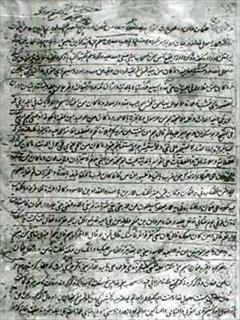
Steadfastness in Fairness: al-Dihlawi’s Fabrications and Sayyid Muhammad-Quli’s Documentary Method
A very important point in comparing the method of the late Sayyid Muhammad-Quli with that of al-Dihlawi is that when al-Dihlawi attributes a claim to the Shiʿa—such as the absolute obligation of taqiyyah—he neither cites evidence from his own reliable sources nor adheres to the principle of binding argumentation and reference to Shiʿi sources. Rather, without documentary support, he merely makes an assertion and in fact resorts to fabrication. This conduct is plainly contrary to scholarly method in theological discussions.
By contrast, in responding to this accusation, the late Sayyid Muhammad-Quli could have confined himself to noting that, according to Shiʿi belief, when Imam al-Hasan (peace be upon him) made this statement, the conditions requiring taqiyyah did not exist. Yet his method is far more precise and robust than this.
The author of Tashyīd al-Maṭāʿin, in refuting this claim of al-Dihlawi, did not merely explain the Shiʿi position; rather, by citing reliable Sunni books and sources accepted by al-Dihlawi himself, he also established the absence of the conditions for taqiyyah.
In this way, he both answered al-Dihlawi’s claim regarding the absolute obligation of taqiyyah and, by drawing on principles and sources accepted by al-Dihlawi, demonstrated that Imam al-Hasan (peace be upon him) spoke at that time under circumstances in which taqiyyah was unnecessary, and that his statement indicated a serious and manifest truth.
Therefore, according to the premise accepted by both sides, Imam Hasan’s (peace be upon him) statement was not only contrary to dissimulation (taqiyyah), but was made with serious intent; its primary meaning is an explicit declaration that Abu Bakr was a usurper.
(See here the collection of articles concerning the methodology of the late Mīr Ḥāmid Ḥusayn al-Hindī, son of the late Sayyid Muḥammad Qulī.)
Fatimite Dignity and Vulnerability after Her Martyrdom: Demonstrating the Collapse of Dihlawī’s Argument
To explain this point, the late Sayyid Muḥammad Qulī cites a lengthy narration from the sound traditions of Ṣaḥīḥ al-Bukhārī, in which it is stated: «وَ کانَ لِعَلِیٍّ مِنَ النّاسِ وَجْهٌ حَیاةَ فاطِمَةَ سلاماللهعلیها، فَلَمّا تُوُفِّيَتِ استنکَرَ علی علیهالسلام وُجُوهَ النّاسِ.»
In al-Mufhim, while explaining Bukhārī’s phrase, «کان لعلی علیهالسلام من الناس وجه حیاة فاطمه», al-Qurṭubī explicitly states that what is meant by «وجه» is the standing, status, and respect that people accorded the Commander of the Faithful (peace be upon him) because of his direct relationship with Lady Fāṭimah (peace be upon her). This was because al-Zahrāʾ (peace be upon her) was a part of the Messenger’s (peace and blessings be upon him and his family) own being and held a lofty rank with him.
Al-Qurṭubī clearly explains that during the lifetime of Lady al-Zahrāʾ (peace be upon her), people respected ʿAlī (peace be upon him) on account of Fāṭimah’s (peace be upon her) dignity. Yet after the martyrdom of that great lady—while ʿAlī (peace be upon him) had still not pledged allegiance to Abu Bakr—the former respect diminished and people turned away from him. This conduct was intended to pressure the Commander of the Faithful (peace be upon him) into pledging allegiance to Abu Bakr, so as to draw him too into the course upon which the others had entered.
In sum, during the lifetime of Lady Fatimah (peace be upon her), people showed respect to Ali (peace be upon him) because of his bond with the Prophet’s (peace be upon him and his family) beloved daughter; but after the passing of that venerable lady, this respect disappeared.
Therefore, when Imam Hasan and Imam Husayn (peace be upon them) objected to Abu Bakr and said, «اُنزِل عَنْ مِنبَرِ جَدِّنا», no fear or danger threatened them; for the Pure and Truthful Lady (peace be upon her) was still alive, and, out of respect for her, her children’s safety was preserved. Thus, the protest of the two Hasans (peace be upon them) against Abu Bakr’s caliphate was natural and required no dissimulation (taqiyyah).
Accordingly, in light of the documented explanations of the late Sayyid Muhammad-Quli, Dehlavi’s first objection concerning taqiyyah is baseless and unacceptable. For this objection to be valid, Dehlavi first had to prove that taqiyyah is generally and absolutely obligatory, and then demonstrate that the conditions requiring taqiyyah existed at that time. These two essential stages have been examined and refuted precisely and with documentation in the responses of the late Sayyid Muhammad-Quli, and Dehlavi’s fallacies and deceptions have been clearly exposed.
From Disregarded Sanctity to the Cry of Truth: Unspoken Indictments of the Caliphal System
It should not be forgotten, however, that this very report itself raises further indictments against the structure of the three-caliphate system. Among them is this: if the Pure and Truthful Lady (peace be upon her) possessed such rank and standing that people respected the Commander of the Faithful (peace be upon him) out of reverence for her, then how was her house threatened with burning, and why was the security of her home not ensured? And what sanctity of that noble lady was preserved when her pure grave has remained hidden from the eyes of the community to this day?
In any case, on the basis of the very principles to which Dehlavi’s like-minded adherents are committed, the action of Imam Hasan and Imam Husayn (peace be upon them) in objecting to Abu Bakr and commanding him to descend from the Prophet’s (peace be upon him and his family) pulpit—and, in fact, presenting him as the usurper of the caliphate—was not only contrary to taqiyyah; rather, it was undertaken in accordance with the truth and in defense of the right.
In this regard, you may refer to the following articles:
Did ʿUmar set Fāṭimah’s house on fire?!
Was not Fāṭimah’s house—the house of revelation?
Did the Pure Zahra, peace be upon her, pass away a natural death?
All of Fāṭimah’s (peace be upon her) support for ʿAlī (peace be upon him)
The Unveiled Cry of Truth: The Infallible Imams and the Invalidity of the Myth of Taqiyyah in Articulating Rank
A most important point is that none of the infallible Imams (peace be upon them) ever practised dissimulation in declaring their own rank and station. In all circumstances, they proclaimed that they were the successors of the Messenger of God (peace and blessings be upon him and his family), and the most learned and most virtuous of the people. They never practised dissimulation in presenting their rank of caliphate, imamate, and virtues; what prevented them from reclaiming their right was not dissimulation, but the lack of companions and supporters.
The late Sayyid Muhammad-Quli also emphasises that the Ahl al-Bayt (peace be upon them) never practised dissimulation regarding the foundational matters of religion, and that the expression of their virtues and the presentation of their stations were always open and explicit. Dissimulation was employed only in secondary jurisprudential matters, and then only under conditions of fear and threat.
He explains that many narrations in which dissimulation is discussed were issued to instruct Shiʿis in circumstances of necessity, so that when danger and risk to life arose, they would know how to act. Moreover, in cases where the questioner was among the opponents and there was no hope of guiding him, the infallible Imams (peace be upon them), in accordance with wisdom, gave answers involving dissimulation.
An even subtler point is that, even under conditions of dissimulation, an action must be based on the Imam’s direct command, not merely on an individual’s own judgment. For example, Ali ibn Yaqtin, the minister of Harun al-Abbasi, in conditions of fear and threat, performed a particular ablution in accordance with the instruction of Imam Musa ibn Jaʿfar (peace be upon him). Although this ablution outwardly differed from the ablution commonly practised by Shiʿis, it was grounded in the command of an infallible Imam.
Referring to this point, the late Sayyid Muhammad-Quli adds that even in jurisprudential matters, the Ahl al-Bayt (peace be upon them) first clarified the actual rulings of religion for the Shiʿis and then, for particular conditions of fear and harm, instructed them to practise dissimulation.
He continues that some legal opinions issued on the basis of dissimulation were intended for obstinate questioners and opponents for whom there was no hope of guidance. Nevertheless, this was not a permanent state of affairs, and the infallible Imams plainly stated the truth in many teachings and realities.
The upshot of this discussion is as follows:
- 1. When Imam al-Hasan and Imam al-Husayn (peace be upon them) said to Abu Bakr, *«انزل عن منبر جدّنا»*, there was no fear that would have necessitated dissimulation (taqiyyah).
- 2. The Ahl al-Bayt (peace be upon them) never practiced dissimulation in expounding their own station of Imamate and Caliphate.
Most instances of dissimulation were confined to subsidiary legal matters; and if dissimulation was occasionally practiced in matters other than the subsidiary issues as well, it was in response to obstinate questioners who had lost hope of guidance.
Therefore, Dehlawi’s claim that the words of Imam al-Hasan and Imam al-Husayn (peace be upon them) were contrary to dissimulation is fundamentally baseless and rejected.
Conclusion
A precise examination of the insults directed at al-Hasan and al-Husayn, peace be upon them, and a critique of the doubt concerning dissimulation (taqiyyah), has revealed a clear and undeniable truth: in declaring the station of their own divinely ordained caliphate and Imamate, the Ahl al-Bayt, peace be upon them, were never confined to imposed silence, nor did they resort to taqiyyah out of fear of any power. The claim of the absolute obligation of taqiyyah, as al-Dihlawi and those who think like him have portrayed it, not only has no basis in authentic Shi‘i teachings, but is also an unjust distortion of a wise doctrine that has meaning only in circumstances of danger to life and grave harm.
With full awareness of the dangers, the Ahl al-Bayt, peace be upon them, spoke clearly and explicitly when declaring the fundamental truths of religion, and no fear held them back from crying out for the truth. When Imam al-Hasan, peace be upon him, called Abu Bakr a usurper upon the Messenger’s pulpit (may Allah bless him and his family), there was neither fear nor any need for taqiyyah. Rather, these words were a cry against the caliphate of Saqifah, founded upon injustice and political domination.
Taqiyyah was a means of preserving the lives of the Shi‘a in the face of manifest oppression, not a means of burying truths or justifying deviations. Appropriating the concept of taqiyyah in favor of a historical distortion of the caliphate is a betrayal both of the truth of religion and of the tradition of the Ahl al-Bayt, peace be upon them. In conclusion, it must be said: the right of the Ahl al-Bayt is too manifest to be wrapped in the covering of taqiyyah; and the cry of al-Hasan and al-Husayn is a firm proof that will forever strike the mouths of those who distort history.
When Truth Stands Alone, Our Zeal Must Cry Out!
Where truth falls silent, darkness will prevail without any resistance. Truth has no need for embellishment; it needs only an open eye and a steadfast heart.
Reasoning means not accepting statements without investigation; it means standing against distortion; it means fighting the lies that have poisoned history. Critical thinking means inquiry, the courage to ask questions, and moving beyond appearances in order to reach the essence of truth.
Today is not a time for indifference. Today is a time to show zeal for the truths. If we do not cry out, if we do not spread the truth, if we remain silent in the face of historical distortions, falsehood will put on the garment of reality and devour the future.
This article is an effort to return to the springs of light and truth. By studying, sharing, writing a comment, and inviting others to read, you can have a part in this great struggle—a share that may appear small, yet is great in safeguarding the truth.
Publish this article. Carry this cry to people's ears. Do not let this lamp be extinguished.
Truth remains alive through our steps. And one day we will be asked: «When truth stood alone, on which side did you stand?»
Related articles


Comments
No comments yet.
