
When Dust Comes to Life: An Analysis of Qur’anic Verses on Human Creation and Resurrection
Author: Hamed Sarem
Abstract
This article examines the creation of humankind from the perspective of the Qur’an and, by criticizing theories such as that of Yadollah Sahabi, which interpret human creation within the framework of the gradual evolution of living beings, demonstrates that the creation of humankind is described in the Qur’an as direct and miraculous. In this regard, four main axes have been examined:
1. The creation of Prophet Adam from soil: The Qur’an describes the stages of Prophet Adam’s creation from dust (turāb), clay (ṭīn), and dried, ringing clay (ṣalṣāl), and shows that this creation was gradual, yet without any need for the evolution of living beings.
2. A comparison between the creation of Prophet Adam and Prophet Jesus: The similarity between the creation of these two prophets indicates that the creation of humankind, too, could have occurred directly and miraculously.
3. The creation of a bird from clay by Prophet Jesus: This miracle is an example of direct creation from clay, which does not require gradual evolution, and it confirms the direct creation of Prophet Adam.
4. The creation of all human beings from soil and its connection with the Resurrection: The Qur’an attributes the creation of all human beings to soil and shows that the Resurrection, like the initial creation, occurs directly from soil.
Relying on Qur’anic verses and precise literary and exegetical analyses, this article concludes that human creation in the Qur’an is expressed as direct and miraculous, and that theories such as Yadollah Sahabi’s theory, which posit the gradual evolution of living beings, are incompatible with the explicit texts of the Qur’an and Islamic narrations.
Introduction
The creation of humankind is one of the subjects about which people have always been curious—subjects such as how the world came into being and, especially, how humankind was created or came into existence. Perhaps the most important and fundamental questions in this regard are how humankind was created, why it was created, and the ultimate end of human creation; these have attracted the greatest human attention and have been the subject of various questions, inquiries, studies, and extensive discussions. Scholars of the empirical sciences and philosophers of diverse schools of thought have conducted many discussions in this field, ranging from efforts to define the human being (what the human being is) to discussions and research on how the human being came into existence (the creation or emergence of humankind), and . . .
Discussion of the coming into existence of humankind is not confined merely to the manner of its emergence or creation; its scope has also extended to human types. Did only one type of human being live on the globe, or did different species of human beings inhabit the earth? In the latter case, to which type does the human being living on earth belong? Various hypotheses have, of course, been advanced concerning these questions.
The Abrahamic religions, especially Islam, have also spoken about these matters. The common feature and emphasis of all divine religions is the divine creation of humankind. They identify the origin of human existence as the divine will to create this being. In addition to this point, they have addressed the manner of human creation as well. The sources of Islam speak extensively about the nature and manner of God’s creation.
Exploration and research into how beings came into existence on earth have led to the formulation of various hypotheses and theories. Some have found these theories to conflict with what Islamic sources present and have regarded the result of this conflict as mutual falsification; some have proceeded to reject religion, while others have endeavored to reject the hypotheses advanced in this regard. Others have considered the conflict to be only apparent and believe that the proposed hypotheses do not mutually falsify the Islamic sources’ account of the manner of human creation; rather, the Qur’an’s account does not contradict the existing hypotheses. Still others have taken the path of maintaining that the Qur’an’s account is open to empirical testing and can be proven from the perspective of the empirical sciences, and that even if there is a conflict, the Qur’an’s view is not unscientific.
Therefore, two issues are seriously raised here:
- What is the Qur’an’s view regarding the manner of human creation? That is: (a) setting aside the various hypotheses; (b) setting aside whether these hypotheses conform or conflict [with the Qur’an], and without attempting to harmonize Qur’anic expressions with existing hypotheses, an understanding of the Qur’an should be attained such that we can definitively attribute a proposition to the verses. Does the Qur’an’s view conform to the existing hypotheses or not? In the latter case, can these two theories be reconciled, or must one inevitably adopt one side and reject the other, or at least neither reject nor affirm one side and instead remain silent?
This article has attempted to address the first matter; that is, to arrive at an understanding of the Noble Qur’an based on the rules of Arabic speech (morphology and syntax) and literary analyses, in such a way that a proposition can be attributed to the Qur’an. Obviously, in order to understand a school of thought, one must examine all its authoritative sources, which requires very extensive research; however, this writing has sought to address the Qur’an’s view concerning human creation.
It is necessary to note that the understanding of exegetes, merely in their capacity as exegetes, is not taken as the criterion; rather, attention is given to an understanding based on the rules of language.
The Creation of Prophet Adam from “Dust”
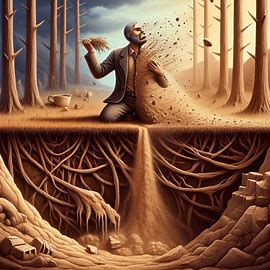
The Noble Qur’an states that Prophet Adam was created from “dust” (turāb). [1] This point is stated in disputation with the Christians. Therefore, at the very least, the Christianity contemporary with the revelation of the Qur’an must have believed that Prophet Adam’s creation was from dust. In this noble verse (Āl ʿImrān 59), two stages are stated for the creation of Prophet Adam: the first stage is creation from “dust,” and the second is expressed by the phrase “Be, and it is” (kun fa-yakūn). These two stages are coordinated in the noble verse with “then” (thumma): “Then He said to him, ‘Be,’ and it is.” This coordinating particle indicates a temporal delay between these two acts of God in creation; that is, first a creation from “dust” took place, and after a period of time had passed, the second act took place. The second act is the saying of “Be, and it is” to that which was brought forth from dust. Clearly, if “and” (wa) had been used instead of “then” to coordinate these two stages, it would not have carried these implications.
The Gradual Nature of Prophet Adam’s Creation
This noble verse shows that the creation of Prophet Adam from dust was one stage of his creation, and Adam did not come into being merely through creation from dust; rather, he required a second stage. Careful consideration of other verses shows that these two stages themselves had various further stages. Although these were the two fundamental stages in Prophet Adam’s creation, other verses do not speak of creation from dust; rather, they speak of creation from “sounding clay, from altered black mud” (ṣalṣālin min ḥamaʾin masnūn). [2] Therefore, Prophet Adam’s creation was accomplished from “sounding clay,” and that “sounding clay” itself was taken from a substance called “altered black mud” (ḥamaʾin masnūn). Attention to the partitive sense of the particle “min” in this expression shows that the sounding clay was a part of the “altered black mud.” In another verse that speaks about this same subject, God describes this creation as being from “clay” (ṭīn). [3] The differing expressions for a single event—“dust,” “sounding clay, from altered black mud,” and “clay”—can indicate the reality that creation from dust itself had stages and that man was not created from dust instantaneously; rather, this very stage of creation from “dust” had stages and occurred gradually. A point requiring attention is that in these two blessed surahs—Sūrat al-Ḥijr and Sūrat Ṣād—the expression is not specifically for the creation of Prophet Adam; rather, the expression in the noble verse is the creation of a human being (bashar), not Adam. Nevertheless, considering that these verses recount God’s conversation with the angels and subsequently report the angels’ prostration before this human being, and in light of verses 30 to 35 of Sūrat al-Baqarah, it can be concluded that this human being either means Prophet Adam or that Prophet Adam is certainly one of the instances of this human being. Another difference between these verses (Sūrat al-Ḥijr and Sūrat Ṣād) and the expression in Sūrat Āl ʿImrān is the form of the sentence used in these verses. In the blessed Sūrat Āl ʿImrān, it is a verbal sentence, and God mentions Prophet Adam’s creation with the past-tense verb “He created him” (khalaqahu); but in these two surahs, it is a nominal sentence, and the act of creation is explained with the active participle “Creator” (khāliq), which entails many differences between these two expressions. The Noble Qur’an, in these noble verses, [4] also speaks of the second stage. God describes this stage by means of proportioning
“I have proportioned him” (sawwītuhu), and the breathing of the spirit: “I breathed into him of My spirit” (nafakhtu fīhi min rūḥī). [5] Therefore: (a) wherever the expression “Be, and it is” occurs, it need not mean that the act is performed instantaneously; (b) the stage of “Be, and it is” includes the proportioning of the being created from clay and includes the breathing of the spirit. Therefore, the stage of “Be, and it is” itself comprises two stages.
A matter worthy of attention is that what causes life and completes these stages of creation is the breathing of the spirit; that is, something called spirit was added to this clay nature, such that without the spirit this creation would not have reached completion. After this stage, God Most High commands the angels to prostrate before this creature.
In light of the noble verses mentioned above, it is clear that Prophet Adam was created from dust, although the dust assumed different forms in various stages and became “altered black mud,” and thereafter became “sounding clay.” In any case, from the perspective of the Noble Qur’an, one can state definitively that Prophet Adam came into existence from soil. Prophet Adam’s creation was not preceded by a being other than himself, and his only antecedent was dust and clay substance. Clearly, the verses under discussion do not indicate that “dust” or “clay” transformed into living beings and that Adam was a subsequent reality arising from those beings. Rather, it is plainly clear that Adam’s creation was directly from dust; and there is, of course, no doubt that the dust took different forms and then the spirit was breathed into it.
Comparison of Prophet Jesus and Adam
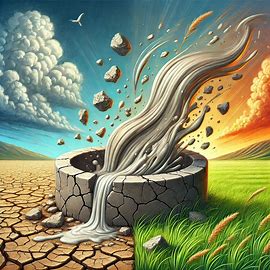
The creation of Jesus differed from the creation of all human beings. This difference is also accepted by the Qur’an. Since this difference has become a pretext for the deviation of some people, the Noble Qur’an has addressed the creation and birth of Jesus, peace be upon him. Among the verses that address this discussion is the comparison between the creation of Jesus and Adam. [6] The likeness of Jesus before God is like the likeness of Adam. The point of resemblance between these two special creatures of God is the manner of their creation. Neither of them entered into existence according to the ordinary course known to humankind. Adam was created from “dust”; then he was told, “Be,” and so he came to be. This manner of creation is an analogy for the creation of Jesus: just as the creation of Jesus was not preceded by a non-human being and occurred through an extraordinary way, the creation of Adam too was not preceded by a non-human being and came about extraordinarily. Therefore, this verse cannot be taken to mean: “Adam’s creation from dust was preceded by beings that were created from soil, and then Adam was created from those beings.” Just as Adam’s creation was apart from the ordinary causes and means of human reproduction, Jesus’s creation was also apart from these causes and means. According to the logic of the Qur’an, both creations are signs of God’s divine greatness and power, and there is no evidence in the Qur’an that Mary had a special characteristic and, because of that particular characteristic, gave birth to a child without a father. Although some have taken Mary’s chosen status and purity as evidence for such a characteristic, portraying Mary as a special person with a body different from others, and have written: “...there is no doubt that Mary, peace be upon her, was hermaphroditic in terms of her internal sex glands, and the manifestation of the Divine Spirit in the form of an adorned human caused an internal effect in Mary, resulting in fertility, pregnancy, and ultimately her bearing a child without a husband.” [7] For if they accept that the birth of Jesus was a special, divine matter beyond the natural customs of human beings, then there remains no obstacle to viewing Adam’s creation in the same way. Since they regard Adam’s creation from soil as a natural process [8], if they accept that Jesus’s creation was unnatural, the intellectual system they have devised will be disrupted.
The Creation of a Bird from Clay
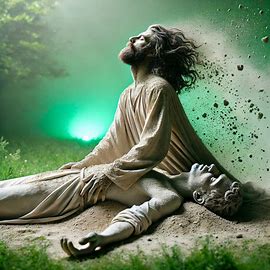
Creation from clay has another example in the Noble Qur’an as well. It may be said that this example is very good evidence for considering, from the Qur’anic perspective, the nature of creation from “ṭīn” (clay). In an event recounted by the Qur’an, it reports the creation of a bird from “ṭīn,” from which it can clearly be understood that what is meant is direct creation from clay, without prior beings serving as intermediaries for the bird’s coming into existence from clay. God introduces creation from ṭīn as one of the signs of Jesus’s prophethood. [9] In these noble verses [10], several points should be noted:
- This act of Jesus is called creation: “أَنِّي أَخْلُقُ لَكُمْ” and “إِذْ تَخْلُقُ”. In both noble verses, the act of creation is attributed to Jesus. In both noble verses, the creation is from “ṭīn”: “أَخْلُقُ لَكُمْ مِنَ الطِّينِ” and “إِذْ تَخْلُقُ مِنَ الطِّينِ”. In both noble verses, ṭīn takes the form of a bird; that is, the clay is shaped precisely into the form of a bird. The expression in both verses is “كَهَيْئَةِ الطَّيْرِ”. In both noble verses, it is stated that “breathing” is performed into this form made from ṭīn in the shape of a bird.
Exactly like the creation of Adam, who was first created from clay and then received the breathing of the spirit. The wording of these two noble verses is as follows:
“فَأَنْفُخُ فيهِ” “فَتَنْفُخُ فيها”
- The act of breathing into the bird is coordinated with what precedes it by means of “fa,” meaning that there is no temporal delay whatsoever between forming the bird’s shape from “ṭīn” and breathing into it. After the breathing, by the permission of God Almighty, the clay-made object becomes a bird: “فَيَكُونُ طَيْراً بِإِذْنِ اللَّهِ” and “فَتَكُونُ طَيْراً بِإِذْني”. In this part of both noble verses, becoming a bird is coordinated with what precedes it by means of “fa,” meaning that there is no pause or delay: as soon as Jesus breathes, the clay artifact becomes a bird. Likewise, in the creation of Adam, after the breathing of the spirit, he became the object of the angels’ prostration.
Therefore, creation from “dust” cannot be understood as the coming into existence from soil of living beings other than Adam, with Adam then considered created from those beings or evolved from them; just as it is explicitly stated that a bird was created from “ṭīn,” breathed into, and transformed into a real bird. This bird, which was a sign establishing Jesus’s claim, is also a sign for the creation of Adam.
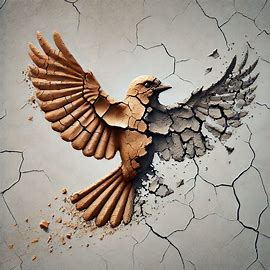
The Children of Adam as the Addressees of the Qur’an’s Commands and Prohibitions
The Noble Qur’an has not spoken of any human other than Adam and the children of Adam; it has spoken only of Adam’s creation, introduces Adam and his wife as the two parents of all human beings on earth, and addresses its audience as the children of Adam. [11]
It uses this expression in many instances. [12] In these addresses, it warns the children of Adam against Satan’s plotting and deception, calls the children of Adam to faith, and reminds them of the covenant and pledge of the children of Adam. Therefore, the addressees of the Qur’an are the children of Adam. Based on this point, it can be concluded that wherever the Noble Qur’an uses the pronoun “kum,” it means the children of Adam, not another type of creature or another type of human.
The Noble Qur’an first speaks of the creation of “you” (kum), then of the forming of “you” (kum), and after that speaks of the creation of Adam. [13] This means that before Adam set foot in this world, was created, and received the breathing of the spirit, the addressees of the Qur’an had been created: “لَقَدْ خَلَقْنَاكُمْ”. After this expression, it says: “صَوَّرْنَاكُمْ,” meaning that first came the creation of “you” (kum), and then came the shaping of “you” (kum). These two stages are joined by “thumma,” meaning that there was a temporal interval between them. Then, again with the conjunction “thumma,” it says: “ثُمَّ قُلْنا لِلْمَلائِكَةِ اسْجُدُوا لِآدَمَ...” meaning that after the shaping of “you” (kum), the angels were commanded to prostrate before Adam. In light of what was stated from other verses regarding the stages of Adam’s creation, this stage must be after the breathing of the spirit into Adam’s body. Since it was stated that the only addressees of the Qur’anic verses are the children of Adam, the referent of the pronoun “kum” in this noble verse is also the children of Adam, and no group other than the children of Adam can be found to be the addressees of the Qur’an. Therefore, this interpretation:
“Indeed, We created you (the human species and the Children of Adam) from something that had existed previously” [14] cannot be correct, because there is no evidence that two distinct and different groups—humans and the Children of Adam—are addressed by the Qur’an; on the other hand, there is evidence that only the Children of Adam are addressed by the Qur’an.
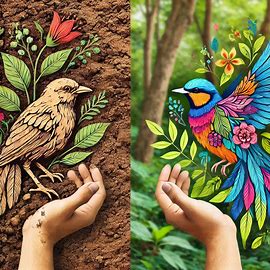
Human and the Children of Adam: Two Names for One Referent
Just as the Noble Qur’an addresses its audience as the Children of Adam, in many instances it commands, prohibits, and addresses them using the expression “human.” In many cases, it also speaks of the creation of the human being from soil. [16] There is no reason to regard the term human as other than the Children of Adam, for exactly as God recounts the creation of Prophet Adam and refers to the creature as “Adam,” elsewhere He refers to the creature as “human,” and elsewhere as “bashar” (man). From this variation in expression, one cannot conclude that Adam had three stages.
Especially in verse 26 of the blessed Sūrat al-Ḥijr, He says: We created the human being from “صَلْصالٍ مِنْ حَمَإٍ مَسْنُون” (sounding clay from black, fetid mud); and two verses later, when recounting the creation of Prophet Adam and the angels’ prostration, He states precisely the same expression for the creation of man. [17] Later in this account, when He reproaches Satan, asking why he did not prostrate, Satan gives as the reason for his refusal to prostrate that man was created from “صَلْصالٍ مِنْ حَمَإٍ مَسْنُون.” [18]
Since the only earthly creature before whom the angels prostrated was Prophet Adam, it is clearly understood that “human,” “man,” and “Adam” refer to no more than one reality.
Therefore, considering Adam to be an advanced and perfected type of human cannot be correct. Human, man, and Adam are creatures made from dust, clay, or sounding clay, and there is absolutely no indication here that living beings existed at every stage until they reached man, human, or Adam—even if they write:
“... With this determination, he set the human species, which is the result of the physical evolution of living beings, upon the path of intellectual evolution.” [19]
In the blessed Sūrat al-Sajdah, He introduces the beginning of the creation of the human being as from clay [20]; then He made his progeny from “a lowly fluid,” and then breathed the spirit into him. [21] These expressions in the noble verses do not differ at all from the creation of Adam or man, and they describe the same stages of creation; therefore:
- The creation of the human being, man, and Adam is one reality, referred to by different expressions. The gradual nature of creation from dust, clay, and sounding clay has no connection with the gradual creation and evolution of living beings.
Consequently, the noble verses 7 to 9 of the blessed Sūrat al-Sajdah do not indicate a course of life in living beings before Adam, the human being, or man.
Based on the conclusions stated above, the falsity of the following claim is clear.
“The gradual creation and evolution of living beings up to the human being can be pleasingly understood from studying three verses (7, 8, and 9) of Sūrat al-Sajdah ... The meaning of the seventh verse introduces the first period of human creation (creation from mud and soil), and the ninth verse explains the period of the completion of the human body and his becoming legally obligated; thus, the eighth verse (ثُمَّ جَعَلَ نَسْلَهُ مِنْ سُلالَةٍ مِنْ ماءٍ مَهينٍ) concerns intermediate periods other than the foregoing periods and has a meaning other than that intended by the aforementioned verses. For reasons explained below, this period can be nothing other than the course of life in other living beings.” [22]
The Creation of All Human Beings from Soil
Contrary to the widespread view, not only حضرت Adam was created from soil; rather, all the children of Adam were created from dust, and creation from dust is an innate and moral characteristic of all the children of Adam. The narrations state that a person's character, ethics, temperament, and various behaviors are affected by the soil from which he was created. [23] Verses of the Qur’an attribute the creation of all human beings to soil and state: all of you were created from soil, then from a drop of sperm, then from a clinging clot, then ... . [24]
In another verse, creation from dust is introduced as a sign of God, and through this sign He argues with human beings. [25]
Therefore, the matter is not that an individual named Adam was created from soil and that no one after him was created from soil. Rather, not only was Adam, the father of humankind, created from soil, but all his children were also created from soil. Although it may be claimed that the manner of Adam’s creation differs from that of the children of Adam, the essential point—that all البشر and human beings were created from soil—is certain and established, and the Noble Qur’an has reported it.
The Repeated Creation of Human Beings from Soil
The Resurrection is one of the events whose occurrence God informs us of at the end of the course of this worldly life. In the Resurrection, a new creation takes place—a creation like the initial creation of the human being. Just as the human being was created from soil at the beginning, he will again be created from soil in the Resurrection.
The Noble Qur’an states: “From the earth We created you, and to it We shall return you, and from it We shall bring you forth once again.” [26] The expression «تارَةً أُخْرى» shows that being brought forth from the earth occurred once before the Resurrection, and that could only have been at the beginning of creation. In the blessed Surah al-Kahf, it states: “You have come to Us just as We created you the first time.” [27] The expression «كَما خَلَقْناكُمْ أَوَّلَ مَرَّةٍ» indicates the reality that the Resurrection is like the initial creation of all human beings and the children of Adam from soil. Just as, in the Resurrection, the evolution of species or creation from another living being is not what creation from dust means, neither can creation from soil in the first creation have such a meaning.
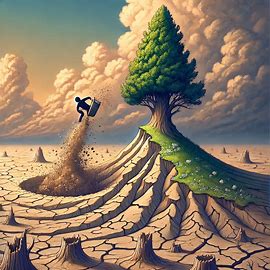
Conclusion
Attention to the verses concerning the creation of the human being conclusively demonstrates the following points:
- The creation of حضرت Adam has two dimensions: one is creation from soil (dust), and the other is the breathing of the spirit. Although Adam’s creation from dust involved various gradual stages, this does not mean that Adam was a later-created being arising from living creatures preceding him. The similarity between the creation of حضرت Jesus and حضرت Adam shows that the creation of حضرت Adam was not within the evolutionary and gradual course of living creatures preceding him. The creation of a bird from clay (ṭīn) by حضرت Jesus shows that creation from soil does not necessarily require passing through stages of evolution. All human beings have an antecedent creation from soil. The verses concerning the Resurrection describe the creation of human beings on the Day of Resurrection as being like the initial creation of human beings from soil. All human beings die, turn into soil, and are created again from soil. Just as there is no evolution of species or evolutionary course of living beings in the Resurrection, neither was there such a course at the beginning of creation, because the Qur’an presents these two creations as alike.
[1] (3) Āl ʿImrān: 59 إِنَّ مَثَلَ عيسى عِنْدَ اللَّهِ كَمَثَلِ آدَمَ خَلَقَهُ مِنْ تُرابٍ ثُمَّ قالَ لَهُ كُنْ فَيَكُون
[2] (15) al-Ḥijr: 28 وَ إِذْ قالَ رَبُّكَ لِلْمَلائِكَةِ إِنِّي خالِقٌ بَشَراً مِنْ صَلْصالٍ مِنْ حَمَإٍ مَسْنُون
[3] (38) Ṣād: 71. When your Lord said to the angels, “Indeed, I am creating a human being from clay.”
[4] al-Ḥijr, 28 and 29
[5] (15) al-Ḥijr: 29. “So when I have proportioned him and breathed into him of My spirit, then fall down before him in prostration.”
(38) Ṣād: 72. “So when I have proportioned him and breathed into him of My spirit, then fall down before him in prostration.”
[6] (3) Āl ʿImrān: 59. “Indeed, the likeness of Jesus before God is like that of Adam: He created him from dust, then said to him, ‘Be,’ and he was.”
[7] The Creation of Man, Yadollah Sahabi, p. 161
[8] In such a way that clay soil turns into mud, and in a place where the water is neither salty nor deep, many organisms live in the clay soil; in these muds, single-celled organisms come into being, and as a result of the perfection of these organisms, a kind of human being comes into existence, and so on.
[9] (3) Āl ʿImrān: 49. “And [make him] a messenger to the Children of Israel, [who will say], ‘Indeed, I have come to you with a sign from your Lord: I create for you from clay the form of a bird, then I breathe into it and it becomes a bird by God’s permission. And I cure the blind and the leper, and I give life to the dead by God’s permission. And I inform you of what you eat and what you store in your houses. Indeed, in that is a sign for you, if you are believers.’”
(5) al-Māʾidah: 110. When God said, “O Jesus, son of Mary, remember My favor upon you and upon your mother, when I strengthened you with the Holy Spirit, speaking to the people in the cradle and in maturity; and when I taught you the Book, wisdom, the Torah, and the Gospel; and when you created from clay the form of a bird by My permission, then breathed into it and it became a bird by My permission; and you healed the blind and the leper by My permission; and when you brought forth the dead by My permission; and when I restrained the Children of Israel from you when you came to them with clear proofs, and those who disbelieved among them said, ‘This is nothing but manifest magic.’”
[10] Ibid.
[11] (7) al-Aʿrāf: 27. “O children of Adam, let not Satan tempt you as he caused your parents to leave Paradise, stripping them of their clothing to show them their nakedness. Indeed, he and his tribe see you from where you do not see them. Indeed, We have made the devils allies of those who do not believe.”
[12] (7) al-Aʿrāf: 26, 27, 31, 35, and 172; (17) al-Isrāʾ: 70; and (36) Yā Sīn: 60
[13] (7) al-A‘rāf: 11 “And We certainly created you, then fashioned you; then We said to the angels, ‘Prostrate yourselves before Adam.’ So they prostrated themselves, except Iblis; he was not among those who prostrated themselves.”
[14] The Creation of Man, Yadollah Sahabi, p. 112.
[15] It makes no difference whether these two groups have complete disjunction or stand in a relation of absolute generality and specificity, as has been claimed.
[16] (15) al-Ḥijr: 26 “And We certainly created man from sounding clay, from black mud molded into shape”; and (23) al-Mu’minūn: 12 “And We certainly created man from an extract of clay”; and (55) al-Raḥmān: 14 “He created man from sounding clay like pottery”; and (32) al-Sajdah: 7 “He who perfected everything He created, and began the creation of man from clay.”
[17] (15) al-Ḥijr: 28 “And when your Lord said to the angels, ‘Indeed, I am creating a human being from sounding clay, from black mud molded into shape.’”
[18] (15) al-Ḥijr: 33 “He said, ‘I am not one to prostrate myself before a human being whom You created from sounding clay, from black mud molded into shape.’”
[19] The Creation of Man, Yadollah Sahabi, p. 126.
[20] (32) al-Sajdah: 7 “He who perfected everything He created, and began the creation of man from clay.”
[21] “Then He made his progeny from an extract of a humble fluid” (8).
“Then He proportioned him and breathed into him of His spirit, and made for you hearing, sight, and hearts. Little are you grateful” (9).
[22] The Creation of Man, Yadollah Sahabi, p. 128.
[23] This discussion is very extensive, and this writing does not have room for it.
[24] Ghafir (40): 67 هُوَ الَّذي خَلَقَكُمْ مِنْ تُرابٍ ثُمَّ مِنْ نُطْفَةٍ ثُمَّ مِنْ عَلَقَةٍ ثُمَّ يُخْرِجُكُمْ طِفْلاً ثُمَّ لِتَبْلُغُوا أَشُدَّكُمْ ثُمَّ لِتَكُونُوا شُيُوخاً وَ مِنْكُمْ مَنْ يُتَوَفَّى مِنْ قَبْلُ وَ لِتَبْلُغُوا أَجَلاً مُسَمًّى وَ لَعَلَّكُمْ تَعْقِلُون Fatir (35): 11 وَ اللَّهُ خَلَقَكُمْ مِنْ تُرابٍ ثُمَّ مِنْ نُطْفَةٍ ثُمَّ جَعَلَكُمْ أَزْواجا
Al-Kahf (18): 37 قالَ لَهُ صاحِبُهُ وَ هُوَ يُحاوِرُهُ أَ كَفَرْتَ بِالَّذي خَلَقَكَ مِنْ تُرابٍ ثُمَّ مِنْ نُطْفَةٍ ثُمَّ سَوَّاكَ رَجُلا
Al-Hajj (22): 5 يا أَيُّهَا النَّاسُ إِنْ كُنْتُمْ في رَيْبٍ مِنَ الْبَعْثِ فَإِنَّا خَلَقْناكُمْ مِنْ تُرابٍ ثُمَّ مِنْ نُطْفَةٍ ثُمَّ مِنْ عَلَقَةٍ ثُمَّ ...
[25] Ar-Rum (30): 20 وَ مِنْ آياتِهِ أَنْ خَلَقَكُمْ مِنْ تُرابٍ ثُمَّ إِذا أَنْتُمْ بَشَرٌ تَنْتَشِرُون
[26] Ta-Ha (20): 55 مِنْها خَلَقْناكُمْ وَ فيها نُعيدُكُمْ وَ مِنْها نُخْرِجُكُمْ تارَةً أُخْرى
[27] Al-Kahf (18): 48 وَ عُرِضُوا عَلى رَبِّكَ صَفًّا لَقَدْ جِئْتُمُونا كَما خَلَقْناكُمْ أَوَّلَ مَرَّةٍ بَلْ زَعَمْتُمْ أَلَّنْ نَجْعَلَ لَكُمْ مَوْعِدا
Author: Hamed Sarem
Related articles
Comments
No comments yet.
