
Ali Akbar: The Prophet of Karbala and a Man from the Lineage of Abraham
Author: Hamed Sarem
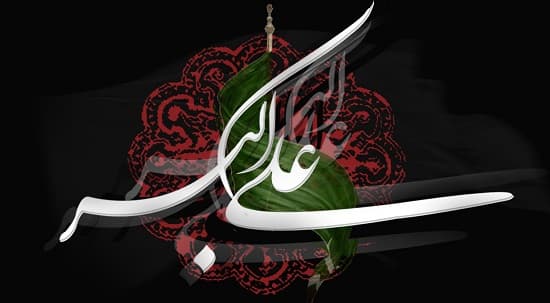
The fire of envy burned in the heart of the Umayyad army of Kufa, but the pretext for fighting Sayyid al-Shuhada was reform of the community, presented as goodwill toward the Prophet's community, to the point that the jurists and judges of Kufa issued a fatwa for killing him.
Karbala was a hard battlefield between two important currents. The Noble Qur'an has spoken of these two currents and explicitly mentioned their meeting and struggle. Their disagreement was not over tribal or ethnic disputes; rather, their conflict was over obedience or disobedience to God Most High. The Noble Qur'an describes the conflict of these two currents in Surat al-Nisa: "Or do they envy the people for what God has given them of His bounty? We gave the family of Abraham the Book and wisdom, and We gave them a great kingdom." (1)
Karbala was a hard battlefield between two important currents. The Noble Qur'an has spoken of these two currents and explicitly mentioned their meeting and struggle. Their disagreement was not over tribal or ethnic disputes; rather, their conflict was over obedience or disobedience to God Most High. The Noble Qur'an describes the conflict of these two currents in Surat al-Nisa: "Or do they envy the people for what God has given them of His bounty? We gave the family of Abraham the Book and wisdom, and We gave them a great kingdom." (1)
Envy Toward the Family of Abraham
This noble verse explicitly states the rivalry between two currents: the first group is the family of Abraham, and the second group is those who envy the family of Abraham. The family of Abraham are those to whom God has given the Book, wisdom, and a great kingdom. According to verse 51 of Surat al-Nisa, the envious ones are some of the Jews, Jibt, and Taghut.
God granted the kingdom to the family of Abraham: to that family of Abraham who are not oppressors, God gave a great kingdom, one manifestation of which is caliphate. The People of the House of infallibility and purity are the same family of Abraham whom God honored and to whom He gave the great kingdom.
The envious are those who move toward Taghut and believe in it. Taghut is the one who rebels against guidance, and among its clearest instances are Banu Umayyah, whom the Noble Qur'an introduces with the description "great rebellion." The criterion for identifying an instance of Taghut is envy: whoever disputes and envies the Ahl al-Bayt, peace be upon them, in the matter of caliphate, and they are the family of Abraham, is an instance of Taghut, because the important work of the people of Taghut is kindling the fire of envy.
The fire of their envy was the trial of all the pure Imams, peace be upon them, after the Prophet. Their fire of envy flared up in Karbala. In Karbala too, the People of the House of infallibility and purity were envied by the current of Taghut, and the envy of the Taghut people was only because of what God had given the Ahl al-Bayt.
Killing Sayyid al-Shuhada Under the Pretext of the Welfare of the Prophet's Community
The fire of envy burned in the heart of the Umayyad army of Kufa, but the pretext for fighting Sayyid al-Shuhada was reform; the dispute was presented as concerning the fate of the Islamic community, and war against Sayyid al-Shuhada was carried out in the form of goodwill toward the Prophet's community. It reached the point that the jurists and judges of Kufa issued a fatwa to kill Sayyid al-Shuhada. The important point is that the fatwa to kill Sayyid al-Shuhada was issued under the claim of preserving the Prophet's Sunnah and the religion of Islam. Of course, the core of the matter was envy, and the source and basis of the fatwa were Umayyad coins. They saw the welfare of the Prophet's community in pledging allegiance to Yazid; if anyone refused allegiance, then to preserve the Prophet's community his life had to be taken.
Allegiance or Death: The Crossroads Set by the Umayyads
Therefore no path existed for anyone: either one had to pledge allegiance or be killed. Mu'awiyah killed many people who opposed Yazid's caliphate in different ways. Many of them were rivals of Yazid for the caliphate. Aisha too, who had once been an important ally of Mu'awiyah in opposing Amir al-Mu'minin Ali, peace be upon him, was killed, because she could not bear to see the caliphate in Mu'awiyah's family. Many members of the party of Saqifah were killed by Mu'awiyah because they did not go along with Yazid's caliphate. Thus either allegiance had to be pledged to Yazid, or being killed by the Umayyad ruling apparatus was certain.
Sayyid al-Shuhada's Opposition to the Theory of Yazidite Caliphate
Hazrat Sayyid al-Shuhada did not submit to allegiance to Yazid. But Aba Abdillah al-Husayn's refusal to pledge allegiance was very different from others' refusal. Others refused allegiance because they themselves coveted the caliphate. They desired something God had not appointed for them. Their coveting of the caliphate also came from their inner envy of the family of Abraham. Therefore those who refused allegiance to Yazid, such as Abdullah ibn al-Zubayr, Aisha, the son of Talhah, and the son of Khalid, had no difference from one another or from Yazid in this respect.
Each of them was a Yazid who had clashed with another Yazid. But Imam Husayn's opposition to Yazid was not like their opposition. Imam Husayn's opposition to Yazid was opposition to the theory and idea that could bring people like Yazid to the caliphate. His opposition to Yazid was opposition to a way of thought. Imam Husayn, peace be upon him, saw Yazid's government standing on a foundation that had not been taken from the Qur'an or the Prophet's Sunnah. Thus Sayyid al-Shuhada's refusal to pledge allegiance to Yazid was a rejection of the very basis of the current of Taghut. Sayyid al-Shuhada was the instance of the family of Abraham in his own time, and the representative of the family of Abraham and the Abrahamic people in human history; Yazid was the instance of the Taghut of his time and the representative of the current of the Taghuts of history.
Each of them was a Yazid who had clashed with another Yazid. But Imam Husayn's opposition to Yazid was not like their opposition. Imam Husayn's opposition to Yazid was opposition to the theory and idea that could bring people like Yazid to the caliphate. His opposition to Yazid was opposition to a way of thought. Imam Husayn, peace be upon him, saw Yazid's government standing on a foundation that had not been taken from the Qur'an or the Prophet's Sunnah. Thus Sayyid al-Shuhada's refusal to pledge allegiance to Yazid was a rejection of the very basis of the current of Taghut. Sayyid al-Shuhada was the instance of the family of Abraham in his own time, and the representative of the family of Abraham and the Abrahamic people in human history; Yazid was the instance of the Taghut of his time and the representative of the current of the Taghuts of history.
The Taghut Current's Burning of the Sunnah
The current of Taghut had confiscated the Prophet's Sunnah. The order to burn the Prophet's hadiths and the prohibition on writing and transmitting hadith were among the clear examples and practical policies of this current. Ubayd Allah ibn Ziyad followed the same path in Kufa. At the beginning of his entry into Kufa, he went after the hadith transmitters who narrated from the Prophet, and he reprimanded and threatened them. The Prophetic Sunnah flowed into the cultural space of society only through a particular channel, under severe censorship, and sometimes with additions, omissions, and fabrications on a wide scale.
Therefore Imam Husayn, peace be upon him, faced a group that were soldiers of Taghut while claiming the Prophetic Sunnah and true Islam. His battle had more of the color of breaking this atmosphere than the color of a political dispute. In this cultural struggle, whose ground was martyrdom and sacrifice in God's path, Imam Husayn, peace be upon him, was the certain victor of the field.
It is obvious that to attain such a historical victory, which made the current of Taghut passive in history, Imam Husayn, peace be upon him, had to pay a heavy price: a price in which he sacrificed not only his own life, but most of his companions, supporters, and children.
Ali Akbar from the Lineage of the Best Family of the Family of Abraham
Among these were the killing of his children and the captivity of his household. One of the sons of Sayyid al-Shuhada who was martyred in Karbala in a hard and painful way was the noble Ali Akbar, peace be upon him. In the Qa'imiyyah Ziyarah, he is named the first martyr among the martyrs of Banu Hashim. In this ziyarah, Ali Akbar, peace be upon him, is introduced in a special way as one of the children of the Messenger of God and from the lineage of Abraham the Friend; the current of the family of Abraham is brought forward.
This ziyarah looks to the Qur'anic verses that introduce the offspring of Abraham as Imams for this community, and to the verses that describe the family of Abraham as envied and possessing the kingdom. This ziyarah clearly conveys that those who martyred Ali Akbar in truth went to war against the offspring of the family of Abraham, the offspring whom God preferred over the worlds, and the offspring to whom God had granted the Book, wisdom, and the great kingdom. Thus in the Qa'imiyyah Ziyarah we read: "Peace be upon you, O first slain from the lineage of the best descendant from the line of Abraham the Friend. May God's blessings be upon you and upon your father, when he said about you: May God kill the people who killed you, my son. How bold they have become against the All-Merciful and in violating the sanctity of the Messenger. After you, let the world be ruined." (2) A few lines later in the same ziyarah we read: "I bear witness that you are closer to God and His Messenger, and that you are the son of His proof and His trustee." (3)
Thus Hazrat Baqiyyat Allah introduces Karbala and the martyrdom of Ali Akbar within the current of the family of Abraham. Their envy of the family of Abraham reaches the point of martyring an offspring whom the Qur'an describes as possessing the rank of divine selection: an offspring about whom God said, "Indeed God chose Adam, Noah, the family of Abraham, and the family of Imran above the worlds." (4)
Ali Akbar, the Prophet of Karbala
When Ali Akbar moved toward the battlefield, Hazrat Sayyid al-Shuhada said words that not only introduced the lofty rank of Hazrat Ali Akbar, but also exposed the camp of falsehood. The camp of falsehood came to war against Sayyid al-Shuhada claiming to preserve the Prophet's community and the Sunnah of the Messenger of God. Some of them sought nearness to God by killing Sayyid al-Shuhada and considered this act a great act of worship, because they had submitted to the command of the caliph of God. When Ali Akbar moved toward the battlefield, Imam Husayn, peace be upon him, said: "O God, bear witness: a youth has gone out to them who is the most similar of people to Your Messenger in appearance, character, and speech. Whenever we longed for Your Prophet, we looked at him." (5)
Sayyid al-Shuhada states that a youth is going to battle these wretched people who is not only the most similar of people to the Messenger of God in thought, logic, and manner, but whose outward face is also the most similar face to the Prophet. Beyond all this, his very creation is the most similar creation to the Prophet. That is, Ali Akbar's clay is the most similar clay to that of the Messenger of God. Ali Akbar was the prophet of Karbala; from every aspect he was like the Messenger of God. Therefore the people who claimed to be from the Prophet's community, who claimed to have come to war to preserve the traces of the Messenger and the Prophet's community, set out to kill the Messenger of God by killing the person most similar to him in every respect. Such a person should have been sacred in a community that calls itself the community of the Messenger of God and truly seeks to preserve the Prophet's traces. Yet he was martyred in a manner nearly unparalleled among all the martyrs of Karbala. In Karbala, they did not even show mercy to the pure body of the human being most similar to the Prophet of God.
Regarding his martyrdom they wrote: "They cut him with their swords into pieces." The same people who called themselves the community of the Messenger of God. When Sayyid al-Shuhada came to his side, he wiped the blood from the blessed face that was so similar to the Prophet and said: "My beloved son, may God curse the people who killed you."
Notes
1- al-Nisa: 54
2- al-Mazar al-Kabir by Ibn al-Mashhadi, p. 488
3- The same source
4- Al Imran: 33
5- al-Luhuf ala Qatla al-Tufuf, Persian translation by Fihri, text, p. 113
2- al-Mazar al-Kabir by Ibn al-Mashhadi, p. 488
3- The same source
4- Al Imran: 33
5- al-Luhuf ala Qatla al-Tufuf, Persian translation by Fihri, text, p. 113
Source
http://nasimonline.ir/detail/News/1033523/162
Author: Hamed Sarem
Related articles
Comments
No comments yet.
