
The Scholarly Role of Lady Ma'sumah in the Islamic World
Author: Hamed Sarem
In the year 200 AH, a man whom God has described in the Hadith of the Tablet as an impudent and arrogant one (1) forcibly removed the eighth Imam of the Shi'a, Imam Ali ibn Musa al-Rida, from Medina and summoned him to Marv, seeking through the pretext of the succession to quell the Alid uprisings against the Abbasids. As the Imam left Medina, he told his family: Weep for me, for I shall not return.
Perhaps for this reason his noble sister left Medina for Marv in order to visit her brother. Longing to see him, she began the journey to Marv; but on the way she reached a city called Saveh. There she fell seriously ill and could not continue. She asked: How far is it from here to Qom? She was told: ten farsakhs. She ordered her servant to take her to Qom. Her servant brought her there, and she stayed in the house of Musa ibn Khazraj ibn Sa'd al-Ash'ari.
The Request for Fatimah Ma'sumah to Enter Qom
But the sound report concerning why Lady Fatimah Ma'sumah entered Qom is as follows: “The correct and sound account is that when the news reached the family of Sa'd, they all agreed to go to Sayyidah (2) Fatimah and ask her to come to Qom. Among them, Musa ibn Khazraj alone went out that night, and when he attained the honor of attending Sayyidah Fatimah, he took hold of the reins of her camel, led it toward the city, brought her down at his own house, and she remained alive for seventeen days.”
The people of Qom asked her to come to their city, and Lady Fatimah Ma'sumah proceeded toward Qom at their request. Musa ibn Khazraj, a leading figure of Qom, had gone out from the city to receive her. He took the reins of that great lady’s mount, brought her into the city, and housed her in his own residence.
Lady Ma'sumah lived in Qom for seventeen days and then departed this world after that short period. After her ritual washing, shrouding, and funeral prayer, performed by Musa ibn Khazraj, her pure body was buried in a place called Babulan, one of Musa ibn Khazraj’s properties. A shelter of reeds was erected over her grave, until Zaynab, daughter of Muhammad ibn Ali al-Rida, built a dome over the tomb of that honored lady.
At the burial of that honored lady, the people of Qom disagreed over who was worthy to place Fatimah’s pure body in the grave. They all agreed to summon a very elderly servant named Qadir to perform this task, and so they sent for him. Meanwhile, two riders with covered faces came toward the people from the direction of the desert. When they approached the body of Fatimah Ma'sumah, they dismounted, prayed over her, buried Fatimah’s body, emerged from the grave, and rode away. No one knew who those two riders were. (3)
The prayer niche in which Fatimah Ma'sumah worshipped, in the house of Musa ibn Khazraj, still remains and has become an object of attention for visitors to Lady Ma'sumah. Today, her place of worship in Qom is famously known as Bayt al-Nur, the House of Light.
Lady Ma'sumah: A Great Ascetic and Scholar of the Islamic World
Regarding Lady Ma'sumah’s asceticism, it is enough to say that during her stay in Qom the most important legacy remaining from her is her prayer niche. Today, those who long for and love that eminent lady go to her place of worship for blessing and intercession—a place which, undoubtedly, was a site of the descent of angels through Lady Ma'sumah’s worship. The people of Qom have given this place a beautiful name: Bayt al-Nur, the House of Light.
Lady Fatimah Ma'sumah was among the great scholars of the Islamic world. The traditions she transmitted from the Messenger of God are recorded both in Shi'i books and in books of the Sunni community. Qom is a city of Shi'i traditionists, a city that, at the height of Abbasid pressure, preserved the Shi'i hadith legacy from the harms of time and hostile enemies; the greatest Shi'i traditionists emerged from Qom. The request of Qom’s people that Fatimah Ma'sumah enter their city indicates her renown for knowledge and piety. Many descendants of the Imams entered Qom besides Fatimah Ma'sumah, but none received the honor that the people of Qom showed to her.
The people of Qom made great efforts to treat Lady Ma'sumah. It has even been related that a gravestone found in Qom bore the inscription: “This is the grave of one who used to provide Lady Ma'sumah’s medicines free of charge.” (4) Serving the Lady was such a great honor for the people of Qom that this service was inscribed on people’s gravestones.
This conduct by the leading figures, traditionists, and Shi'i people of Qom indicates the immense rank of Lady Ma'sumah among the great Shi'i traditionists. Thus it may be said that the people of Qom, because they recognized the station of that eminent lady, invited her to their city and, in accordance with her rank, honored her station.

Lady Ma'sumah: A Courageous Defender of the Truth of the Ahl al-Bayt
The content of the traditions transmitted by Lady Ma'sumah, as well as the time at which she transmitted them, deserves attention. She lived under two tyrants: Harun al-Rashid and al-Ma'mun. These two were the killers of two Imams among the Shi'i Imams. In addition to martyring Imam Musa ibn Ja'far, Harun put many Shi'a, lovers of the Ahl al-Bayt, and descendants associated with this household to death merely because their forefather was Imam Ali, Commander of the Faithful. Al-Ma'mun was no less than Harun, except that his deception and crimes were more cunning.
In these terrifying political circumstances, the traditions transmitted by Lady Ma'sumah are highly noteworthy and show her effort to preserve God’s religion. At a time when the enemies of God’s religion had devoted all their efforts to destroying the religion pleasing to God, she followed her martyred mother, Lady Fatimah al-Zahra, in defending the guardianship. Just as Lady Zahra, when she saw the Commander of the Faithful left alone among Medina’s covenant-breakers, reminded the covenant-breakers and the usurpers of Saqifah of his right through her eloquent sermon.
It must truly be said that Fatimah Ma'sumah was the truthful woman of her age. Consider her traditions in light of the political atmosphere of that day:
The Prophet’s Tradition about the Inscriptions on the Gates of Paradise during the Ascension
“I heard the Messenger of God say: When I ascended to heaven, I entered Paradise. Before me was a palace of white pearl, with a gate adorned with pearls and rubies and a curtain upon it. I raised my head and saw written on the gate: ‘There is no god but God; Muhammad is the Messenger of God; Ali is the guardian of the people.’ On the curtain was written: ‘Blessed, blessed be the owner of the palace; who is like the Shi'a of Ali?’ I then entered. Within was a structure and palace of red agate, with a silver gate adorned with green emerald and a curtain hanging upon it. Written on this gate was: ‘Muhammad is the Messenger of God; Ali is the trustee of the Chosen One.’ On the curtain was written: ‘Give glad tidings to the Shi'a of Ali of purity of birth.’ I entered through this gate as well ... I reached the next gate, and on its curtain was written: ‘Shi'at Ali hum al-fa'izun’—the Shi'a of Ali are the triumphant. I asked: ‘For whom is this palace?’ Gabriel said: ‘O Muhammad, it is for your cousin and your successor, Ali ibn Abi Talib. On the Day of Resurrection people will be raised naked, except the Shi'a of Ali; all people will be called by their mothers’ names, except the Shi'a of Ali, who will be called by their fathers’ names, because they loved Ali, and because of this love their birth was pure.’” (5)
By considering the meanings of this tradition together with the political conditions of Lady Ma'sumah’s time, one can understand her defense of the sanctuary of guardianship. By transmitting this tradition, whose import is the truth of Shi'ism, she defended the guardianship of the Imams. In the conditions of that day, transmitting this tradition meant exposing oneself to many dangers from the oppressors.
This tradition has a very remarkable chain of transmission; part of this chain is as follows: (6)
This chain is known as the Fawatim. Fatimah, daughter of Imam al-Rida, transmitted from Zaynab, Umm Kulthum, and Fatimah Ma'sumah, daughters of Musa ibn Ja'far; from Fatimah, daughter of Imam al-Sadiq; from Fatimah, daughter of Imam al-Baqir; from Fatimah, daughter of Imam al-Sajjad; from Fatimah and Sukaynah, daughters of Imam Husayn; from Umm Kulthum, daughter of Ali; from Fatimah, daughter of the Messenger of God, who said: I heard the Messenger of God say—may God’s greetings and blessings be upon them all—...
This chain consists entirely of daughters of the Imams, and each daughter transmitted the tradition from her paternal aunt. This shows that the women of the Ahl al-Bayt lived in a scholarly environment, were generally learned women, and were familiar with hadith teachings.
If Fatimah Ma'sumah is to be a model for the young women of our guardianship-oriented society, special attention must be paid to this dimension of that great lady’s existence. No girl can claim that Fatimah Ma'sumah is her model in life while remaining unfamiliar, or only slightly familiar, with the teachings of the Ahl al-Bayt and their luminous traditions.
Given the special Shi'i method of transmitting hadith from one generation to another—where, at each level, a student heard hadith from a shaykh or teacher with authorization and then granted authorization to transmit it to his student—it may be claimed that Lady Fatimah Ma'sumah was the hadith teacher of Fatimah, daughter of Imam al-Rida, namely her niece. Or, more precisely, she held hadith lessons for women. Although history has never explicitly mentioned this point, the chains of traditions transmitted from her and the Shi'i method of hadith transmission allow one to assert the existence of her hadith teaching sessions.
Lady Ma'sumah’s traditions are not limited to the Shi'a; rather, her scholarly influence is evident throughout the Islamic world. Some of her traditions have also been transmitted in books of the Sunni community, so that through this noble lady the proof may be completed against those who turned away from the guardianship of Imam Ali, Commander of the Faithful. Among her traditions also reported in the books of opponents are the traditions of Manzilah and Ghadir. With the same chain already mentioned, she transmits from Fatimah al-Zahra that Lady Fatimah al-Zahra said: ‘Have you forgotten the Messenger of God’s statement at Ghadir, when he said: Whomever I am his master, Ali is his master? Have you forgotten that he said to Ali: Your relation to me is the relation of Aaron to Moses?’ (7)
As is evident from the outward meaning of the traditions, these reports too defend the truth of the Commander of the Faithful and establish Lady Fatimah al-Zahra’s displeasure with those who usurped Imam Ali’s right. Lady Fatimah Ma'sumah was truly among the defenders of the sanctuary of guardianship, and in this respect she bore a praiseworthy resemblance to her martyred mother, Fatimah al-Zahra. Some books of the opponents also transmit this tradition, to the extent that the books Abaqat al-Anwar, al-Ghadir, Ihqaq al-Haqq, and Nafahat al-Azhar cite it from accepted Sunni sources for argument against opponents. (8)
Lady Fatimah Ma'sumah Bestowed Added Honor upon Qom
Muhammad ibn Hasan al-Qummi relates in the History of Qom that a group from Ray entered upon Imam al-Sadiq and said: We are from Ray. The Imam said: ‘Welcome to our brothers from the people of Qom.’ The Shi'a emphasized that they were from Ray. The Imam again replied: ‘Welcome to our brothers from the people of Qom.’ They repeated several times that they were from Ray, and the Imam continued to give the same reply.
Then Imam al-Sadiq said: ‘Indeed God has a sanctuary, and it is Mecca; the Messenger of God has a sanctuary, and it is Medina; the Commander of the Faithful has a sanctuary, and it is Kufah; and indeed we have a sanctuary, and it is the city of Qom. In the future a woman from our family, called Fatimah, will be buried there. Whoever visits her, Paradise will become obligatory for him.’ The narrator says that this tradition was related from Imam al-Sadiq before the birth of Imam Musa ibn Ja'far, the father of Fatimah Ma'sumah. (9)
Why Ayatollah Mar'ashi Came to Qom
It has been related from Ayatollah Mar'ashi Najafi that, in a gathering of his students, he would say concerning why he came to Qom: ‘My father and mother lived in Najaf al-Ashraf. I too was born and raised in that city. My father, the late Ayatollah Sayyid Mahmud Mar'ashi Najafi, had an intense longing to visit Lady Zahra. He spent forty nights in the shrine of Imam Ali, hoping to find Lady Zahra’s noble grave. On the fortieth night, in a dream, he was granted audience with Imam al-Sadiq, who said: God has concealed Lady Zahra’s grave from everyone for certain considerations. If you wish to receive the blessing of visiting Lady Zahra’s resting place, visit the resting place of Lady Ma'sumah, who is the noble lady of the Ahl al-Bayt, and cling to her mantle. Therefore, following my father’s instruction, I came from Najaf to Qom intending to visit the pure shrine of Lady Ma'sumah, and through the insistence of Ayatollah Ha'iri, the founder of the Qom Seminary, I remained there.’ (10)
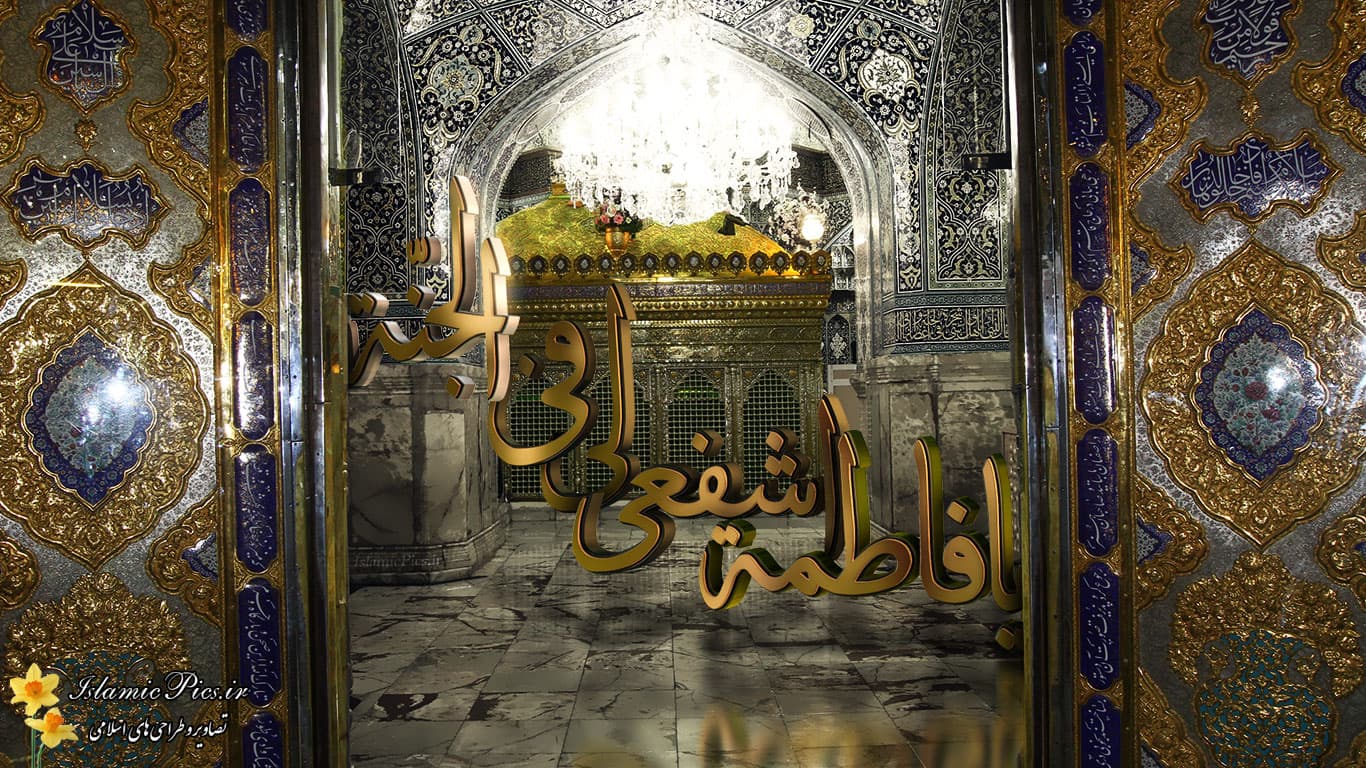
The traditions concerning the rank and stations of this great and noble lady are more numerous than can be mentioned here. Yet for the sake of brevity, we refrain from examining the remainder of these traditions and discussing the qualities of Lady Ma'sumah. Addressing that great lady—the sister of God’s guardian, the aunt of God’s guardian, and the daughter of God’s guardian—we humbly say: ‘O Fatimah, intercede for us in Paradise, for you have with God a rank of great rank.’ (11)
Notes
1. Al-Kafi, vol. 1, p. 527, chapter on what has come concerning the twelve and the designation of them.
2. Sitti means “lady”; Sitti Fatimah means “Lady Fatimah.”
3. History of Qom (Persian), Hasan ibn Muhammad ibn Hasan Qummi, translator: Qummi, pp. 213–215.
4. Anwar al-Musha'sha'in fi Bayan Halat al-Ruwat al-Qummiyyin, vol. 3, p. 277, Shaykh Muhammad Ali ibn Husayn Na'ini Ardastani Kachu'i Qummi.
5. Bihar al-Anwar, Allamah Majlisi, vol. 65, pp. 76–77.
6. “Fatimah, daughter of Ali ibn Musa al-Rida, narrated to us, saying: Fatimah, Zaynab, and Umm Kulthum, daughters of Musa ibn Ja'far, narrated to me; they said: Fatimah, daughter of Ja'far ibn Muhammad, narrated to us; she said: Fatimah, daughter of Muhammad ibn Ali, narrated to me; she said: Fatimah, daughter of Ali ibn al-Husayn, narrated to me; she said: Fatimah and Sukaynah, the two daughters of al-Husayn ibn Ali, narrated to me from Umm Kulthum, daughter of Ali, from Fatimah, daughter of the Messenger of God, who said: I heard the Messenger of God say ...”
7. Khulasat Abaqat al-Anwar, Sayyid Hamid Naqawi, vol. 7, p. 188.
8. See: Khulasat Abaqat al-Anwar, Sayyid Hamid Naqawi, vol. 7, p. 188; al-Ghadir, Shaykh Amini, vol. 1, pp. 196–197; Sharh Ihqaq al-Haqq, Sayyid Mar'ashi, vol. 21, p. 27; and Nafahat al-Azhar, Sayyid Ali Husayni Milani, vol. 9, pp. 101–102.
9. Jami' Ahadith al-Shi'a, Sayyid Burujirdi, vol. 12, pp. 616–617.
10. Quoted from the magazine Pasdar-e Islam, no. 177.
11. The visitation prayer of Lady Ma'sumah.
Author: Hamed Sarem
Related articles

Comments
No comments yet.