
Visiting Lady Masumeh Is Not a “Pretext” for Paradise, but Its “Price”
Author: Hamed Sarem
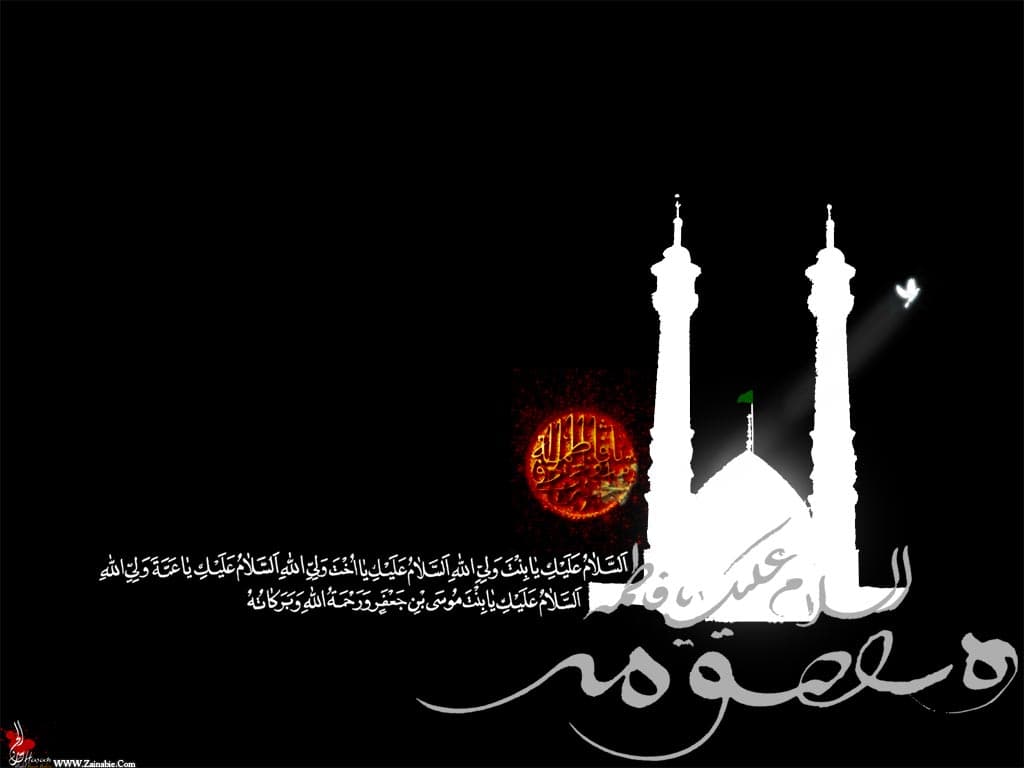
Every human being who sets foot on this earthly globe experiences bitter and sweet days; yet men and women, old and young, believers and hypocrites, Muslims and unbelievers will all experience a most difficult day—a day of which even the great ones express fear and seek God's protection. For on that day, wealth and many children will not benefit a person, except one who comes with a sound heart. It is a day when, from the intensity of terror, each person flees from brother, mother, father, and children; when the criminal and sinner wishes to ransom himself from God's punishment, even for a moment, with parents, children, tribe, and all people. The answer comes: “Kallā innahā laẓā * nazzā‘atan lil-shawā”—he will never be saved; the fire of Hell blazes over him until his head, face, and limbs are completely burned.
Paradise Is Obligatory for the Visitors of the Noble Lady of the Ahl al-Bayt, Fatimah Masumeh
On that day when the excuse of the wrongdoer brings him no benefit, Paradise is obligatory for the visitors of the Noble Lady of the Ahl al-Bayt, Fatimah Masumeh (Bihār, vol. 99, p. 265). On the day when the wrongdoer bites his fingers in remorse and regret and says, “Would that I had taken the way of obedience with the Messenger of God,” all Shi‘a enter Paradise through the intercession of that honored lady, the daughter and sister of God's wali. And on the day when the sun and stars are extinguished, heaven and earth are thrown into upheaval, and “when the wild beasts are gathered” comes to pass, two of Paradise's gates are opened to the Shi‘a from the sanctuary of that learned traditionist.
What has happened that the great and mighty God, whose will has been that Paradise be given for a price, has this time made Paradise obligatory for the sake of visiting her? Perhaps we are mistaken: visiting her is not a “pretext” for Paradise, but its “price.”
Receiving Grace from Lady Masumeh’s Sacred Presence Requires the Capacity for Knowledge
If, while visiting her, there is attentiveness from the visitor and favor from that noble lady, then when you address her, “O Fatimah, intercede for me in Paradise,” you will find that the realm of her intercession is Paradise. Through her intercession, you soar to higher stations and degrees, and her generosity is not confined to saving sinful lovers from Hell. Why should it be otherwise when “she has with God a station of great stations”? Before God, she has an immensely great rank and standing. She is generous, from a family of the generous, and her pure forefathers are all “generous, descendants of the generous.”
Although she belongs to the family of generosity, receiving grace from her sacred presence requires capacity and preparation. Perhaps this is why Paradise has been made obligatory for visitors subject to recognition and knowledge; it is as though nothing is more detested by the Ahl al-Bayt than the darkness of ignorance. Thus all the deeds of the Shi‘a are evaluated on the basis of knowledge.
Crossing the Bridge of Sirat, sharper than a sword and thinner than a hair, with a thousand years of ascent and climbing and a thousand years of descent and coming down, is possible only through knowledge of the Prophet’s Household. Truly, knowledge and awareness are inherent to the Shi‘a; one sign of love for the Ahl al-Bayt is eagerness to acquire knowledge from the pure Household. Those not engaged in learning in the school of the Ahl al-Bayt have been called ghuthā’—driftwood and debris. Visiting Lady Fatimah Masumeh, too, must be accompanied by knowledge of her rightful due.
Qom: The Sanctuary of the Ahl al-Bayt
God has a sanctuary, and it is Mecca; the Messenger of God has a sanctuary, and it is Medina; the Commander of the Faithful has a sanctuary, and it is Kufa; and we, the Ahl al-Bayt, have a sanctuary, and it is Qom. A lady from among my descendants will be buried there; whoever visits her, Paradise becomes obligatory for him. (Bihār, vol. 48, p. 317)
The Ahl al-Bayt, who are themselves the greatest sanctuary of God, have regarded Qom and her resting place as their own sanctuary. Imam Reza, who is an infallible Imam and with whom no one can be compared, says: whoever visits her is like one who has visited me.
The seventh Imam, Musa ibn Ja‘far, said of her three times: “May her father be her ransom.” When Fatimah Masumeh was eight years old, she answered in writing the scholarly questions of a group of Shi‘a.
Like her mother Fatimah al-Zahra, she defended the sanctuary of walayah through her knowledge and journey, and amid the oppressive atmosphere of the Abbasids, she transmitted traditions in defense of the usurped right of the Ahl al-Bayt.
She is the intercessor of the Day of Recompense, and the entire community of her grandfather, the Messenger of God, needs her intercession. Her visitation is equal to visiting Imam Reza and is the price of Paradise. Like al-Siddiqah al-Kubra, she left this world in the springtime of youth, at the age of twenty-seven, while traveling toward Iran and Tus to defend the Imam of her time. She spent the final seventeen days of her noble life in worship. Her place of worship in Qom is today one of the pilgrimage sites, known to the people of Qom as Bayt al-Nur.
The Resemblances of Lady Masumeh to Lady Fatimah
In every respect, she closely resembles her revered mother, Lady Fatimah—a Fatimah of whom it is said, “her Shi‘a were withheld from knowing her.” Thus, if we say that we too have been deprived of truly knowing Lady Fatimah Masumeh, we have spoken the truth, for she is the person most resembling Lady Zahra. Her shrine consoles the Shi‘a of Lady Zahra, those who in Medina, because of the ظلم of the usurpers, could not find her grave.
Yes, from among her soil the scent of “Fatimah” reaches the ear.
And how beautifully they have composed:
That grave which was lost in Medina has been found in the Medina of Qom.
And how beautifully they have composed:
That grave which was lost in Medina has been found in the Medina of Qom.
Author: Hamed Sarem
Related articles
Comments
No comments yet.