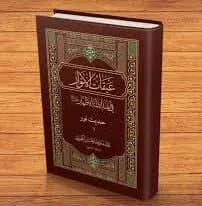
A Methodological Examination and Critique of Shah Abd al-Aziz Dehlavi’s Distortions in the Transmission of the “Hadith al-Thaqalayn”: Focusing on the Views of Allamah Mir Hamid Husayn in Abaqat al-Anwar
Author: Hamed Sarem

Abstract:
The Hadith of al-Thaqalayn is among the most firmly established transmitted texts proving the supreme leadership of the Ahl al-Bayt (a). Nevertheless, Shah Abd al-Aziz Dehlawi, in clear opposition to the sound foundations of «ʿilm al-hadith», has sought, through methodological distortions, to undermine the import of this mutawatir text. Drawing on the forceful and scholarly critiques of Allamah Mir Hamid Husayn in the noble work «ʿAbaqat al-Anwar», this study anatomizes Dehlawi’s manner of engaging with this hadith. The findings show that Dehlawi’s approach is not a scholarly critique, but rather a mixture of deliberate truncation, concealment of tawatur, and reduction of chains of transmission. By exposing Dehlawi’s unfaithful method of transmitting the text, this article demonstrates that his argumentative edifice collapses under the scale of hadith criticism even before entering the theological arena.
1. Introduction:
In the sphere of theological disputes, fidelity in transmitting texts is the first condition of scholarly dialogue. In rebutting the Shiʿi argument based on the Hadith of al-Thaqalayn, Shah Abd al-Aziz Dehlawi adopted a course that contradicts the most elementary principles of scholarly citation. In his unparalleled work, ʿAbaqat al-Anwar fi Imamat al-Aʾimmah al-Athar, Allamah Mir Hamid Husayn examined this approach with exceptional precision and showed how Dehlawi, in order to evade the definitive implications of this hadith, resorted to «the transformation of text and chain of transmission». The purpose of this writing is to revisit the structural critiques in ʿAbaqat al-Anwar of Dehlawi’s method of transmitting the Hadith of al-Thaqalayn.
2. Dehlawi’s Method of Transmission: A Setting for Distortion
The foundation of Allamah Mir Hamid Husayn’s critiques rests on the manner in which Dehlawi formulated the hadith. Rather than transmitting the complete and mutawatir text of the Hadith of al-Thaqalayn from primary Sunni sources, Dehlawi reduces it, in a mutilated form and solely through one narrator (Zayd ibn Arqam), to the following purport:
(Dehlavi’s claim in transmitting the hadith): The Prophet (PBUH) said: “I leave among you two weighty things: the Book of God and my ‘itrah.”
He then, on the basis of this very incomplete transmission, claims that “‘itrah” merely means relatives, and that holding fast to them does not mean entrusting them with political leadership; rather, it conflicts with the traditions concerning following the caliphs.
3. ‘Abaqat al-Anwar’s Strike against the Body of Dehlavi’s Argument (Methodological Critique)
With astonishing command of Sunni sources, Allamah Mir Hamid Husayn demonstrates that, in order to reach his desired conclusion, Dehlavi has undertaken a “tendentious surgery” on both the text and chain of transmission. ‘Abaqat al-Anwar’s forceful critiques of this manner of transmission may be summarized under the following headings:
A) Crime against the Chain of Transmission (Suppression and Reduction):
1. Reducing tawatur to a solitary report: Dehlavi has, with astonishing feigned ignorance, confined a hadith transmitted by more than 20 eminent Companions solely to the narration of “Zayd ibn Arqam,” in order to deprive it of the status of definitive proof.
2. Boycotting the multiplicity of transmission routes: He has concealed not only its tawatur, but even the hadith’s status as mustafid; and in the face of its abundant sound chains in the Sahihs and Sunans, he has maintained absolute silence.
3. Denial of even minimal validity: Dihlawi has even refrained from applying the designation “hasan” (sound) to this narration, revealing an entirely biased approach.
b) Deliberate truncation of the text (censorship of key concepts):
By comparing Dihlawi’s transmission with authoritative Sunni sources (such as Sunan al-Tirmidhi, al-Hakim’s al-Mustadrak, and others), Mir Hamid Husayn exposes his alterations to the text:
4. Omission of the explicative phrase “Ahl Bayti”: Dihlawi deliberately omitted the phrase “Ahl Bayti,” which appears alongside “ʿitrati” in the primary texts; for the presence of this term would have blocked a broad, lexical interpretation of “ʿitra” (meaning all relatives).
5. Censorship of the statement of infallibility: The pivotal phrase, “و إنّهما لن یفترقا حتّی یردا علیّ الحوض,” which clearly indicates the protection of the Ahl al-Bayt from error and their inseparability from the Qur’an, was removed from the text by Dihlawi’s censorial blade.
6. Omission of exclusive virtues: The supplements and contextual indicators that, in the complete text of the hadith, attest to the greatness and superior knowledge of the Ahl al-Bayt (a) and of Amir al-Mu’minin (a) in particular have been entirely erased.
c) Evasion of scholarly confrontation:
7. Rather than engaging forthrightly and academically with the arguments of Shi‘i theologians, Dehlavi censored the proofs derived from this hadith and resorted to baseless objections and contrived contradictions (with reports such as “Hold fast to my Sunnah and the Sunnah of the caliphs...”).
4. Conclusion
The meticulous investigations of ‘Allamah Mir Hamid Husayn in ‘Abaqat al-Anwar uncover the bitter truth that Shah ‘Abd al-‘Aziz Dehlavi, in confronting the Hadith of al-Thaqalayn, departed from the bounds of fairness and scholarly integrity. When a theologian’s argument rests on such fragile foundations as “fragmenting the text,” “concealing mutawatir chains of transmission,” and “omitting contextual indicia of meaning,” it falls beyond usefulness owing to its methodological poverty before it even requires intricate substantive criticism. In reality, Dehlavi rose not against “the truth of the Hadith of al-Thaqalayn,” but against a “distorted specter” of it.
Author: Hamed Sarem
Related articles

Comments
کریم باقریفارسی
سلام. عالی
میلادفارسی
احسنت ، خدا رحمت کند میر حامد حسین و تمام علما و مدافعان شیعی را که از حریم اهل بیت عصمت و طهارت با جان و دل دفاع کردند.
میلادفارسی
احسنت ، خدا رحمت کند میر حامد حسین و تمام علما و مدافعان مذهب حقه تشیع را که از حریم اهل بیت عصمت و طهارت با جان و دل دفاع کردند.
nabaolazimفارسی
ان شالله خداوند متعال به ما و شما هم توفیق دفاع از حق اهل البیت را عنایت کند
nabaolazimفارسی
سلامت باشید ممنون از بذل توجه شما
nabaolazimفارسی
شکر الله مساعیهم
امیرفارسی
يُرِيدُونَ أَنْ يُطْفِئُوا نُورَ اللَّهِ بِأَفْوَاهِهِمْ وَ يَأْبَى اللَّهُ إِلَّا أَنْ يُتِمَّ نُورَهُ وَ لَوْ كَرِهَ الْكَافِرُونَ بر دشمن امیرالمومنین علیه السلام تا صبح قیامت لعنت