
Learning and Moral Formation: The Foundation of Imam al-Baqir’s Monotheistic Society
Author: Hamed Sarem
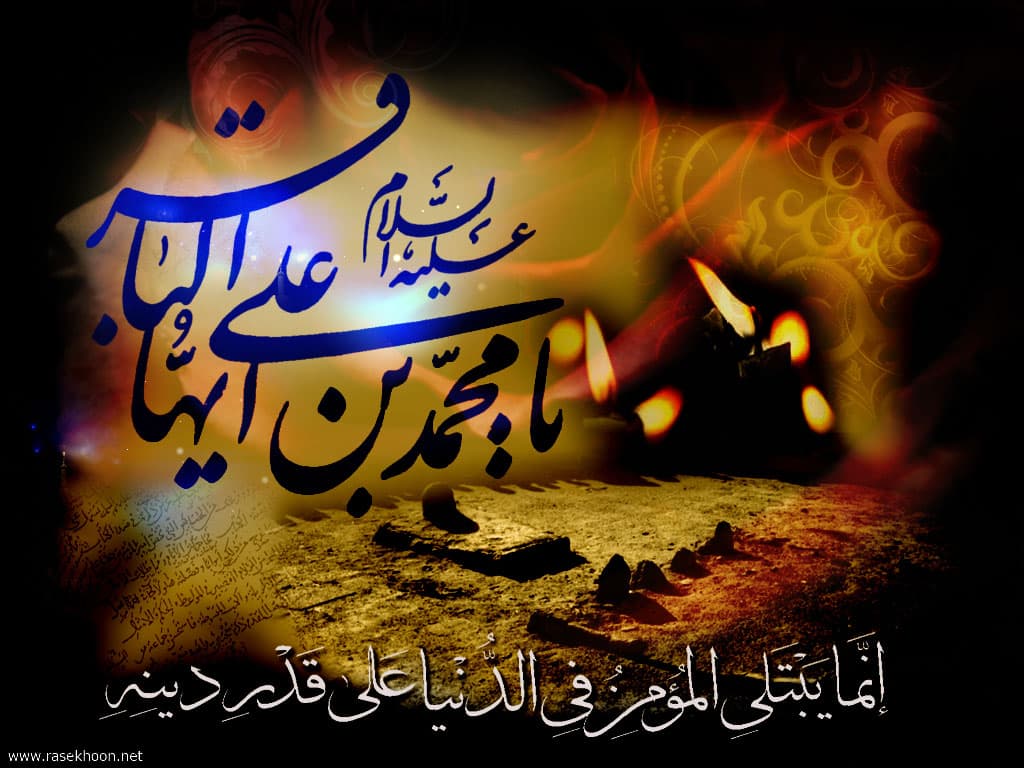
Social abnormalities and disorders indicate that, unless cultural authorities devise a remedy, a sick and decadent society will be witnessed in the not-too-distant future.
The norms and abnormalities present in a society may be regarded as an important indicator of its health or illness. Just as an individual’s health may be endangered for various reasons, the health of society is also threatened. Conduct contrary to the principle around which a society is formed is an important sign of its unhealthiness. Social illness usually overtakes society gradually, so that people notice its threats and abnormalities only very late, since many problems and abnormalities spread covertly.
Factors Behind Cultural Disorder
The cultural problems and abnormalities of contemporary society have various causes. Undoubtedly, a considerable portion of them is rooted, directly or indirectly, in economic problems and unemployment. There is no remedy for those hardships except improving livelihoods and the economy.
Although the economy plays an important part in creating social problems and existing abnormalities, not everything seen in society in the form of corruption, bad conduct, and immorality should be attributed to economic conditions. In many instances, cultural institutions have been negligent and, regrettably, have “shortchanged” their duty.
Neglect of society’s cultural affairs and the absence of intelligent, purposeful cultural policy and planning have led to major cultural catastrophes in a religious society: a society whose public values run contrary to the religion in which it believes. This is the greatest cultural catastrophe one can observe, and such examples are not few in contemporary society.
Some Contemporary Cultural Catastrophes
The gradual spread of divorce celebrations means turning divorce into a value and a very ordinary matter—so much so that cakes and invitation cards for divorce celebrations are seen online. Although divorce is not in itself forbidden, it means the collapse of a family’s foundations and is certainly not a blessed phenomenon.
Add to the very high divorce rate the low rate of marriage and the flight from marriage, whose widespread emergence is a serious concern. The cohabitation of young women and men, regrettably called “white marriage,” uses an attractive expression for an act considered ugly and reprehensible in many respects; an act that in some way legitimizes prostitution among men and women and will undoubtedly lose its negative connotation in the not-too-distant future.
These matters are not all of society’s problem. There are many other issues: abnormal clothing among women and men in cities; the public display of matters once carried out very secretly but now advertised and presented as natural, such as various dance classes; a notable number of street women with a relatively low average age; and the very significant role of social networks in spreading moral corruption at twice the speed. Taken together, these indicate that society’s health is seriously threatened, a threat that may lead to a decline worse than that of Western societies.
These points constitute only a very small part of society’s cultural disorder. The activity of deviant doctrinal groups and organizations must also be considered. The spread of different satanist groups, the promotion and recruitment of false mysticisms—with their many forms and high degree of influence—and the efforts of missionary Christianity and other false schools are further threats to society today.
Economic and livelihood difficulties have also, in different ways, both intensified these abnormalities and caused these deviations to be ignored.
Iranian Society Today Is Cultivated
It is clear that today’s religious society in Iran is cultivated, and despite all this it cannot be described as decadent or on the verge of decadence. The institution of the family remains very firm and strong, despite the wishes of opponents, and this is an important deterrent against many of these abnormalities. Speaking of cultural problems is not meant to darken the picture of society’s cultural condition; it is meant to say that social health is under serious threat. Just as a person’s high fever does not mean certain death, but means that health is endangered and serious action is required, observing these abnormalities shows that unless cultural authorities devise a remedy, a sick and decadent society will be witnessed in the not-too-distant future.
Undoubtedly, the most important and fundamental task cultural authorities can and must perform is the reconstruction of Shi‘i culture, for what gives our society authenticity in the face of other cultures is its Shi‘i values, which are regrettably being forgotten.
Society’s Alienation from Shi‘i Ethical and Intellectual Thought
In culture, greater attention has been paid to Shi‘i rituals and practices. This is itself very important, yet two points must be considered: first, even this attention to the manifestations of Shi‘i culture and belief is not undertaken by cultural authorities but is wholly popular and spontaneous; second, no work has been done to acquaint the different segments of society precisely with the Shi‘i intellectual system.
The general public’s unfamiliarity with the Shi‘i intellectual and doctrinal system has made them unfamiliar with their own beliefs. This unfamiliarity, together with the efforts of targeted media and virtual networks, prepares the ground for the spread of deviant ideas, thoughts, and subcultures among social groups, and also weakens the uninformed in their commitment to religious values.
Cultural Disorder in the Umayyad Period
This kind of cultural disorder also existed during the time of the Pure Imams. During the imamate of Imam al-Sajjad, Medina witnessed a deplorable moral situation because of Umayyad domination and their deceptive policies. Historical reports state:
The city of Medina was filled with singing women, who played an active role in teaching singing to girls and boys, spreading song, and disseminating licentiousness. It is regrettable that the city of the Prophet, peace and blessings be upon him and his family, became a center of pleasure-seeking in the Umayyad era, though it was hoped it would be a center of religious civilization and culture and a source of Islamic thought in the world. The Umayyads brought about this condition in order to destroy its religious and political centrality. (1) Aisha, daughter of Talha, held mixed gatherings of women and men in which ‘Azzah al-Milā’ sang. (2)
Factors in Medina’s Moral Decline
Various factors may be named as causes of Medina’s decline, including the corrupt beliefs of the Murji’ah, who held that mere belief in God saves one from Hell. What is witnessed in our society today is either precisely Murji’ite thought or worse. One often hears that acts of worship and fulfilling obligations have no bearing on one’s felicity or wretchedness, and that only good intention and a pure heart matter. This belief was one factor in Medina’s decline. Another was Umayyad policy: by preoccupying people with desires, they sought to isolate the spirit of uprising and truth-seeking and, by removing the ugliness attached to such acts, prepare the way for their own indulgence. Thus they attained this purpose through mixed gatherings of amusement and play. Shawqi Dayf, a major contemporary Egyptian scholar, writes that mixed gatherings of dance and song were held in Medina without a curtain between women and men; Aisha, daughter of Talha, held such gatherings and ‘Azzah al-Milā’ sang there. (3)
All these factors played an important part in the decline, but more important than all was the separation of the Imam and the Prophetic Sunnah from society. Imam al-Sajjad was kept away from the heart of society by the force of the sword; therefore, through his supplications, he sought to communicate with people and show the path of guidance.
The Imams’ Cultural Leadership of Shi‘i Society
Imam al-Sajjad succeeded in training students in that atmosphere of repression and corruption. After him, Imam al-Baqir faced a similar condition in Medina: a society rendered wholly decadent by Umayyad wealth and power, whose values were determined by standards of caprice. Umayyad rulers also did not permit Imam al-Baqir much freedom of movement.
By making use of Imam al-Sajjad’s students, Imam al-Baqir saved Shi‘i society from moral deviations and doctrinal misguidance. His cultural leadership made the boundaries of Shi‘ism entirely clear as a school, and expounded its intellectual system so that rival schools yielded before Shi‘i reasoning.
Learning and Moral Formation: A Major Mark of Shi‘i Culture
A very important point is that Imam al-Baqir’s teachings permeated all Shi‘i groups. He defined a culture with two wings: learning and moral formation. The result of these two wings was devotion and servitude to God Most High. Thus a Shi‘i society was built whose foundation was monotheism and servitude to God; the means of preserving this culture and this society, distinguished from rival cultures, was learning and moral formation. Many reports show Imam al-Baqir commanding all Shi‘is to attend gatherings for learning divine sciences, while the guiding Imams after him affirmed and emphasized the continuity and preservation of these gatherings.
Imam al-Baqir said: “May God have mercy on a servant who revives knowledge.” He was asked, “What is its revival?” He replied, “That he discusses it with people of religion and scrupulousness.” He also said: “Discussing knowledge is study, and study is a good prayer.” Study is recitation joined with commitment and understanding—that is, reading accompanied by retention and comprehension. (4) He also said: “Remembering knowledge for an hour is better than standing in worship for a night.” (5)
The Flow of Knowledge and Ethics Through Shi‘i Society
Thus the society envisioned by Imam al-Baqir, and in fact implemented in practice, is one in which acquiring knowledge has the highest value. All members are encouraged to learn the knowledge of the Ahl al-Bayt. Such encouragement from the Imam created a wave of Shi‘i interest in learning and study—knowledge whose results include adopting human and Islamic ethics. The Imams said: “Do not sit with every scholar, except a scholar who calls you from five things to five things: from doubt to certainty, from pride to humility, from ostentation to sincerity, from enmity to goodwill, and from desire to asceticism.” (6)
This narration introduces five marks of Shi‘i society: certainty, humility, sincerity, goodwill, and asceticism. To imagine a society in which all, or at least most, of its people possess these qualities is to imagine the most ideal society possible.
The Mission of Cultural Authorities and Religious People
Society must undoubtedly be directed toward Imam al-Baqir’s teachings, and planning must be made for this purpose. A society whose cultural planners and authorities move in this direction will find its salvation guaranteed. Imam al-Sadiq said: “Visit one another, for in your visiting is the revival of your hearts and the remembrance of our sayings. Our sayings make some of you compassionate toward others. If you hold to them, you will be rightly guided and saved; if you abandon them, you will go astray and perish. So hold to them, and I guarantee your salvation.” (7) Our society today undoubtedly stands at the crossroads of salvation and destruction. Imam al-Baqir and the other guiding Imams introduced both the destination—the ideal society—and the way of reaching it, and commanded it. Clearly, these instructions have been forgotten in our present society. After cultural authorities, the heavy burden of this great sin rests upon religious and devout society, for it has not turned, and does not turn, toward the teachings of al-Baqir and al-Sadiq.
The Need for Greater Attention to Shi‘i Rational, Intellectual, and Ethical Systems
When their narrations are neglected, the spread of godlessness and its symbols in society is natural. Nor should the spread of behaviors infiltrating from identityless cultures be unexpected. Young people’s lack of knowledge of the Shi‘i rational and intellectual system produces nothing but the conditions for atheistic ideas to enter. Failure to know the family system emphasized by the Pure Imams produces nothing but high divorce rates, and distance from the Ahl al-Bayt’s ethical system produces nothing but increased immorality, delinquency, and other problems.
So long as religious people do not seek to institutionalize the narrations in society, each day will bring more religious alienation, weak faith, and their consequences. Our society has no path except toward the pure teachings of the hadiths: teachings that build society upon monotheism and give it two wings of flight—the wing of learning and the wing of moral formation. A learned and ethical society regulates its values by knowledge and ethics; societies distant from this knowledge and ethics define their values through lust, fashion-worship, Westernization, and loss of identity.
Notes
1. An Analysis of the Life of Imam al-Sajjad, Baqir Sharif al-Qurashi, trans. Mohammad Reza Ata’i, vol. 2, p. 704.
2. Al-Shi‘r wa al-Ghina’ fi al-Madinah wa Makkah li-‘Asr Bani Umayyah, Shawqi Dayf, p. 50.
3. Ibid.
4. Bihar al-Anwar, Beirut edition, vol. 1, p. 206.
5. Bihar al-Anwar, Beirut edition, vol. 1, p. 204.
6. Bihar al-Anwar, Beirut edition, vol. 1, p. 205.
7. Wasa’il al-Shi‘ah, vol. 16, p. 346.
Author: Hamed Sarem
Related articles
Comments
No comments yet.
