
The Secrets of Imam Ali’s Qunut: A Journey into History through the Du'a of the Two Idols of Quraysh
Author: Hamed Sarem

Introduction
Every text carries a message, but some texts go beyond ordinary messages and unveil hidden truths. The Du'a of the Two Idols of Quraysh is among the texts that, through its symbolic language, lifts the veil from historical realities. Without directly naming individuals, this supplication examines events that had a profound effect on the course of Islamic history. By focusing on deviations, changes of direction, and injustices inflicted upon religious truths, it takes us on a journey through history so that we may learn lessons that still resonate in our lives today.
Abstract
From beginning to end, the Du'a of the Two Idols of Quraysh refers, in subtle yet decisive language, to deviations that occurred in the Muslim community after the Prophet’s passing. It speaks of an effort to alter the principles of religion, marginalize the people of truth, spread injustice, and impose a culture of despotism. The supplication symbolizes resistance to currents that played an important role in Islamic history but have often been shrouded in silence. By analyzing this text, one can understand more clearly the influential historical currents and their social and cultural consequences.
Text and Historical Analysis
Reference to Early Plots and Deviations
The supplication repeatedly refers to “lies” and “hypocrisy.” These expressions may symbolize efforts made in the earliest years to divert the message of Islam. Such deviations may have appeared in crucial decisions concerning the Prophet’s succession or the administration of resources and power. Rather than focusing on merit, these actions were at times shaped by expedient or ambitious political policies.
Conflict with Loyal Companions and Supporters of Truth
One of the themes of the supplication is the injustices inflicted upon the “people of truth.” These injustices, ranging from intellectual and social isolation to harsh and repressive treatment, led to the gradual elimination of dissenting and truth-seeking voices. In history, there were companions who, because of their commitment to the ideals of the Prophet (PBUH), faced neglect and pressure.
Social and Cultural Injustices
The Du'a of the Two Idols of Quraysh speaks of “oppression” and “corruption” that penetrated structurally into a society claiming justice and equality. From the inequitable distribution of resources to the concentration of power in the hands of particular groups, this supplication criticizes processes that weakened social and economic justice.
Changes in Religious Principles and Values
“Innovation” is one of the central keywords in the supplication. The word represents changes made to the course of religion and its original teachings. Altering the Prophet’s traditions (PBUH), distorting religious teachings, and replacing Qur’anic principles with tribal values are all matters to which it may refer.
Violence and the Suppression of Opponents
In the supplication, we encounter symbols of “oppression” and “violence” that may refer to suppressing every protest and opposition to deviant paths. Pressuring those who sought a return to the correct path not only restricted the space for dialogue but also spread an atmosphere of fear and terror throughout society.
Imam Ali’s (PBUH) Qunut and the Recitation of This Supplication
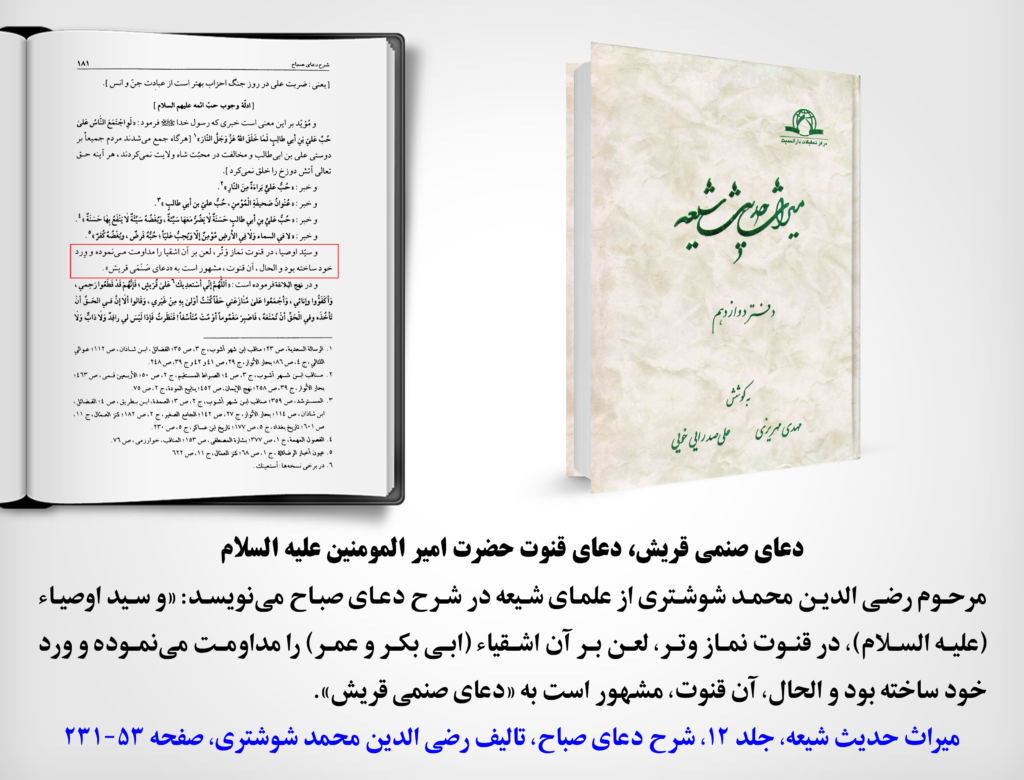
According to historical evidence, Imam Ali (PBUH) would recite this supplication in the qunut of his prayer. This fact demonstrates the depth of the supplication’s message and its role in the intellectual and doctrinal awakening of Muslims. Its recitation in qunut, beyond its spiritual aspect, contained a social and historical message that clearly revealed realities to followers.
Conclusion
The Du'a of the Two Idols of Quraysh, beyond being a devotional text, is a mirror of historical truths that allows us to examine the course of Islamic developments with greater precision. It reminds us how deviation from divine principles, shifts in major political and social directions, and the elimination of truth-seeking forces can distance a society from justice, unity, and spiritual elevation. Its message remains alive, calling us to reconsider our values, know history, and strive to preserve the truth.
The Du'a of the Two Idols of Quraysh symbolizes steadfastness against deviations and recalls the truth that every society, if it moves away from divine principles and justice, will be exposed to repeating those same historical mistakes. It calls us to reflect on the past and strive to build a brighter future.
Author: Hamed Sarem
Related articles

Comments
No comments yet.

