Talhah Was the First Person to Pledge Allegiance to Ali
Author: Hamed Sarem

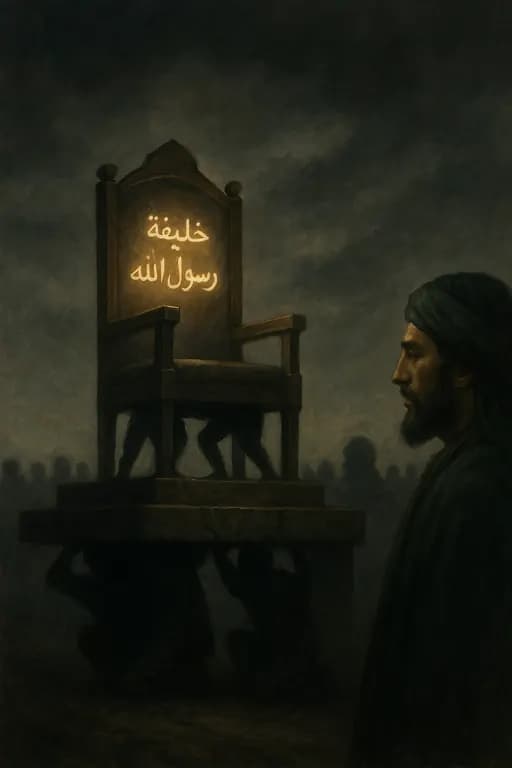
One of Talhah's political maneuvers was that he was among the first people to pledge allegiance to Ali (peace be upon him). Perhaps it was out of desire to obtain authority over Yemen or another important city that he did not delay in this allegiance. But whatever the reason and motive for his allegiance, he pledged by choice, because the Commander of the Faithful, unlike previous rulers, did not force anyone to pledge allegiance; whoever pledged did so by choice.
Talhah Was the First Person to Pledge Allegiance to Ali
Ibn Abbas says: "By the One besides whom there is no god, the first of God's creation to place his hand in Ali's hand in allegiance was Talhah ibn Ubayd Allah" (1). It is also narrated that Talhah and Zubayr pledged allegiance to Ali (peace be upon him) willingly and without compulsion while Ali was on the pulpit (2).
The Commander of the Faithful (peace be upon him) said: "...Whoever pledged allegiance to me willingly, I accepted from him, and whoever refused to pledge allegiance to me, I left him alone. Among those who pledged allegiance were Talhah and Zubayr" (3). It is narrated from Sufyan al-Thawri that he would shout loudly and say: "By God, I have no doubt that Talhah and Zubayr truly pledged allegiance to Ali, then broke the pledge without reason" (4). By agreement and consensus, the first person to pledge allegiance was Talhah (5).
Aishah Prostrated When She Heard of Ali's Martyrdom
After twenty-five years of enduring a bone in the throat and a thorn in the eye, the Commander of the Faithful (peace be upon him) reached the caliphate. But the fire of hatred in those whose being was full of hatred and malice toward Ali (peace be upon him) blazed even more. One of these people was Aishah, who began opposing the Imam's new government after Ali became caliph. She was the one who, when she heard the news of Ali's martyrdom, fell in prostration and, because of her love for Ali's killer, named her servant Abd al-Rahman (6).
Talhah's Excessive Demands and Betrayal
After pledging allegiance, Talhah and Zubayr came to the Commander of the Faithful and said: "O Commander of the Faithful, you know our situation in Medina, our many dependents, and that the stipend you give us is not enough for our expenses. Give us an amount that will suffice us." The Commander of the Faithful said: "Go to the people. If all the people agree that I should give you from their rights, I will do so" (7).
This was while Zubayr's wealth consisted of eleven houses in Medina, two houses in Basra, one house in Kufa, and one in Egypt. His cash at death was 52 million, or according to another report 59 million, silver coins (8). In addition, he had one thousand horses, one thousand male slaves, and one thousand female slaves (9). Talhah's wealth was as follows: his estates were worth 30 million silver coins. At his death, his cash was 200,000 gold coins and 2,200,000 silver coins. In addition, 300 camel-loads of gold, or according to some, 300 cowhides filled with gold, remained from him (10).
It should be noted that all influential people who had no conflict with the usurping governments used the public treasury in this way, while Ali's share of the public treasury, according to his own expression, was like the milk that remains for a camel's calf after milking (11). Ibn Abi al-Hadid says that during the siege, Uthman would say: Woe from that Hadrami's son, Talhah. How many pieces of gold I gave him, and now he wants to spill my blood and drives people to kill me.
Perhaps the Imam's refusal to agree to these kinds of demands from Talhah and Zubayr caused their departure and became an excuse to break the pledge. In any case, Talhah demanded the governorship of Yemen from Ali (peace be upon him), and the Commander of the Faithful said about this: "Talhah and Zubayr pledged allegiance willingly... Talhah asked for Yemen and Zubayr hoped for Iraq. When they learned that I would not appoint them over Yemen and Iraq, both asked me for permission to perform umrah, but they intended deceit and trickery, and they went toward Aishah..." (12).
The Killers of Uthman Became His Blood-Avengers
Talhah, who was one of the main agents in Uthman's killing, and Aishah, who had issued a fatwa to kill the third caliph and had repeatedly encouraged people to kill Uthman, raised the banner of avenging Uthman's blood. Talhah, out of desire for the caliphate, and Aishah, to support Talhah and bring him to power, rebelled against the Commander of the Faithful and launched the Battle of Jamal.
Jamal was the first war among Muslims that was launched out of desire for the caliphate. More astonishingly, Uthman's killers rose to avenge Uthman's blood. They were not Uthman's legal heirs, and they sent thousands of Muslims to death in this war. In Basra they committed many crimes, wrote letters to notable people to fight Ali and avenge Uthman, but ultimately they were defeated and created a stain of disgrace for themselves forever. Talhah died in this battle.
Talhah Was Killed by Marwan ibn al-Hakam in the Battle of Jamal
In the Battle of Jamal, the Commander of the Faithful called Talhah and said to him: Did you not hear the Messenger of God say: O God, befriend whoever befriends Ali and be hostile to whoever is hostile to Ali? Talhah said: Yes, O God. The Imam said: If you heard this, why did you come to fight me? Talhah said: I will not fight you. At that moment, Marwan ibn al-Hakam shot Talhah from behind, claiming vengeance for Uthman, and killed him (13). Al-Tabari reports that Marwan ibn al-Hakam targeted Talhah with an arrow in the Battle of Jamal and killed him, repeatedly saying: I have avenged Uthman. In another report, Marwan shot Talhah with an arrow, killed him, and said to Aban ibn Uthman: I have spared you from some of your father's killers (14).
Talhah Rebelled to Avenge Uthman Because He Feared Being Accused of Killing Him
Outwardly, this war was for avenging Uthman, but it is clear that in reality desire for the caliphate, the conflict between Banu Umayyah and Banu Tamim, and the hatred of both groups toward the Commander of the Faithful caused this sedition. In this regard, the Commander of the Faithful said: By God, Talhah ibn Ubayd Allah did not rebel to avenge Uthman except because he feared Uthman's blood would be demanded from him, for he himself was accused of killing Uthman, and among the people no one was found more eager than him to kill Uthman. To cast doubt and confusion among the people, he made these false claims.
By God, Talhah should have taken one of three paths regarding Uthman, but he did not. If Ibn Affan was a wrongdoer, as Talhah thought, then he should have cooperated with Uthman's killers and stayed away from Uthman's supporters. If Uthman was wronged, then he should have prevented his killing and presented acceptable excuses for Uthman's actions so that the people's anger would subside. If he was in doubt about Uthman's affairs, then it would have been better for him to withdraw from the angry people, take refuge in seclusion, and leave the people with Uthman. But he did none of these three things. Instead, he undertook an action for which he had no clear proof and brought excuses that were not acceptable to people (15).
In this report, the Imam gives a very interesting answer to Talhah's claim of blood-avenging: out of fear that he himself would be accused of this killing, he introduced someone else as the killer and rose in blood-avenging. In any case, another report from Aishah has reached us that is deeply striking and reveals the hidden reality for fair-minded people.
The Sedition Aishah Raised Under the Pretext of Avenging Uthman
Before Aishah heard that the Commander of the Faithful had become caliph, she was happy at the news of Uthman's death and wanted Talhah to become caliph. It is narrated that Aishah was pleased by the news of Uthman's killing and said: His deeds killed him; he burned the Book of God and killed the Prophet's Sunnah, so God killed him. Then she asked: With whom did they pledge allegiance? She was told that when I left Medina, the keys to the public treasury were in Talhah's hand, and surely the people would pledge allegiance to him.
Then on the road she saw Ubayd ibn Umm Kilab and asked him: What news? He said: Uthman has been killed. Aishah said: Was Na'thal killed? He said: Yes, Na'thal was killed. Aishah said: Tell me the story of Uthman. Ubayd ibn Umm Kilab said: When the people besieged Uthman's house and Talhah ibn Ubayd Allah saw that he would prevail and had obtained the keys to the treasuries and the public treasury, he prepared for the people to pledge allegiance to him. When Uthman was killed, the people turned toward Ali (peace be upon him) and pledged allegiance to him, and no one paid attention to Talhah. I thought there would be a dispute between Talhah, Zubayr, and Ali over the caliphate.
Malik al-Ashtar said to Talhah: Go and pledge allegiance to Ali. I saw with my own eyes that Talhah and Zubayr pledged allegiance to Ali (peace be upon him). Then Ali went to the pulpit and delivered a sermon, and the people pledged allegiance to him on the pulpit that day. The next day the people also pledged allegiance to him, and on the third day I left Medina. Aishah said: O brother, did you yourself see that Talhah pledged allegiance to Ali? The narrator said: Yes, by God, I said nothing except what I saw; Talhah and Zubayr were the first to pledge allegiance to Ali.
Aishah said: Indeed we belong to God! By God, I dislike this man, Ali; Ali has usurped the caliphate, and God's caliph was killed wrongfully. Take me back to Mecca. Ubayd ibn Umm Kilab says: I accompanied Aishah toward Mecca. On the way Aishah said to me: I did not think the people would turn away from Talhah after the hardship he endured at Uhud. I said: The one to whom they pledged allegiance endured hardship and trial more severe than Talhah's at Uhud.
Aishah said: O brother of Banu Bakr, when we enter Mecca and the people ask why Aishah returned, tell them it was for rising to avenge Uthman's blood and seek his blood. Ali ibn Munyah came to Aishah and said: A caliph was killed, while you used to encourage the people to kill him. Aishah replied: I disavow his killer before God. Then she went to the mosque and declared disavowal and hatred toward Uthman's killer.
It is necessary to recall that when Aishah became certain Uthman would be killed, she left Medina intending to perform umrah, and the insistence of Uthman and Marwan did not change her decision. On the way back to Medina, imagining that Talhah had become caliph, she learned of the events in Medina and returned to Mecca. In any case, Aishah always had hatred and malice toward Ali (peace be upon him) (16).
Talhah, Zubayr, and Aishah Never Repented
With this report and what has passed, it becomes clear that Aishah first incited and encouraged the killing of Uthman out of desire to bring Talhah to the caliphate, and Talhah too, with the wish for caliphate, besieged Uthman's house and insisted on his killing. After they did not reach their goal, they rebelled against Ali ibn Abi Talib, who was both the Prophet's explicitly appointed caliph and the one upon whose caliphate the ummah had reached consensus. They never repented of this act, although some insist on saying that Talhah and Zubayr, who rebelled against the Imam and caliph of their time, repented at the moment of death.
Without doubt, those who insist that Talhah and Zubayr repented have accepted that their actions were contrary to piety and justice and were, in reality, a great crime. To prevent damage to the weak theory of the companions' justice, they introduced the claim of their repentance. Shaykh al-Mufid, may God have mercy on him, says: Talhah and Zubayr were killed while both were determined to fight the Commander of the Faithful and remained in sin; whoever claims otherwise is false and is claiming knowledge of the unseen.
Ibn Shahr Ashub writes: If Talhah and Zubayr were among those who repented, their repentance would have been to stand among the people and loudly confess their wrongdoing and transgression, then go toward the Imam, place their hands in his hand, and pledge allegiance. But Zubayr was a combatant at first and then left the war, while Talhah's case is more severe, because Marwan killed him in the battlefield while he insisted on fighting Ali (peace be upon him) (17).
Ali's Words to Talhah's Corpse
After the fire of war subsided, the Commander of the Faithful came upon Talhah's corpse and said: This is the breaker of allegiance, the creator of sedition in the ummah, and the one who called for killing me and killing my progeny. Then he ordered that Talhah be made to sit up. They sat Talhah up, and the Commander of the Faithful said to him: O Talhah, I found what was with my Lord to be true. Did you find what your Lord promised to be true?
Some said to the Imam: Do you speak to Talhah after his killing? He replied: By God, he hears my words, just as the slain in the well of Badr heard the words of the Messenger of God (18). In any case, Talhah was killed while having rebelled against two caliphs to whom he had pledged allegiance. Does reason accept that Uthman, the killed, is in Paradise and Talhah, the killer, is also in Paradise?
Why Is the Claim of the Companions' Justice False?
Allamah Amini writes: Fifty reports establish that Talhah and Zubayr were the foundation of the sedition against Uthman, and those two had no hesitation about shedding Uthman's blood. Talhah prevented water from reaching Uthman, did not return Uthman's greeting, prevented his burial for three days, and ordered that anyone who intended to bury Uthman be stoned. He was not even satisfied with that until Uthman was buried in the Jewish cemetery. After these historical reports, is there any room left for the justice of the companions? (19)
Truly, those who today curse Uthman's killers and condemn them, how do they believe that the Messenger of God gave Talhah and Zubayr glad tidings of Paradise? How did God give glad tidings of Paradise to both Talhah and Ali (peace be upon him), while the Battle of Jamal was one of the bloodiest wars? How can it be said that Aishah is in Paradise only and solely because she was one of the Prophet's wives, even though she caused the killing of thousands of Muslims? The answer is only one sentence: you have no right to speak about the companions, because all of them were just. Does sound reason and a pure conscience accept this answer? Is this answer not closing the path of investigation?
In any case, precise examination of history reveals the falsehood of many beliefs upon which some groups insist. Studying the past causes reconsideration of some beliefs, such as belief in the justice of all companions or the legend of the Ten Given Glad Tidings, even though some people, contrary to the judgment of reason, prevent examination of the conditions of the past.
Notes
1. Al-Kafi'ah fi Ibtal Tawbat al-Khati'ah, p. 13, chapter one on the position of Talhah and Zubayr toward Uthman, their allegiance to Ali, and their breaking it.
2. Al-Kafi'ah fi Ibtal Tawbat al-Khati'ah, p. 13.
3. Al-Mustarshid fi Imamat Ali ibn Abi Talib, p. 418, his disputation with the Kharijites, p. 389.
4. Sharh al-Akhbar, al-Qadi al-Nu'man al-Maghribi, vol. 1, pp. 403-404.
5. Al-Fusul al-Mukhtarah, al-Sharif al-Murtada, pp. 227-228.
6. Al-Jamal, Damin ibn Shadqam al-Madani, pp. 26-27.
7. Al-Kafi'ah fi Ibtal Tawbat al-Khati'ah, p. 13.
8. Bukhari, Book of Jihad, vol. 5, p. 145, quoted from Pas az Ghorub, p. 333.
9. Bukhari, Book of Jihad, vol. 5, p. 145, quoted from Pas az Ghorub, p. 333.
10. Muruj al-Dhahab, vol. 1, p. 434, and Al-Iqd al-Farid, vol. 2, p. 283.
11. Nahj al-Balaghah, sermon 77.
12. Al-Mustarshid fi Imamat Ali ibn Abi Talib, p. 418, his disputation with the Kharijites, p. 389.
13. Sharh al-Akhbar, al-Qadi al-Nu'man al-Maghribi, vol. 1, pp. 402-403.
14. Manaqib Ahl al-Bayt, al-Mawla Haydar al-Shirwani, p. 374.
15. Nahj al-Balaghah, Dashti translation, p. 331, characteristics of Imam Ali, p. 331.
16. Al-Jamal, Damin ibn Shadqam al-Madani, pp. 20-25.
17. Al-Istighathah, p. 205.
18. Al-Kafi'ah fi Ibtal Tawbat al-Khati'ah, p. 26, chapter two on the Battle of Jamal.
19. Al-Ghadir, Shaykh al-Amini, vol. 9, pp. 109-110.
Author: Hamed Sarem
Related articles

Comments
No comments yet.