Tashyid al-Mata'in: A Scholarly Analysis Refuting the Claim of the Legitimacy of the First Caliphs (6) (The Caliphate Slander)
Author: Hamed Sarem
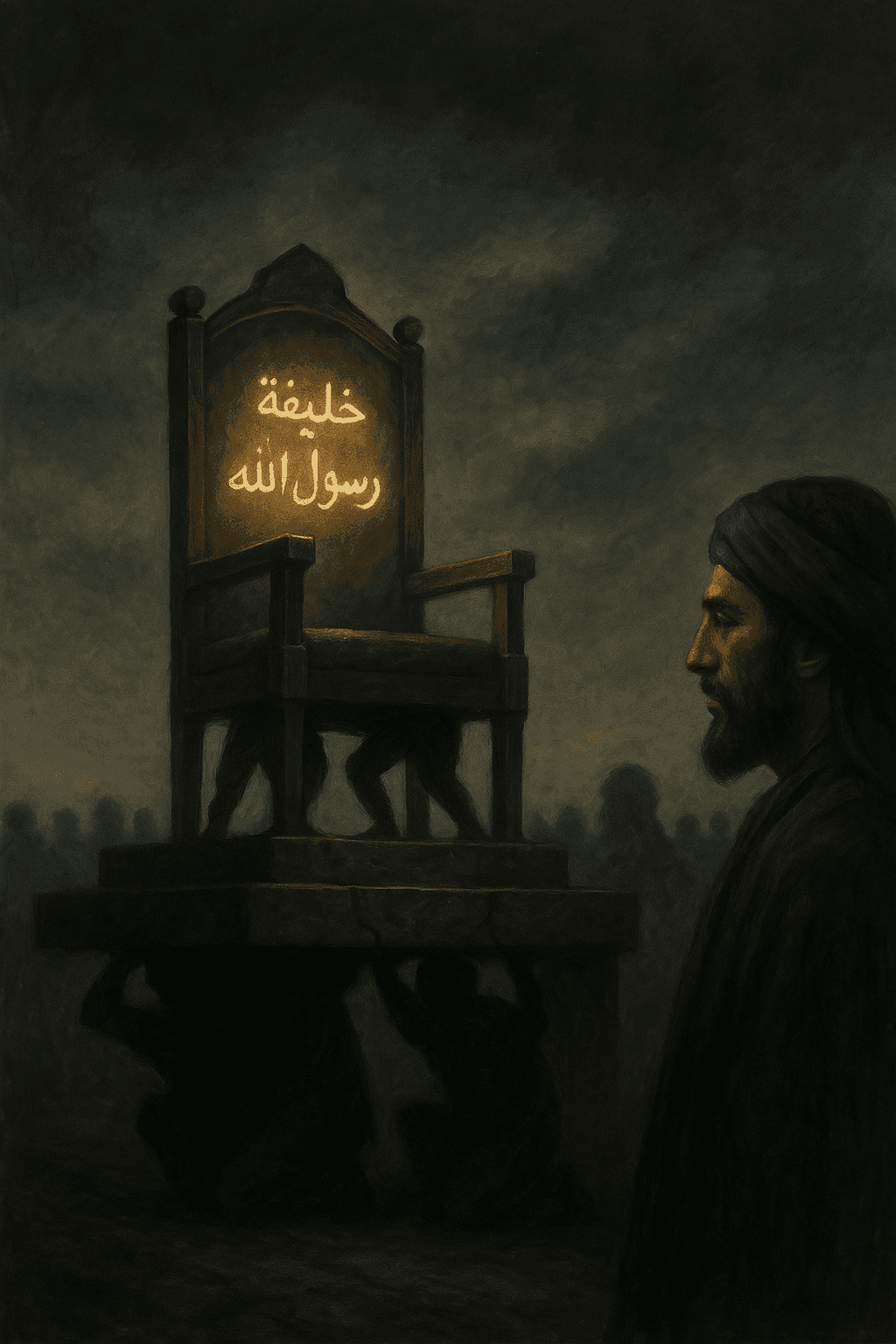
The Falsity of the Title “Successor of the Messenger of Allah” for Abu Bakr in Light of Polemical Critiques and Sunni Sources
Abstract
In the theological framework of Twelver Imami Shi‘ism, the legitimacy of the caliphate rests not on the will of the people or the agreement of a group, but solely on three rational and transmitted pillars: infallibility, superior knowledge, and divine designation (naṣṣ). In contrast, Sunni theologians have at times considered the consensus of the community, and at other times the allegiance of a minority, to be the basis for the legitimacy of the caliphate. One of the principal manifestations of this disagreement appears in applying the title “Successor of the Messenger of Allah” to Abu Bakr—a title that not only lacks a valid textual designation, but is also indefensible from the perspective of reason and even of authoritative Sunni sources, and falls among the false attributions to the Prophet of Islam (PBUH). Using an analytical-critical method and relying on the method of polemical critiques (maṭāʿin), this article examines one of the most important Imami objections: the rejection of the legitimacy of Abu Bakr’s caliphate as the prophetic successor. By citing the views of Shi‘i theologians such as al-ʿAllāmah al-Ḥillī and Muḥammad Qulī, as well as referring to the position of Qāḍī ʿAḍud al-Dīn al-Ījī in al-Mawāqif, it demonstrates that Abu Bakr’s caliphate was founded neither on designation nor on consensus, but merely on the limited allegiance of some Companions. Therefore, applying the title “Successor of the Messenger of Allah” to him is a clear instance of fabricating religious legitimacy and distorting history; as the Commander of the Faithful, ʿAlī (PBUH), also regarded it as a calumny against the Prophet.
Keywords: Abu Bakr’s caliphate, Successor of the Messenger of Allah, method of polemical critiques, political legitimacy, Imamate, designation, consensus, ʿAḍud al-Dīn al-Ījī, historical criticism, theological analysis.
Introduction
In the theological framework of Twelver Imami Shi‘ism, the Imamate is not a conventional or merely political office; rather, it is the continuation of prophethood and the perpetuation of divine guardianship. In the Imami view, this office is meaningful only when three fundamental conditions are fulfilled: infallibility, superior knowledge, and divine designation (naṣṣ). This triad has been established in Shi‘i theological texts through rational and transmitted proofs, and assuming the office of Imamate without these conditions is considered devoid of religious legitimacy (see: Sayyid al-Murtaḍā, al-Shāfī fī al-Imāmah, vol. 2, p. 24). In contrast to this merit-based Shi‘i framework, two principal bases for the legitimacy of the caliphate have been advanced in Sunni thought: “domination” (taghallub, gaining power and prevailing over the people) and “agreement” (the consensus of the Companions). These two bases not only lack clear rational and transmitted support, but also conflict with the requirements of sound reason and the foundations of the Qur’an. Accordingly, the religious competence and divine authority of a caliphate founded upon them are subject to serious doubt and deemed invalid. In demonstrating the invalidity of an undesignated caliphate, the Shi‘a, in addition to affirmative arguments based on prophetic designations, have also employed an ancient critical method known in the theological tradition as “maṭāʿin.” In the terminology of Imami scholars, maṭāʿin means establishing the absence of the conditions of Imamate in those who assumed the office of caliphate after the death of the Prophet of Islam (PBUH). This method has a long history in Shi‘i theology and has been used as one of the important proofs for negating the legitimacy of the caliphate of the first caliphs. In the precise words of the late Muḥammad Qulī in Tashyīd al-Maṭāʿin, after the entitlement of the Commander of the Faithful (PBUH) has been established on the basis of designation and superiority, the second stage is that “they proceed to establish the absence of the three conditions in the three [caliphs], and this is called maṭāʿin” (Muḥammad Qulī, Tashyīd al-Maṭāʿin, p. 7).
Accordingly, one of the most effective methods for proving the immediate caliphate of the Commander of the Faithful, ʿAlī (peace be upon him), is to analyze the statements, actions, and positions of the non-designated caliphs in the light of rational, ethical, and Qur’anic criteria—matters that, in theological terminology, are regarded as instances of “taʿn” (impeachment). As Imami theologians have emphasized, such impeachments are not merely historical references or moral critiques; rather, they are theological proofs indicating the absence of infallibility and, at times, manifest sinful conduct (ibid., p. 9). In other words, even if the مخاطب does not hold that infallibility is necessary for the Imamate, establishing the caliphs’ sinful conduct and lack of justice—on the basis of criteria shared with Sunni Muslims—is sufficient to call their legitimacy into question.
Some of these impeachments are so fundamental and grave that they indicate not merely a lack of qualification, but are regarded as evidence of departure from faith. A prominent example is the incident of violating the sanctity of Lady Fāṭima (peace be upon her), which, from the Shiʿi perspective, is not a simple transgression but a crime against God’s proof and evidence that its perpetrator has fallen from faith.
By way of analogy, “impeachments” play in Imami theology the same role that negation plays in the declaration of divine unity. Just as “lā ilāha” is a necessary step in negating false lordships and a prelude to “illā Allāh,” negating the legitimacy of usurping caliphate is likewise an affirmation of the right of the Prophet’s Household to the Imamate. Hence, critiquing illegitimate caliphates serves the acceptance and establishment of the divinely ordained Imamate.
This method has also been emphasized in the theology of major Imami scholars such as Sayyid al-Murtaḍā. Explicitly affirming the method of impeachment in al-Shāfī, he writes: «طریقة الطعن فی أن غیره علیهالسلام لا یصلح للإمامة، فاضحة و واضحة، و قد اعتمدها شیوخنا رحمهمالله قدیماً...» (Sayyid al-Murtaḍā, al-Shāfī fī al-Imāma, vol. 2, p. 24). Therefore, the method of impeachments is not limited to criticizing the qualifications of the first three caliphs; rather, it clearly negates their religious, ethical, and intellectual eligibility as well.
Adopting an analytical approach and relying on the primary sources of Imami theology, this article seeks to explain precisely the concept of impeachments and reconsider its function in the Shiʿi intellectual sphere, in order to examine and analyze the role of this method in consolidating the merit-based theory of the Imamate.
Examining a False Attribution: A Critique of the Title “Successor of the Messenger of God” for Abū Bakr
In Nahj al-Haqq wa Kashf al-Sidq, Allamah al-Hilli begins his examination of the criticisms not from Shi‘i sources, but by citing reliable Sunni reports. He presents the first criticism under the heading “al-Matlab al-Awwal fi al-Mata‘in allati rawaha Ahl al-Sunnah” and devotes it to one of Abu Bakr’s most fundamental claims: applying to himself the title “Successor of the Messenger of Allah.” According to his report, after attaining the caliphate, Abu Bakr called himself by this title and sent official letters far and wide in which he introduced himself as “Abu Bakr, Successor of the Messenger of Allah.” Allamah regards this act not as political courtesy or a common expression, but as an “explicit lie,” and, in proving this, appeals to Sunni consensus; for according to the agreement of the scholars of that school, the Prophet of Islam (PBUH) did not explicitly and textually appoint anyone to the caliphate (see: Nahj al-Haqq).
The claim to be the Messenger of Allah’s successor is refutable on two grounds. First, by Sunni consensus, the Prophet neither left behind a political will nor identified a particular person as his successor. Second, Abu Bakr’s caliphate was established not by a textual designation, but solely through the allegiance of Umar ibn al-Khattab and the approval of a few Companions. As Allamah al-Hilli explicitly states: «إن إمامة أبی بکر لم تثبت بنص إجماعاً، بل ببیعة عمر بن الخطاب و رضا أربعة لا غیر».
Under such circumstances, applying the title “Successor of the Messenger of Allah” to Abu Bakr is nothing but an unfounded attribution to the Messenger of God (PBUH)—an attribution that not only lacks any religious basis, but also fundamentally conflicts with explicit historical statements. Among this evidence is Umar ibn al-Khattab’s own statement in the final days of his life, which clearly attests to this point. He said: «إن لم أستخلف فإن النبی لم یستخلف، وإن استخلف فإن أبا بکر استخلف». This sentence plainly indicates that the Prophet not only did not designate anyone for the caliphate, but that allegiance to Abu Bakr likewise arose not from the Prophet’s will, but from the decision of Umar and those around him.
From this very statement, Allamah al-Hilli draws a clear and decisive conclusion: if the Prophet did not appoint anyone as his successor, it would have been more appropriate to call Abu Bakr “Umar’s successor,” rather than “the Messenger of Allah’s successor,” since it was Umar who brought him to the caliphate. He writes: «قد کان الأولى أن یقال إنه خلیفة عمر، لأنه هو الذی استخلفه». Instead of relying on an unfounded title, it would have been better to speak in accordance with historical reality and a sound basis.
From the perspective of Shi‘i theology, this erroneous attribution is not merely a verbal mistake; it carries doctrinal consequences. Lying about the Prophet of God is among the gravest sins and invalidates justice; therefore, it indicates sinful depravity. Allamah al-Hilli argues not out of prejudice, but by relying on the internal logic of Sunni thought. By way of naqḍ (counter-argument), he reasons that if Sunnis themselves explicitly affirm the absence of a textual designation, how can a title be used that implies appointment and designation by testament?
Here, an instructive comparison emerges: the claim to the caliphate of Amir al-Mu’minin Ali (PBUH) does not arise from political expediency or the desire of a group, but rests on Qur’anic texts and mutawatir narrations that have been reflected even in some Sunni sources. By contrast, Abu Bakr’s caliphate, even within the framework of Sunni principles, took shape on a fragile foundation without textual designation. Thus, applying the title “Successor of the Messenger of Allah” to Abu Bakr is nothing but an attempt to sacralize power and portray an unfounded caliphate as legitimate.
At the end of this section, Allamah al-Hilli emphasizes the fame and clarity of this objection and writes: «As for calling Abu Bakr the successor of the Messenger, it is among the most widely known matters... and no one among the Sunnis has any room to deny it.» This statement not only confirms, from the Shi‘i perspective, the acceptance of the objection, but also indicates that even in the Sunni view, attributing Abu Bakr’s caliphate to the Prophet is an improper claim lacking theological validity.
Therefore, the first objection in the tradition of critiquing the caliphate is not an emotional attack, but a deep-rooted, rational, and documented critique that, relying on historical and theological evidence, calls into question the legitimacy of the title «Successor of the Messenger of Allah» and regards it as a great lie uttered by history.
The Legitimacy of the Caliphate in the View of the Author of al-Mawaqif: From Divine Designation to the Allegiance of a Minority
One of the clearest pieces of evidence for the absence of a prophetic designation for Abu Bakr’s caliphate emerges from within Sunni sources, especially from the prominent theological work al-Mawaqif fi ‘Ilm al-Kalam by Qadi ‘Adud al-Din al-Iji. In this book, al-Iji explicitly declares that the establishment of imamate does not require the consensus of the community, and that even the allegiance of one or two members of those qualified to bind and loose is sufficient to establish it. He writes:
«If it is established that imamate is attained through choice and allegiance, then know that this does not depend on consensus, for no proof of it has been established by reason or transmitted evidence. Rather, one or two of those qualified to bind and loose are sufficient; for we know that the Companions—despite their firmness in religion—were content with this, such as ‘Umar’s appointment of Abu Bakr and ‘Abd al-Rahman ibn ‘Awf’s appointment of ‘Uthman. They did not stipulate the gathering of those in Medina, let alone the gathering of the entire community. No one objected to them, and the ages have proceeded upon this until the present time» (al-Mawaqif, vol. 3, p. 590).
This statement contains four fundamental points, each of which clarifies the foundations of the legitimacy of the caliphate from al-Iji’s perspective:
First, unlike Shiite theologians, al-Iji not only does not regard the caliphate as a divine office, but he does not even consider the consensus of the community necessary for its establishment. In his explicit view, neither reason nor transmitted evidence has provided proof of the necessity of consensus; and this is the fundamental point of distinction between the Sunni theory of the caliphate and the theory of designation in Imamite thought.
Second, he clearly declares that the allegiance of one or two members of the ahl al-hall wa al-'aqd is sufficient to establish the caliphate. Such an interpretation of the matter of the caliphate reduces its status from succession to the Messenger of God (PBUH) and the continuation of divine guidance to the level of a minimal social agreement.
Third, as historical evidence, he refers to two concrete examples: the allegiance of Umar ibn al-Khattab to Abu Bakr, and the allegiance of Abd al-Rahman ibn Awf to Uthman. In neither of these two cases was there any consensus, nor was even the general participation of the people of Medina considered the criterion—let alone the consensus of the Islamic community.
Fourth, al-Iji explicitly states that this method has been accepted throughout the ages and that no one has objected to it. In his words, the Companions—with all their firmness in religion—were content with this very minimum, and on this basis the process of the caliphate continued until his own time.
Such a view undoubtedly nullifies the religious legitimacy of the caliphate and reduces it merely to a social mechanism subject to custom and expediency. In fact, this premise lowers the caliphate from its divine station to a conventional, changing, and unstable one; such that “the indication of a single person” may be regarded as the source of a sovereignty that, instead of beginning through explicit designation, began with the vote of a minority and was made to appear legitimate by the silence of history.
This interpretation of the caliphate stands precisely opposite to the Imamite theory of imamate: a theory that sees the imamate as a link connected to prophethood and founded upon three pillars—knowledge, explicit designation, and infallibility—not upon the interests of power, the opinions of individuals, or prevailing custom.
Fundamental Points in the Author of al-Mawāqif’s View on the Legitimacy of the Caliphate and the Mechanism of Allegiance
Imamate without consensus; a caliph without collective agreement. According to the author of al-Mawāqif, the realization of imamate does not require the consensus of the community, and the caliphate can be established without unanimity. Neither the call of reason nor the voice of transmitted evidence: in support of this claim, al-Ījī explicitly states that no proof, neither rational nor transmitted, has been established for the necessity of consensus. («إذ لم یقم علیه دلیل من العقل و السمع») An allegiance as small as two persons is sufficient: for the establishment of the caliphate, the allegiance of one or two members of ahl al-ḥall wa al-ʿaqd suffices; neither a majority nor consensus is required. («بل الواحد أو الاثنان من أهل الحل والعقد کافٍ») The practice of the predecessors, a seal of confirmation: the basis for this theory is the conduct of the Companions, who brought about the caliphate in this very manner. The conduct of the predecessors has been regarded as the criterion of legitimacy. («علمنا بأن الصحابة مع صلابتهم فی الدین اکتفوا بذلک») One vote, one caliph; the beginning of a caliphate: Abu Bakr’s caliphate took shape through ʿUmar’s allegiance—not on the basis of public consensus, nor through a consultative decision, but solely through the act of one member of ahl al-ḥall wa al-ʿaqd. («کعقد عمر الأمر لأبی بکر») The second allegiance, according to the same rule: the same logic was applied to ʿUthmān’s caliphate as well; ʿAbd al-Raḥmān ibn ʿAwf handed the caliphate to him through an individual allegiance. («و عقد عبدالرحمن بن عوف الأمر لعثمان») Medina silent, the caliphate in motion: in neither of these two caliphates was the participation of all the people of Medina made a condition. The voice of the entire city was not needed for authority to be entrusted to someone. («من غیر اشتراط اجتماع من فی المدینة») The consensus of the community? Neither a condition nor a necessity: in this view, not only is the consensus of the community not a condition, but even the consensus of a single city is unnecessary. («فضلاً عن اجتماع الأمة») A small allegiance, a weighty crown: on this basis, if only two members of ahl al-ḥall wa al-ʿaqd give allegiance, that allegiance suffices for the caliphate to be formed and authority to be recognized. An unquestioned path; an undeniable history: al-Ījī explicitly states that this method was not objected to from the very beginning, and that for centuries this same practice continued without challenge. («هذا و لم ینکر علیهم أحد، و علیه انطوت الأعصار إلى هذا الزمان»)
Analytical Critique and Unveiling of the Self-Contradictory Theory of the Caliphate in al-Mawāqif
A silent confrontation: the contradiction with the principle of “consensus” in Sunni thought
One of the most fundamental theological claims of Sunni theologians in justifying the legitimacy of Abu Bakr’s caliphate is their appeal to the “consensus of the community”—a consensus that, like a fortified citadel, has always been used as a pillar of strength for consolidating the early caliphate. Nevertheless, the author of al-Mawāqif plainly and unreservedly declares that the caliphate has no need for consensus; rather, the allegiance of one or two members of ahl al-ḥall wa al-ʿaqd is sufficient for the realization of imamate.
This statement is not merely an intra-sectarian opinion; rather, it opens the door to a deep-rooted contradiction in the Sunni theory of the caliphate: if the legitimacy of the caliphate does not require consensus, then why has the “consensus of the Companions” been presented for centuries as a badge of honor and decisive proof? If consensus is the basis of legitimacy, the theory of the author of al-Mawāqif is invalid; and if consensus is not a condition at all, then all defenses founded on consensus will collapse like a building on sand.
In fact, al-Ījī’s statement in al-Mawāqif not only undermines the principle of consensus as a theological rule in Sunni jurisprudence, but also stands in clear logical contradiction with what Sunni scholars themselves have said about Abū Bakr’s caliphate. Years of arguments for the legitimacy of the first caliphate on the basis of consensus are rendered ineffective by al-Ījī’s explicit statement in al-Mawāqif: for if consensus is a condition of legitimacy, then Abū Bakr’s caliphate, established through the pledge of a few individuals, lacks validity; and if the pledge of a minority is sufficient, then the claim of consensus no longer has any basis. Ultimately, al-Ījī’s statement is nothing but an acknowledgment that Abū Bakr’s caliphate emerged through political domination, not through a religious designation or genuine consensus—an implicit admission of usurpation and the seizure of power, rather than a religious and consultative selection.
2. Reverse Lawmaking and the Ambiguous Concept of Ahl al-Ḥall wa al-ʿAqd
The author has turned a political occurrence—the pledge of allegiance of ʿUmar to Abū Bakr—into a general rule. This retrospective lawmaking, namely transforming political reality into a theoretical principle, is not only unscientific but dangerous. Moreover, Ahl al-Ḥall wa al-ʿAqd is a concept lacking a clear definition and historically ambiguous: neither its criterion, nor its number, nor its status is clear. This title has been more a tool for concealing the engineering of power than a genuine indicator of popular representation or a criterion of legitimacy. In practice, this mechanism is “a cover for a coup and the behind-the-scenes installation of rulers.”
3. Imamate: Neither Divine Appointment nor Popular Endorsement, but Merely a Personal Pact?
In this theory, the imamate is neither determined by God nor established by the people’s vote. It is formed solely on the basis of an agreement between two people. Does reason accept that someone who has no superiority by any religious, scholarly, ethical, or social criterion should become caliph merely through a private pledge of allegiance? And not the caliph of a tribe or a city, but “the caliph of the Prophet of Islam”! Even an ordinary person would not accept such a degree of irrationality in the acquisition of power, let alone present it as an Islamic system.
4. Elite Domination or the Engineered Hegemony of Power?
In the author’s exposition, the allegiance of Umar and Abd al-Rahman ibn Awf is presented as a decision made by elites. Yet they were neither scholarly, political, nor military elites, nor were they a public authority for the Ummah. Therefore, they possess neither legitimacy nor intellectual or executive authority. What actually occurred was the “rule of informal, power-seeking currents” which, through prior planning, seized control of governance. Rather than public participation, we witness “the domination of a limited and hidden current.”
5. Reducing the Ummah to a Captive, Will-less Mass
A theory that seeks legitimacy in a limited allegiance entirely eliminates the role of the Ummah. In this view, the people are neither participants in consultation nor possessors of the right to choose; rather, they are merely obedient followers and imitators of the decisions of an unspecified group. The Ummah has not only been marginalized, but has been taken captive: its right to self-determination has been stripped away, and it is required only to comply with the imposed system.
6. A Serious Challenge: If the Companions Are Just, Why Was Their Opinion Not the Criterion?
Although the Sunni tradition emphasizes the justice of all the Companions, this fundamental question arises: if just Companions were present in Medina, why were they not broadly consulted during the process of pledging allegiance to Abu Bakr? How could a hasty allegiance, in an atmosphere mixed with threats and pressure, be regarded as the source of legitimacy? If, in every neighborhood of Medina, one person pledged allegiance to another, could that person too become caliph? And if no specific criterion was taken into account for the one receiving allegiance or for those giving it, on what basis does this claimed legitimacy rest? Especially when Imam Ali (a) and Lady Fatimah (a)—who rank among the foremost Companions—refused to pledge allegiance to Abu Bakr, how can one still claim consensus and regard it as the foundation of legitimacy?
7. Disregard for the Criteria of Reason, Knowledge, Honesty, and Ethics
Human reason accepts governance only from one who is learned, truthful, and morally guided. In this event, however, the caliphate was established on the basis of power, the people’s ignorance, and the disregard of ethical criteria. Such a situation is not merely disrespectful toward the people; rather—even assuming that God and the Prophet have the right to appoint an Imam—it violates the right of God and the Prophet. For the caliphate was seized by people whom neither God appointed, nor the Prophet, nor the people.
8. History Is Not a Natural Process, but the Product of Repression and Censorship
The author of “al-Mawāqif” says: “No one has objected up to this time.” Yet history is full of protest and repression: the explicit opposition of al-Ṣiddīqah al-Ṭāhirah (peace be upon her), Imam Ali’s (peace be upon him) silence, the objections of Banu Hashim, and the uprising of Ashura. These show that not only was there opposition, but that its voice was silenced through force and censorship. A process stabilized by repressing opponents and eliminating the voice of protest is not “the natural course of history”; it is “the imposition of history upon the people.”
9. Neither from Heaven nor from the People’s Vote: The Theory’s Incompatibility with Reason and Tradition
This theory—that the legitimacy of the caliphate is attained through the allegiance of one or two individuals—neither accords with the texts of the Qur’an nor is compatible with the collective reason of the Ummah. Verses such as ﴿وَأَمْرُهُمْ شُورَىٰ بَیْنَهُمْ﴾, although not explicitly concerned with the matter of the caliphate, emphasize the principle of consultation in administering the people’s public affairs. If the caliphate is regarded as representing the people, then their participation and choice are required; and if it is regarded as a continuation of prophethood, then it requires designation by the Prophet.
Now, if neither the people have chosen him nor the Prophet has appointed him, the fundamental question is this: whose caliph is this caliph in reality? Is he God’s representative? The successor to the Messenger? Or the product of the people’s collective will? And if he is none of these, no kind of legitimacy can be attributed to him.
In such a case, he is neither the chosen recipient of revelation nor the product of the الأمة’s judgment; rather, he is merely someone who, by imposing power, has installed himself upon the seat of caliphate. He is neither the successor of the Messenger nor the choice of the public; ultimately, he is a coup-maker who manufactures legitimacy, seated on the throne of caliphate without any legitimacy having descended from heaven or any endorsement having arisen from earth.
10. The caliphate that emerges from this theory is nothing but a sacred dictatorship
Ultimately, a caliph who has neither been chosen by the people nor appointed by the Prophet, but has come to power through the agreement of a few individuals, is as legitimate as any imposed government in history. The difference here, however, is that such a caliphate is presented in the name of religion and the Prophet. “This is precisely sacred dictatorship”: a power that, in the name of revelation, compels people into “political servitude and religious silence,” without granting them the right to choose, to protest, or even to judge.
A rational comparative examination of the theory of caliphate in al-Mawāqif and the theory of designation in Imami theology
1. The collapse of the pillar of “consensus” in the theory of al-Mawāqif before the rational foundation of the theory of designation
The author of al-Mawāqif considers the legitimacy of the caliphate independent of consensus and makes it contingent upon the pledge of allegiance of one or two persons. This view fundamentally undermines the most important historical claim of Sunnis, namely the “consensus of the Companions.” By contrast, the theory of designation in the Imami school rests not on consensus but on rational proofs: because people need an infallible and most learned Imam, and because only God knows who possesses these qualities, the designation of the Imam must be made by God through the Prophet. This theory is neither beset by contradiction nor founded upon historical legends; rather, it rests on reason, the necessity of guidance, and the Prophetic tradition.
2. From Ignorance to a Sudden Affair: Institutionalizing an Unfounded Event
In the theory of al-Mawāqif, Umar’s accidental pledge of allegiance to Abu Bakr has been transformed into a theoretical model for the caliphate. This means that a “sudden affair” (faltah), ignorance, or even an arbitrary act has become the basis of a political-religious institution which, after monotheism, is the most important doctrinal issue! Reason asks: if Umar had made Abu Bakr caliph through threat, murder, or bribery, would that still have been the path of caliphate? According to the theory of coercion and domination found in Sunni theology, the answer is yes! Yet in the Shi‘i theory of designation, no faction or tribe derives political benefit from the appointment of the Imam. The Imam is appointed by God, not the product of collusion. This theory is formed on the basis of a priori proofs, not post hoc justifications of events.
3. A Personal Pact or a Divine Office? Which Is More Compatible with Reason?
The theory of al-Mawāqif presents the caliphate as the result of an agreement among several people, without any scholarly, ethical, or epistemic evaluation. This theory invalidates every criterion recognized by reason, justice, or religion. By contrast, the Shi‘i theory of designation considers a person Imam only when he is infallible, most learned, and divinely appointed; and this is also what reason accepts: one who does not err, possesses complete knowledge, and is free from carnal desires is worthy of guiding society.
4. Is the Caliphate the Product of Consultation or the Result of a Military Coup?
In al-Mawāqif, the legitimacy of the caliphate comes from the pledge of Umar or Abd al-Rahman ibn Awf—individuals who were neither religious, political, nor military authorities. More strangely still, opponents during the caliphates of Umar and Uthman faced serious threats of death. Pressure squads, prisons, and even executions were employed against opponents. This does not accord with the logic of council and consultation; rather, it more closely resembles the engineering of power through instruments of repression. Shi‘i theory speaks of the Prophet’s explicit designation, not backroom deals.
5. The Ummah in the Theory of al-Mawāqif: Obedient Without Will or Political Slave?
In this theory, the people do not even have the role of observers; they must merely obey. Freedom of opinion, freedom of thought, and even the freedom to question are taken away from them. By contrast, in the Shiite theory of designation, although the Imam is appointed by God, society must mature, understand, accept, and defend him. Freedom, knowledge, and duty have meaning in this theory, because the Imam is the mirror of rationality and the people must consciously stand beside him.
6. If the Companions Are Just, Why Were Their Opinions Not Sought?
Sunnis consider all the Companions just. But reason asks: if these just people were present in Medina, why were their views not sought in choosing the caliph? Why was allegiance obtained through force, threats, and pressure? If, in every neighborhood of Medina, two people pledged allegiance to another person, would he too become caliph? The absence of a clear criterion in this theory proves the meaninglessness of the caliphate. In Shiite theory, since the Imam has been specified by an explicit designation, every kind of duality and confusion is eradicated.
7. Does Legitimacy Come from Power, or from Knowledge, Infallibility, and Divine Designation?
In the theory of al-Mawāqif, the criterion for the caliphate is “power.” That is, whoever moves first and more forcefully to secure allegiance is the caliph. But reason does not accept such a thing. Legitimacy comes not from force, but from truth. Shiite theory says: the Imam is one whom God knows, whom the Prophet introduces, and whom the people must obey. He is infallible, knowledgeable, and the true leader of the people—not a self-proclaimed ruler.
8. The Continuation of an Imposed Path Through Force and Silence Is Not Proof
The author of al-Mawāqif claims that, to this day, no one has objected! But what is the reality? The outcry of Lady Fāṭimah (peace be upon her), the protesting silence of ʿAlī (peace be upon him), the patience of Banū Hāshim, the uprising of ʿĀshūrāʾ, and Shiite and non-Shiite movements in different centuries are all signs of اعتراض to this path. In Shiite theory, obedience to the Imam rests on rational argument, Prophetic designation, and Quranic verses—not fear, not transaction, and not silence arising from powerlessness. Silence born of compulsion can never become proof.
9. If the Caliphate Is the Successorship of the Prophet, It Must Come from the Prophet
The verse «وأمرهم شورى بینهم» concerns the public affairs of the people, not the appointment of the Prophet’s successor. If the caliph is the representative of the people, the people must choose him; if he is the representative of the Prophet, the Prophet must introduce him. Al-Mawāqif has neither. Shiite theory, however, draws upon clear verses such as the Verse of Wilāyah (إِنَّمَا وَلِیُّكُمُ اللَّهُ وَرَسُولُهُ وَالَّذِینَ آمَنُوا...) and the verse of Ulī al-Amr. This theory is rooted in reason, transmitted evidence, and the tradition of the Prophet alike.
10. A Caliphate Without Criteria Is an Authoritarian Religious Rule, Not Divine Guidance
What appears in the theory of al-Mawāqif is a caliphate without criteria: it is connected neither to knowledge, nor to justice, nor to the consent of the people, nor to the Prophet’s appointment. Yet it acquires legitimacy in the name of religion. This is a power-centered structure accompanied by religious sacralization, not divine guidance. In contrast, Shiite theory regards Imamate as the manifestation of divine wisdom, infallibility, knowledge, and compassion—not domination over people, but leadership of hearts and minds.
“Successor of the Prophet or Successor of Umar? The Reversal of the Basis for the Legitimacy of the First Caliphate in Light of al-Mawāqif”
Upon reflecting on the explicit statements of Qāḍī ʿAḍud al-Dīn al-Ījī in al-Mawāqif, no doubt remains that Abu Bakr’s caliphate was established not on the basis of a designation by the Prophet (PBUH), but solely through the pledge of allegiance of a person such as Umar ibn al-Khattab. Al-Ījī clearly states that the realization of the imamate does not require consensus, and that even the pledge of one or two members of those qualified to loose and bind is sufficient, just as Umar pledged allegiance to Abu Bakr and Abd al-Rahman ibn Awf to Uthman. Therefore, what has been presented as Abu Bakr’s caliphate neither has its roots in revelation nor is based on the will and explicit designation of the Messenger of God (PBUH); rather, it is the outcome of a limited political act and the allegiance of a minority of the Companions, which did not even become widespread in Medina.
Within this framework, Abu Bakr cannot be called “the successor of the Messenger of God,” for this title implies appointment by the Prophet; whereas not only is there no such designation, but Umar ibn al-Khattab himself denied appointment by the Prophet and emphasized that, just as the Prophet appointed no one, he too would appoint no successor. Moreover, al-Ījī stresses that, despite their steadfastness in religion, the Companions sufficed with that limited allegiance, and that there was no legal obligation for the participation of the public or for the realization of consensus.
Thus, Abu Bakr’s caliphate should be regarded as “the caliphate of a particular minority,” not as the caliphate of the Messenger of God: a caliphate formed neither on the basis of designation, nor the consensus of the community, nor even rational criteria of merit, but through laxity in the concept of those qualified to loose and bind and the reduction of the leadership of the community to the hasty allegiance of a few people, in an atmosphere of tension and surprise. Such a caliphate can be considered neither legal, nor rational, nor derived from the Prophetic practice. Rather, it should be regarded as a clear example of the conflict between the Sunni theory of the caliphate and revelatory principles, definitive texts, and rational criteria—a theory that, in defending itself, has even been willing to overlook the principle of consensus and reduce legitimacy to an individual pledge of allegiance.
The False Designation of Abu Bakr’s Caliphate from Historical and Theological Perspectives
The late Muhammad Quli, in demonstrating that Abu Bakr’s caliphate is not only unsupported by a Prophetic designation but is not even founded upon consensus, cites evidence from earlier scholars. Quoting the author of al-Istighātha fī Bidaʿ al-Thalātha, he emphasizes that the first innovation instituted by the earliest rulers after the Messenger of God (PBUH) was authority and leadership over the people without the permission of God and the Prophet: «أول مبتدعة الأول منهم تأمل منها علی الناس من غیر إباح الله ذلک له و لا رسوله». This caliphate was accompanied by the demand for a general pledge of allegiance and by compelling people to obey, whether willingly or under coercion: «مطالبة جمیع الأمة... الآن قیام و کرها». The author regards these acts as the first injustice to emerge in Islam after the death of the Messenger of God (PBUH): «فکان ذلک منه أول ظلم ظهر فی الإسلام بعد وفاة رسول».
The author states explicitly that Abu Bakr and those close to him themselves acknowledged that the Prophet had neither appointed him to the caliphate nor commanded the people to obey him: «أضافه و أولیاء جمیعاً مقرین و أن الله و رسول لم یولی هاذا ذلک... ولا أمراً به بیعته». Despite this, Abu Bakr called himself the “Successor of the Messenger of God” and sent official letters bearing this title throughout the regions: «ثم تسما به خلافة رسول الله... و نفضت به ذلک کتبه إلی الأطراف». The author regards this conduct as encompassing oppression, disobedience, and lying against the Prophet: «فکانت هذه أحوال منه جامعة للظلم والمعصیة والکذب علی رسول الله».
Moreover, he emphasizes that Abu Bakr and everyone else knew full well that the Messenger of God had not appointed him as his successor: «لقد علم و علم خاص والعام أن الرسول لم یستخلفه». For this reason, he considers the use of the title “Successor of the Messenger of God” for Abu Bakr to be not merely incorrect, but a knowing and deliberate lie against the Prophet: «ذلک کاذباً علی رسول الله متعمداً للکذب فی».
The author continues with a rational argument that no one has the right to claim succession to the Prophet unless the Prophet himself appointed him to that office; and since no such explicit designation exists concerning Abu Bakr, his claim to the caliphate is fundamentally invalid and impossible: «لا یجوز لأحد أن یدعی خلافة الرسول إلا لمن استخلفه الرسول... و من لم یستخلف الرسول کان محال أن یکون خلیفة له».
He states that Abu Bakr could have called himself a sultan, ruler, or king, but claiming to be the Successor of the Messenger was an evident lie. If someone were permitted to call himself the Prophet’s successor without a prophetic appointment, under any justification, this path would be opened to all Muslims to make such a claim; and this is a statement that no person of understanding would accept: «و لو جاز ذلک... لجاز هذا لکل... و هذا ما لا یقوله ذو فهم».
Finally, the author states explicitly that this analysis is not merely a personal interpretation, but is derived from the words of the Commander of the Faithful, Ali (peace be upon him): «و هذا الطعن مأخوذ من کلام أمیر». As related by Ibn Qutaybah in al-Imāmah wa al-Siyāsah, when Qunfudh went to Ali (peace be upon him) on behalf of the “self-styled Successor of the Messenger of God” and invited him to pledge allegiance, the Imam replied: «ما کذبتم علی رسول الله»; that is, “How quickly you have lied against the Messenger of God.” This statement clearly identifies calling Abu Bakr “the Successor of the Messenger of God” as a lie, a fabrication, and an evident act of disobedience.
Therefore, in view of the explicit historical statements, the words of eminent scholars, and the admissions of Sunni sources themselves, it becomes clear that the Prophet of Islam (peace be upon him) did not designate anyone as caliph, and that Abu Bakr, without a prophetic appointment, called himself the “Successor of the Messenger of God.” This attribution is invalid, contrary to fact, and, in the view of scholars committed to truth, a clear instance of falsely ascribing something to the Prophet of God.
Conclusion
An analysis of the theory of Abu Bakr’s caliphate in light of Qāḍī ʿAḍud al-Dīn al-Ījī’s view in al-Mawāqif, and its critique on the basis of the method of objections (ṭarīqat al-maṭāʿin), shows that the title “Successor of the Messenger of God” (Khalīfat Rasūl Allāh) not only lacks textual, rational, and consensual support, but also, historically, was formed on the basis of a limited, non-consultative, and non-popular pledge of allegiance. Accepting such a title means accepting an explicit fabrication in attributing the caliphate to the Prophet of Islam (PBUH), a matter acknowledged not only by Imāmī theologians but even by some Sunni sources.
From the perspective of Imāmī theology, the Imamate is the continuation of divine authority and an office appointed by God; it must rest on three foundations: explicit designation (naṣṣ), infallibility (ʿiṣma), and superior knowledge (aʿlamiyya). In contrast, the theory of the caliphate in al-Mawāqif reduces the Imamate to a covenant between two or more persons and diminishes its legitimacy to the level of a political agreement—an agreement based neither on the Prophet’s designation, nor on the general will of the community, nor on rational criteria of merit. As this article has shown, such a theory, rather than explaining divine guidance, is more concerned with justifying a historical fait accompli and consolidating power through religious legitimization.
Although Abu Bakr’s claim to the caliphate as “Successor of the Messenger of God” appears outwardly to seek to sacralize a political domination, inwardly it is regarded as a clear instance of attributing falsehood to the Noble Prophet (PBUH), a matter that conflicts with the principles of reason, definitive textual proofs, and even the historical evidence found in Sunni sources. Therefore, this article emphasizes that a critical rereading of the theory of the caliphate and a reassessment of religious titles through theological precision and rational argument are an unavoidable necessity in doctrinal and historical studies.