
“Abaqat al-Anwar”: A Remarkable, Documented Defense of the Imamate of the Ahl al-Bayt (Peace Be Upon Them)
Author: Hamed Sarem

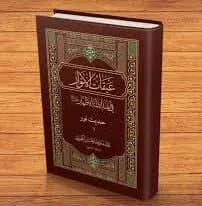
“Abaqat al-Anwar fi Imamat al-A’imma al-Athar,” the enduring and valuable work of Sayyid Mir Hamid Husayn, one of the greatest Shi‘i thinkers, is a documented and scholarly response to the book “al-Tuhfa al-Ithna Ashariyya.” Written by one of the Sunni authors, that book seeks to confine Shi‘i arguments for the imamate of Imam Ali (peace be upon him) to a few verses and traditions and to portray them as weak and undocumented. In “Abaqat al-Anwar,” however, Sayyid Mir Hamid Husayn draws upon authoritative Qur’anic and hadith sources, with scholarly and logical precision, to refute this claim and defend the imamate of the Ahl al-Bayt (peace be upon them).
In what follows, we examine this scholarly work and show how “Abaqat al-Anwar” has clearly and documentarily established the truth of the imamate and answered the doubts raised in “al-Tuhfa al-Ithna Ashariyya.”
Part One: Qur’anic Verses; Clear and Definitive Proofs of the Imamate
In the first part of “Abaqat al-Anwar,” Sayyid Mir Hamid Husayn uses verses of the Noble Qur’an to present clear and firm proofs for the guardianship and imamate of Imam Ali (peace be upon him). These verses not only defend the imamate of the Ahl al-Bayt (peace be upon them), but also establish Imam Ali’s special position alongside the Prophet of Islam. Some of these verses include the following:
- The Verse of Guardianship (Qur’an 5:55): “Indeed, your guardian is only Allah, His Messenger, and those who believe—those who establish prayer and give alms while bowing.” This verse clearly establishes the guardianship of Imam Ali (peace be upon him) and places him alongside God and the Prophet.
The Verse of Affection (Qur’an 42:23): “Say: I ask of you no reward for it except affection for [my] near relatives.” This verse emphasizes the importance of love for the Prophet’s household and clarifies its direct connection to the imamate of Imam Ali (peace be upon him).
The Verse of Purification (Qur’an 33:33): “Allah only wishes to remove impurity from you, O People of the House, and to purify you thoroughly.” Besides proving the infallibility of the Ahl al-Bayt, especially Imam Ali (peace be upon him), this verse affirms their sacred standing before God.
Part Two: Prophetic Traditions; The Prophet of Islam’s Testimonies to the Imamate of Imam Ali
In the second part, Sayyid Mir Hamid Husayn refers to a collection of Prophetic traditions in which the Prophet of Islam (peace and blessings be upon him and his family) explicitly speaks of the imamate of Imam Ali (peace be upon him). These traditions not only establish Imam Ali’s exalted rank, but also show that the imamate does not belong to a particular individual by personal claim; rather, it is divinely determined through the Prophet of Islam. Among these traditions are:
- The Hadith of Ghadir: “O gathering of Muslims! Do I not have more authority over you than you have over yourselves? They said: Yes. He said: Whoever has me as his master, Ali is his master. O Allah, befriend whoever befriends him and oppose whoever opposes him.” The Hadith of Ghadir, proclaimed on the day of Ghadir Khumm, explicitly introduces Imam Ali (peace be upon him) as the Imam and successor of the Prophet of Islam.
The Hadith of Aaron: “Are you not pleased to be to me as Aaron was to Moses, except that there is no prophet after me?” In this tradition, the Prophet of Islam clearly declares that Imam Ali (peace be upon him) is his successor just as Aaron was for Moses.
The Hadith of the Bird: “The Prophet had a bird that had been cooked for him or presented to him. He said: O Allah, bring me the most beloved of Your people to eat this bird with me. Then Ali came to him.” This tradition likewise shows Imam Ali’s special position with the Prophet of Islam and highlights the importance of his closeness to the Prophet.
A Critique of “al-Tuhfa al-Ithna Ashariyya” and an Answer to Its Doubts
The book “al-Tuhfa al-Ithna Ashariyya,” which mainly critiques Shi‘i arguments for the imamate of Imam Ali (peace be upon him), attempts to restrict those arguments to a few particular verses and traditions and portray them as unfounded and weak. Yet Sayyid Mir Hamid Husayn, in “Abaqat al-Anwar,” draws upon Qur’anic verses and reliable traditions to reject these claims with precise scholarly evidence and gives decisive answers to these doubts on the basis of the Qur’an and the Sunnah of the Prophet of Islam.
Sayyid Mir Hamid Husayn ultimately shows that Shi‘i proofs for the imamate of Imam Ali (peace be upon him) are not limited to what appears in “al-Tuhfa al-Ithna Ashariyya.” Rather, there are abundant sources in the Qur’an and the Prophet’s Sunnah defending the imamate of the Ahl al-Bayt, each independently establishing Imam Ali’s place in Islamic history.
The Importance and Influence of “Abaqat al-Anwar” in Islam’s Intellectual History
“Abaqat al-Anwar” is not merely a scholarly book; it is a documented and scholarly defense of the imamate of the Ahl al-Bayt in Islam’s intellectual history. Since the fourteenth Islamic century, the book has been recognized as a principal source for researchers in theological and imamate discussions and has contributed to a deeper understanding of the truth of the imamate.
A Scholarly Legacy for Muslims Seeking Truth
“Abaqat al-Anwar” goes beyond being a merely scholarly work. It is regarded as a rich source for recognizing the truth of the imamate and the guardianship of the Ahl al-Bayt (peace be upon them) for all Muslims, whether Shi‘i or Sunni. Through documented analyses and reference to authoritative sources, this work helps every seeker of truth attain a precise understanding of the imamate and the guardianship of the Ahl al-Bayt.
Reaching the Truth Requires Your Sharing!
This is only the beginning of a broad and substantial discussion! ✨ If you feel that these materials can offer others a fresh perspective on the truth of the imamate, the best course is to share this article with your friends and loved ones. When this discussion is shared, everyone can take part in it and take another step toward a better understanding of the truth. 🔍
In future installments, we will address more of the key points and scholarly methods presented in “Abaqat al-Anwar,” and you will see how the criticisms that have been raised are analyzed more deeply. If you have an opinion, whether in agreement or disagreement, we eagerly look forward to reading it in the comments!
This is an opportunity to expand scholarly and documented discussions concerning the imamate and guardianship of the Ahl al-Bayt (peace be upon them). Your criticism and opinion can help make this path clearer. Even if you disagree with the points presented, freedom of expression and constructive discussion are always steps forward.
So we await joining one another in this scholarly discussion and, together, taking steps on the path of supporting the truth! 📝
Author: Hamed Sarem
Related articles

Ordibehesht 31, 1405 AP
Mir Hamid Husayn’s Masterpiece in Establishing the Mass Transmission of the Hadith al-Thaqalayn: A Biographical Evaluation of the Narrators’ GenerationsAuthor: Hamed Sarem
Comments
No comments yet.