The Renown of the Supplication against the Two Idols of Quraysh in the Words of the Late al-Karaki
Author: Hamed Sarem

Cursing Those Who Deserve It: A Great Act of Worship in Seeking Truth
Second discussion: cursing as worship in cases of deserving it
Cursing in the position of worship
If cursing is directed at someone who deserves it, it is considered worship, just as sending blessings upon those worthy of them is worship. Just as blessings upon those deserving them earn reward, cursing in its proper place and for God’s pleasure also brings reward.
Qur’anic Evidence for the Permissibility of Cursing
God Almighty refers to cursing in numerous verses and has even commanded it. Some of these verses are as follows:
- Cursing disbelievers: “So the curse of God is upon the disbelievers” (al-Baqarah/81): God’s wrath and curse are upon disbelievers. Cursing together with angels and believers: “Upon them is the curse of God, the angels, and all people” (al-Baqarah/161): the curse of God, the angels, and people is upon disbelievers. Cursing oppressors: “Indeed, the curse of God is upon the wrongdoers” (Hud/18): God’s curse is upon oppressors. Cursing in this world and the Hereafter: “God has cursed them in this world and the Hereafter” (al-Ahzab/57). Cursing as proof in mubahalah: in the event of mubahalah, God says: “Then let us invoke and place the curse of God upon the liars” (Al ‘Imran/61). This verse indicates the use of cursing as a means of establishing the truth.
Cursing as a Divine Command
In the verse “God curses them, and those who curse curse them” (al-Baqarah/151), God’s curse is mentioned together with the curse of those who curse. Commentators have said that this is not merely a report; rather, it is a command from God to angels and those who curse to curse these people.
The Prominent Place of Cursing in Religion
The repetition of cursing in the Qur’an indicates its lofty value in religion. This act is considered great worship, and it was even used in mubahalah as a means of establishing the truthfulness of the Noble Prophet (P).
Conclusion: when performed in cases of deserving it and for God’s pleasure, cursing is an act of worship affirmed and recommended in Islamic teachings and is regarded as part of the religious rites.
Cursing in the Qur’an and Islamic Narrations
1. Cursing in al-Baqarah 151: The verse “God curses them, and those who curse curse them” (al-Baqarah/151) is not simply God informing others. Rather, it relates to God’s command to angels and to all those who curse. God commands them to curse this particular group.
2. Explanation of al-Baqarah 288 regarding divorced women: The verse “Divorced women shall wait by themselves for three periods” (al-Baqarah/288) means that divorced women must refrain from remarrying for three periods of purity. This verse too is not a report from God; rather, it commands divorced women to observe this waiting period.
3. Cursing as a valuable act of worship: Cursing in the Qur’an and in the Islamic view is among the best acts of worship. In the verse of mubahalah with the Christians of Najran, God commands that God’s curse be upon the liars: “Then let us invoke and place the curse of God upon the liars” (Al ‘Imran/61). For this reason, the Christians were compelled to make peace and pay jizyah, and they could not refute his words.
4. Effects of mutual imprecation between husband and wife: If a husband and wife engage in li‘an, meaning that they curse one another, this causes the legal punishment to be removed from them and the child’s lineage to be denied in relation to them. If the woman refuses li‘an without a witness, a punishment may be imposed upon her.
5. Cursing in the sayings of the Prophet of Islam (P): The Prophet of Islam (P) used cursing in some cases. When Abu Sufyan had composed one thousand offensive verses against the Prophet, the Prophet said: “May God send upon him a thousand curses for every letter.” A narration also states that God curses a liar, even if the lie is uttered in jest.
Cursing in the Conduct and Sayings of the Ahl al-Bayt (A)
1. Cursing by the Commander of the Faithful (A): In the qunut of his obligatory prayer, ‘Ali, the Commander of the Faithful (A), would curse certain people, such as Mu‘awiyah, ‘Amr ibn al-‘As, Abu Musa al-Ash‘ari, and Abu al-A‘war al-Sulami. Although Imam ‘Ali (A) was among the most forbearing and forgiving people in confronting sins, he used it in obligatory prayer because he regarded cursing as one of the best means of drawing near to God.
2. Cursing by ‘A’ishah and ‘Uthman: Sunni narrations state that ‘A’ishah cursed ‘Uthman and that ‘Uthman likewise cursed ‘A’ishah. They also state that, while angry with ‘Uthman, ‘A’ishah left Medina and went to Mecca.
3. Cursing in supererogatory prayers by Imam ‘Ali (A) and Imam al-Sadiq (A): Some companions of Imam ‘Ali (A) have narrated that he would curse Abu Bakr and ‘Umar in some of his supererogatory prayers. Imam al-Sadiq (A) also cursed four people after prayer, including Abu Bakr and ‘Umar.
4. Cursing in Sunni narrations: Whoever carefully considers Sunni narrations will see how Imam ‘Ali (A) and the other immaculate Imams (A) cursed their opponents. It has been transmitted in books such as al-Kafi and other hadith and supplication sources from the Imams (A) that they named people deserving of cursing and spoke of cursing them.
5. Cursing as a religious slogan: These acts of cursing are in fact among the branches of religion and part of its symbols, and there is no doubt or uncertainty about this.
The Meaning of the Prohibition of Cursing in Islam and Its Difference from Cursing Those Who Deserve It
1. Prohibition of excessive and undeserved cursing: Some annotators cite a hadith of the Prophet (P): “Do not be frequent cursers.” This hadith means a prohibition against cursing excessively and without reason. The Prophet (P) wanted Muslims to refrain from cursing innocent people or doing so without cause. If what was intended were cursing those who deserve to be cursed, the Prophet (P) would have said: “Do not be ‘anīn,” which differs greatly in meaning from the word “la‘‘ānīn.”
2. The Commander of the Faithful’s prohibition of cursing the people of Syria: Although ‘Ali, the Commander of the Faithful (A), prohibited cursing the people of Syria, his purpose was to prevent sedition and division. He also hoped that the people of Syria would embrace Islam and return to the path of guidance. This conduct resembles God’s approach with Pharaoh: in the verse “Speak to him gently, that perhaps he may take heed or fear” (Ta Ha/4), Moses was asked to speak to Pharaoh in the gentlest and best manner, perhaps he would be admonished.
3. Cursing as an educational and reformative tool: Thus, the prohibition of cursing in certain instances means that it should not be done continually and without reason. Rather, where a person or group deserves cursing, it should be undertaken to reform and state the truth, not as a habit or without cause.
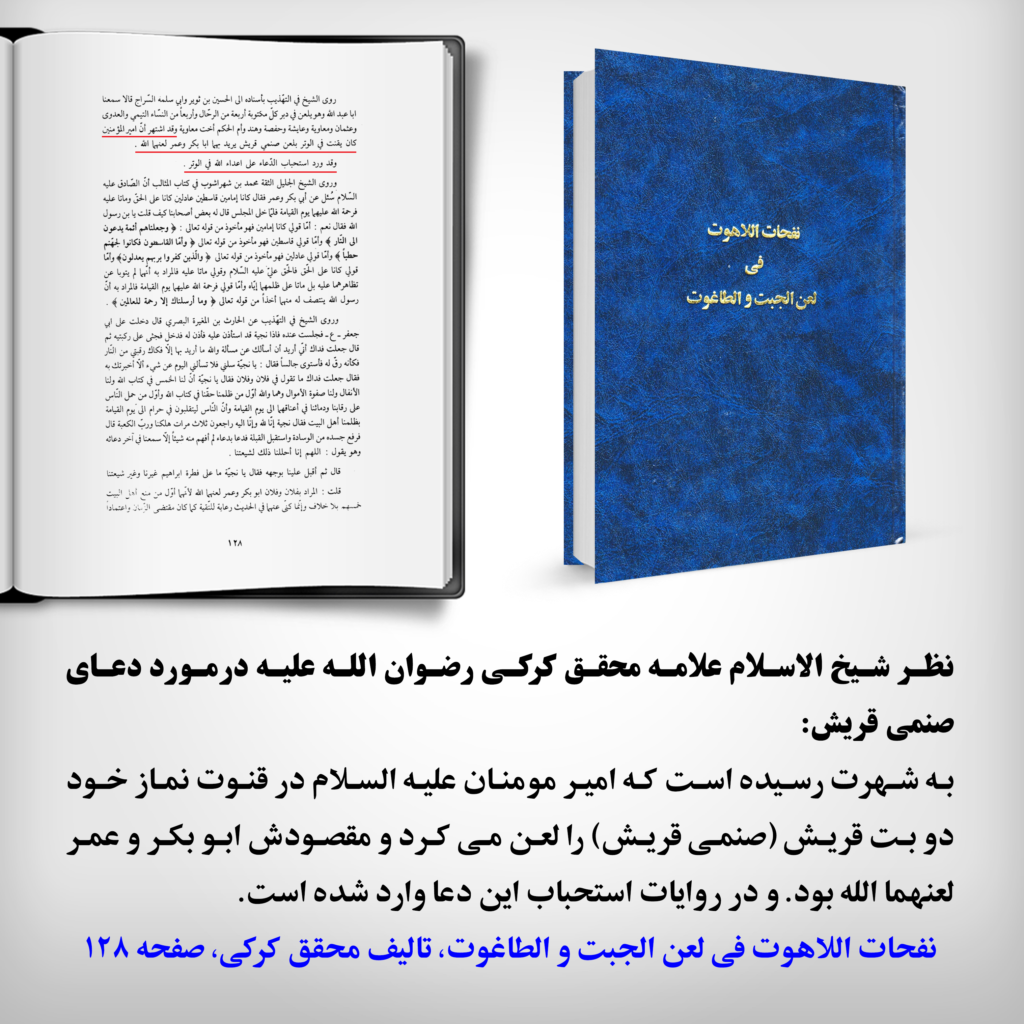
The Book Nafahat al-Lahut: A Treasury of Knowledge
Nafahat al-Lahut: A Treasury of Islamic Knowledge
Nafahat al-Lahut is a valuable book in the field of Islamic knowledge. Drawing on the Qur’an, narrations, and the views of Muslim scholars, it examines doctrinal, jurisprudential, and ethical subjects. With a precise and comprehensive outlook, the book answers common doubts and questions and has become a reliable source for interested readers.
Cursing as Worship: A Curse, a Path Toward God?
One part of the book examines cursing as worship. Drawing on Qur’anic verses and narrations from the Ahl al-Bayt (A), the author states that cursing, under particular conditions and for God’s pleasure, can be considered worship. Just as sending blessings upon those worthy of them earns reward, cursing those who deserve it also brings divine reward.
Qur’anic Verses: Cursing, God’s Command
The author refers to verses in which God curses disbelievers, oppressors, and those led astray. For example:
- “So the curse of God is upon the disbelievers” (al-Baqarah/89): God’s curse upon the disbelievers. “Indeed, the curse of God is upon the wrongdoers” (Hud/18): God’s curse upon the oppressors.
Narrations of the Ahl al-Bayt (A): Cursing as a Means of Nearness
The Ahl al-Bayt (A) also cursed deserving people in particular cases. For example, Imam ‘Ali (A) cursed Mu‘awiyah and ‘Amr ibn al-‘As in the qunut of prayer. This shows that cursing, under particular conditions, can be part of worship.
An Important Point: Cursing Must Be in Its Proper Place
The author emphasizes that cursing must be carried out carefully and in cases of deserving it. Baseless cursing and cursing innocent people must be avoided.
What Is Your View?
Do you agree with this view? In your opinion, under what conditions is cursing permissible? Share your views with us and take part in this discussion. 👇💬
We await your views and comments! 😊
Author: Hamed Sarem
Related articles

Comments
No comments yet.