
Esfand 25, 1403 APImam Hasan (Peace Be Upon Him)
The Instance of Calf Worship in the Time of Imam Hasan (peace be upon him)
Author: Hamed Sarem
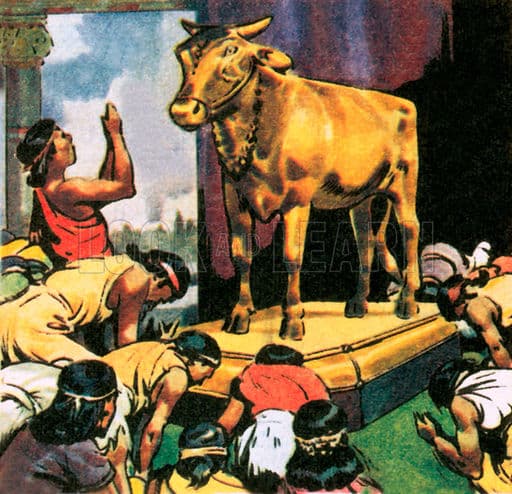
An instance of calf worship in the time of Imam Hasan (a): Imam Hasan’s (a) peace treaty goes back to the doctrinal corruption that afflicted the Muslims. At the event of Saqifah, instead of choosing a just and learned Imam, the Muslims turned toward an ignorant imam. These false inclinations of the people are an instance of calf worship.
Religion and Thought Group, “Daneshjoo News Agency,” Hamed Sarem: When we observe human life, we find that great figures are not few. There are many people who became legends for their nations, and the descriptions of them were exaggerated to such an extent that they became more than legends and turned into myths.
A Figure at the Summit of Existence
This time, the discussion is about a figure who stood at the summit of existence, such that eulogists cannot reach the essence and ultimate extent of describing him—as stated in “al-Jāmiʿah al-Kabīrah”—and God has created nothing in this world that can be compared with that great figure—as stated in “Maʿānī al-Akhbār.” Truly, how can one attain the most complete description of him or compare him with any ordinary human being, when he is al-Mujtabā?
God chose him and selected him for Himself, and made his heart a vessel for His will. Clearly, when a rational person looks upon him with these merits, his intellect can command nothing but submission and obedience to him, for his will is God’s will: if one obeys him, one has obeyed God; and if one is pleased with him, one has been pleased with God.
The Imam’s Will Is God’s Will
Can this great figure—whom all intellects, if gathered together, would be unable to describe even one aspect of, as stated in Imam al-Rida’s sermon in Marw—be criticized? Can one question why he did not take up the sword, why he made peace, and ask why, why, and why?
Certainly, in every question raised about this figure, we must not forget that God sent him to guide His creation. Therefore, we must conform ourselves to his conduct, not demand that he conform to us. If this point is taken into account, the direction of these questions will change: then we will seek guidance in the Imam’s life, rather than seeking criticism or blame. Nor should the doubts raised by opponents be left unanswered.
The events that occurred in the early days of Islam and during the life of Imam Hasan, peace be upon him, are of great importance. However, we will suffice with referring to only a very small part of them, so that we may be able to see the path of guidance more clearly.
The Terms of the Peace Treaty Are a Sign of Mu'awiyah's Fear and Incapacity
One of the most important events was the peace treaty with a person who had been cursed by the tongue of the Messenger of Allah, peace and blessings be upon him and his family. This peace treaty has remained a subject of questioning until now, and analysts have offered many analyses regarding its cause. Was the peace an acceptance of defeat, or was it an attempt to impose defeat on the enemy? From the text of the agreement, it becomes clear that Imam Hasan, peace be upon him, entered into the peace from a position of strength, and that the conditions stated in the peace document reveal the enemy's incapacity and fear.
In his sermon, Imam Hasan, peace be upon him, declared that the reason for his acceptance of peace was the people's breach of their covenant in following the Imam whose obedience is obligatory. He also pointed to the grave consequence of abandoning the Imam appointed by Allah, Glorified and Exalted is He.
Supporting the Imam of the Time Brings Blessings to the People
Imam Hasan, peace be upon him, said: “By Allah, had the people pledged allegiance to me, obeyed me, and supported me, Allah would have rained down the sky's rain upon them, the earth would have sent forth its blessings, and Mu'awiyah would not have coveted the caliphate.”
At the same time, the Prophet, peace and blessings be upon him and his family, said: “No community entrusts its affairs to a person who is not more knowledgeable than they are, except that its
affair declines until it reaches the worship of the calf.” The Children of Israel abandoned Aaron and followed the calf, despite knowing that Aaron was Moses's successor. Likewise, this community abandoned Ali, despite having heard the Messenger of Allah, peace and blessings be upon him and his family, say to Ali, peace be upon him: “You are to me as Aaron was to Moses, except that there is no prophet after me.”
The Doctrinal Deviation That Led to the Peace Treaty
In this sermon, the Imam pointed to the grave deviation in the people’s beliefs. Perhaps this statement is the best answer to the question: Why did the people refrain from supporting their Imam? Why did the people of Kufa assist Mu'awiya, despite knowing his immorality and treachery, because of their worldly ambitions?
Love of the Calf in the Hearts of Those Who Broke Their Covenants
Yes, according to what Imam Hasan al-Mujtaba said, this deviation had roots in the people’s beliefs. In other words, before the soldiers fell into the trap of Mu'awiya’s gold and minerals, their creed had already become corrupted; and this corruption stemmed from the Saqifah of Banu Sa'idah, where the rightful Imam was set aside and allegiance was given to an ignorant person instead of the learned one.
It is no wonder that one whose heart contains love and worship of the calf will not hasten to support God and the trustee of God. Based on the verses of the Qur'an, Imam al-Mujtaba elucidates for us some Qur'anic secrets that constitute a divine law: whenever we refuse to accept the guardianship of the rightful Imam, we will fall under the guardianship of the calf and its worship, just as the community of Moses did when it refused to accept the guardianship of Aaron, who had been appointed by God; in the end, they became worshippers of the calf.
The Shroud Was Torn Apart
Imam Hasan, peace be upon him, knew through his Imamate-given knowledge that his enemies would subject his funeral to the utmost humiliation. He knew that they would shoot at his pure body until his shroud was torn apart—[as mentioned in] Ziyarat al-Mujtama' li-A'immat al-Mu'minin. Yet through this funeral and the enemies’ humiliation of it, the manifestation of the calf in this community became evident, so that the distinction between the path of guidance and the worship of God, and the path of misguidance and the worship of the calf, would be clear.
The Just Government of Imam al-Mahdi Will Not Be Realized by the Hands of Calf-Worshippers
Since the Qur’an was revealed for all ages, we must be attentive to the fact that the government of justice of Imam al-Mahdi, peace be upon him, will not be realized at the hands of those who have become, as the Qur’an describes them, worshippers of the calf. We must urge ourselves to live our political, social, and other aspects of life under the guardianship of Imam al-Mahdi, or else we will have fallen into the same deviation into which the people of Moses fell.
Author: Hamed Sarem
Related articles

Comments
No comments yet.