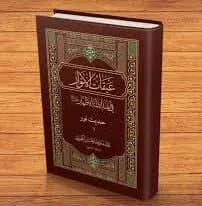
Allama Mir Hamid Husayn’s Methodology in Defending the Ahl al-Bayt (peace be upon them): A Comparative Analysis of Critical Approaches in “Abaqat al-Anwar”
Author: Hamed Sarem
Abstract
Sayyid Mir Hamid Husayn, one of the foremost Shiite scholars, employed rigorous scholarly and argumentative methods in his writings—especially in “ʿAbaqāt al-Anwār”—to defend the legitimacy of the Ahl al-Bayt (peace be upon them) and to critique the views of opponents. This abstract reviews the principal approaches and methods he followed in criticizing and analyzing hadiths and the arguments of opponents.
1. Critiquing opponents’ arguments: Sayyid systematically uses mutawatir hadiths and an analysis of the biographies of the Companions to critique opponents’ arguments. 2. Examining the chains of transmission and meanings of hadiths: He carefully studies hadith chains and analyzes their implications, revealing the weakness of opponents’ arguments. 3. Attention to the circumstances in which hadiths were issued: He gives special attention to the circumstances and time of hadiths’ issuance, showing that many hadiths were issued in particular contexts. 4. Using Sunni hadiths: He draws upon Sunni hadiths in critiquing opponents’ arguments. 5. Refuting fabricated hadiths: He carefully examines forged and weak hadiths and invalidates opponents’ arguments that are based on them.
These methods highlight not only the importance of fairness, precision, and commitment to truth, but also demonstrate that the merits of the Ahl al-Bayt (peace be upon them) cannot be denied, and that any attempt to distort them will face scholarly and ethical challenges. This abstract can be used as a model for researchers in the fields of hadith, doctrine, and history.
Reason: A Shield Against Forgery and Lies
Reason is a divine gift that enables human beings to distinguish between truth and falsehood. When reason encounters the truth, it acknowledges it and does not rebel against it. This characteristic makes reason a divine proof for all people. God has founded His program of guidance upon this reason and has sent proofs whose truthfulness becomes evident through rational reflection.
Yet, in the face of the path of guidance, misleaders always seek to distance reason from sound discernment. Since reason does not accept falsehood in place of truth, misleaders resort to forgery and deception. They try to confuse reason by concealing facts and presenting events in reverse, so that people choose the dark path instead of striving toward the light. Their schemes appear in the form of strange lies, forged documents, the burning of documents, distortion of facts, concealment of facts, and even false testimony. These methods have recurred throughout history and continue to this day. The result is the inversion of truth, so that falsehood presents itself to people as truth.
Throughout history, the hypocrites—who spared no means in their schemes during the life of the Noble Prophet (may God bless him and his family)—continued their betrayals after his death. They sought to distance society from the truth and to marginalize the Prophet’s Household (peace be upon them), who were the people most entitled to the Prophet and the most knowledgeable among them. Their principal aim was to deprive human society of the knowledge and light of the Ahl al-Bayt (peace be upon them). In this context, some writers busied themselves with suppressing facts and concealing the sun of guidance. They made every effort to hide the light of divine guidance in darkness and began presenting the ignorant as signs of guidance for future generations.
Allamah Mir Hamid Husayn: The Scholar Who Turned Doubts into a Joke
In the face of these efforts that promoted dark ideas, great thinkers and scholars devoted their effort and time, renouncing worldly pleasures, to dedicate their lives to research and writing. Through precise and systematic research, they were able to invalidate falsehood and establish the truth. Among these great figures was Allamah Sayyid Mir Hamid Husayn al-Hindi. Through his continuous effort and boundless sacrifice, he was able to present his master, the Commander of the Faithful, Ali (peace be upon him), to people in the light of truth. He worked in such a way that no one could, through lies, concealing the truth, or distorting evident facts, deny this great right. But how did he achieve this success? In previous writings, we examined his method of scrutinizing chains of transmission and reasoning according to principles; in this article, we will address his method of responding to the distortions and objections contained in the book "Tuhfa-yi Ithna Ashariyya".
Sayyid Mir Hamid Husayn, in addition to his learning and precision of judgment in debates, was exceedingly careful about accurately transmitting statements and attributing words to their respective speakers. It is well known that falsehood must always be clothed in the garb of truth in order to persuade people of what is false. For this reason, Allamah Mir Hamid Husayn examined the book "Tuhfa Ithna Ashariyya" line by line and word by word, until it appeared as though the book did not contain a single statement that was correct and consistent with reality. The contradictions and conflicts in the statements of the author of "al-Tuhfa," his students, and his teachers became so evident that no trace of truth could be found in this book. Like his great forefather, Imam Ibrahim (peace be upon him), who left no argument for the idol worshippers, Allamah Mir Hamid left no excuse for those who marginalize Amir al-Mu'minin Ali (peace be upon him) and turn away from him.
The greatness of the author, his precision of judgment, his mastery of the sciences, his attentiveness to what was said, his trustworthiness in transmission, and his practical concern for the rules of research are all evident in his methods of answering objections and criticizing arguments. He closed every door and pretext with the strongest proofs and firmest evidence, and dispelled every doubt and ambiguity, so that no path remained for opponents to attack the school, cast doubt on the proof, or weaken the hadith. He answered them in the finest manner and with the most beautiful responses: «بالبحوث الدقيقة، والاهتمامات الجميلة، والاستدلالات البراهينية، والالتزامات النبوية، والاستدلالات العلوية، والنقض الرضوي». In all of this, he relied on Sunni books and argued from the statements of their leading scholars in the various sciences and disciplines.
He addressed every word found in "al-Tuhfa," either by refutation or criticism. He would often answer the words of the author of "al-Tuhfa" with what the author himself had stated in the same book or in his other writings; at times, he answered them with the words of his father and the rest of his teachers and shaykhs. Even the twelfth chapter of "al-Tuhfa" was reduced to poetic epistles and Hindi expressions at which people laughed. At times, he discussed the words of the teacher and father of its author, Wali Allah Dihlawi, and those of his students, especially Muhammad Rashid al-Din Khan Dihlawi and Haydar Ali Faydabadi. Indeed, he addressed all that these fanatics who denied the truths had said—such as Ibn Taymiyya, Ibn al-Jawzi, Ibn Hajar, and many others—who had tried to attack the school of Ahl al-Bayt, and he refuted and investigated all of it.
‘Abaqat al-Anwar: An Encyclopaedia That Revealed to the World the Light of the City of Knowledge
In his study of the well-known hadith, "I am the city of knowledge and Ali is its gate" (أنا مدينة العلم وعلي بابها), Allamah Mir Hamid Husayn responded with unparalleled precision and depth to all the objections and criticisms raised by Dihlawi and others. In one complete volume, he established this hadith comprehensively from the perspective of its chain of transmission, on the basis of evidence. He then clearly and precisely explained the imamate of Amir al-Mu'minin Ali (peace be upon him) on the basis of this hadith. In a single volume, the investigating Allamah answered all the objections raised in the book Tuhfa Ithna Ashariyya concerning this celebrated hadith. But his work did not stop there: in the second volume, he addressed everyone who had objected to this hadith from every possible angle. In two volumes, he studied and analyzed the Hadith of the City of Knowledge with utmost precision and detail.
Allamah Mir Hamid Husayn, with his comprehensive learning and exceptional precision, answered all the objections raised by leading Sunni scholars, from the early figures to the later ones, from every city and region. This breadth and depth of research made ‘Abaqat al-Anwar an encyclopaedia of theology, scholarship, and history. This work is regarded as one of the most important and extensive books in the field of doctrinal studies, written in a rigorous scholarly style in accordance with all standards of academic research.
‘Abaqat al-Anwar is not merely an apologetic work; rather, it is a unique scholarly and historical reference in the field of doctrine. Through this work, Allamah Mir Hamid Husayn not only clearly demonstrated the truth of the Ahl al-Bayt (peace be upon them), but also left a model of profound and methodical research for later scholars. Consequently, this book became a doctrinal, scholarly, and historical encyclopedia, and one of the most important and extensive works written in the field of doctrinal controversies. Below, we present some important aspects of the book’s scholarly research method.
Full Citation of the Opponent’s Words: A Fair and Scholarly Method
The practice of Shi‘a scholars is to quote the opponent’s words in full and then respond to them. Sayyid Mir Hamid Husayn quoted the words of Dihlawi and everyone who attempted to criticize him without any omission or distortion, and without merely paraphrasing their meaning. After presenting the text in full, he cites the sentences one by one and responds to each of them.
Comprehensive Coverage: Fundamental and Exhaustive Answers
Allamah Mir Hamid Husayn does not confine himself to brief answers. He does not consider a superficial or merely counter-argumentative response sufficient; rather, he takes every aspect of an objection into account, answers it from different angles, and leaves no aspect unanswered. He responds in a foundational and radical manner, so that the fabrications, distortions, and prejudices upon which the opponents of the Shi‘a have built their case are demolished from their very roots and foundations.
The Hadith of al-Thaqalayn and the Critique of Ibn al-Jawzi: A Precise Study of a Central Hadith
Hadith al-Thaqalayn is among the most important traditions cited as evidence for the Imamate of the Ahl al-Bayt (peace be upon them). Ibn al-Jawzi included this hadith in his book Al-‘Ilal al-Mutanāhiyah fī al-Ahādīth al-Wāhiyah. In this book, he collected unreliable and fabricated traditions. He transmitted the hadith in the following form:
“A hadith concerning the bequest regarding the ‘Itrah: ‘Abd al-Wahhab al-Anmati informed us; he said: Muhammad ibn al-Muzaffar informed us; he said: Ahmad ibn Muhammad al-‘Atiqi narrated to us; he said: Yusuf ibn al-Dakhil narrated to us; he said: Abu Ja‘far al-‘Uqayli narrated to us; he said: Ahmad ibn Yahya al-Halwani narrated to us; he said: ‘Abd Allah ibn Dahir narrated to us; he said: ‘Abd Allah ibn ‘Abd al-Quddus narrated to us, from al-A‘mash, from ‘Ata’, from Abu Sa‘id, who said: The Messenger of Allah, peace and blessings be upon him, said: ‘Indeed, I am leaving among you two great matters: the Book of Allah and my ‘Itrah. These two shall never part until they come to me at the Pond. So consider how you succeed me regarding them.’”
He then impugns this hadith and says:
“This hadith is not authentic. Ahmad, Yahya, and others declared ‘Ata’ weak. Yahya said concerning Ibn ‘Abd al-Quddus: ‘He is nothing; he is an evil Rafidi.’ Ahmad and Yahya said concerning ‘Abd Allah ibn Dahir: ‘He is nothing, and there is no good in one who records hadith from him.’”
The eminent scholar Sayyid Mir Hamid Husayn answered Ibn al-Jawzi’s objection with 156 responses. Some of these responses are:
1. Response to the claim that the hadith is weak: Some Sunni scholars relied on authoritative hadith books to reject the claim of weakness regarding this hadith and to regard it as authentic. 2. Examination of the narrators: The reliability of narrators such as ‘Ata’, Ibn ‘Abd al-Quddus, and ‘Abd Allah ibn Dahir was examined carefully. 3. Sunni scholars’ criticism of Ibn al-Jawzi: A number of Sunni scholars, such as Sibt Ibn al-Jawzi, al-Sakhawi, al-Samhudi, Ibn Hajar al-Makki, and al-Manawi, criticized Ibn al-Jawzi’s error in including this hadith in his book Al-‘Ilal al-Mutanāhiyah.
– Sibt Ibn al-Jawzi: He found it surprising that this hadith had escaped his grandfather’s notice.
– Al-Sakhawi and al-Samhudi: They considered the inclusion of this hadith in “al-‘Ilal al-Mutanahiyah” incorrect and warned against this error.
– Ibn Hajar al-Makki and al-Manawi: They held that this error resulted from Ibn al-Jawzi’s negligence or mistake.
Many Sunni scholars have regarded this hadith as reliable and rejected the claim that it is weak.
Critique of the Hadith Attributed to the Prophet Regarding Abu Bakr: A Study in Historical Fabrication
While responding to the opponents of the well-known hadith, “I am the city of knowledge and Ali is its gate,” Ibn al-Jawzi cited a hadith claiming that the Prophet, peace and blessings be upon him, said: “There is nothing in my breast except that I have placed it in Abu Bakr’s breast.”
Criticism directed at this hadith:
1. Contradiction with reality: This hadith is inconsistent with historical and logical evidence. 2. Explicit declaration that the hadith is fabricated: Many Sunni scholars, such as Ibn al-Jawzi, al-Tibi, Ibn Qayyim al-Jawziyya, and others, considered this hadith fabricated. - Ibn Qayyim: He regarded this hadith and other hadiths concerning the virtue of Abu Bakr as forged and unreliable. - Examples of these fabricated hadiths include: - God Almighty appearing on the Day of Resurrection specifically to Abu Bakr. - The Prophet’s love for Abu Bakr’s white comb as a sign of Paradise.
Conclusion:
In addition to contradicting reality, these hadiths have been regarded by prominent Sunni scholars as fabricated reports that cannot be relied upon. This is a brief and concise example from the research of Allama Sayyid Mir Hamid Husayn concerning one of Ibn al-Jawzi’s objections. As this summary shows, Allama Mir Hamid Husayn demolished the foundation upon which the concealment of the right of the Ahl al-Bayt, peace be upon them, had been built.
Allama Mir Hamid Husayn: Defender of the Sanctuary of Wilayah and Illuminator of the Realities of Matters
Given the breadth of Allama Mir Hamid Husayn’s research and its scholarly comprehensiveness, no room remained for objection or doubt regarding the chains of transmission that establish the truth of Amir al-Mu'minin Ali, peace be upon him. Allama Mir Hamid Husayn worked in such a way that he left no opportunity for doubts and objections to spread. It is important to mention that the efforts of the author of "Abaqat al-Anwar" reveal this truth: some people, under the pretext of examining chains of transmission and warning against forged and fabricated hadiths, exclude many sound and reliable hadiths—under the name of sincerity—by alleging fabrication and forgery. This itself is a clear example of concealing the truth.
In this scholarly endeavor, Allamah Mir Hamid Husayn did not confine himself to criticizing the book "Tuhfa-yi Ithna ‘Ashariyya." Rather, he completely demolished everything the opponents had constructed by means such as burning documents, forging them, concealing facts, and distorting them. He not only exposed the distortions in "Tuhfa-yi Ithna ‘Ashariyya," but also critically examined and meticulously reviewed all supporters of this current. In every subject he addressed, he left none of the opponents’ statements unanswered and responded to all their objections.
This struggler and defender of the sanctity of wilayah did not limit himself merely to answering the objections and statements of the opponents. He also addressed objections and criticisms that the opponents had not raised but could have raised, and answered them. For example, regarding the hadith, "The likeness of my Ahl al-Bayt among you is the likeness of Noah’s Ark...", although Dihlawi confined himself to challenging the hadith’s import and did not discuss its chain of transmission, Allamah Mir Hamid Husayn, in addition to examining its meaning, also addressed its chain. The Sayyid, may God have mercy on him, mentioned ninety-two transmitters of this noble hadith, beginning with leading Sunni scholars such as al-Shafi‘i, Ahmad ibn Hanbal, and Muslim ibn al-Hajjaj, and continuing through to his contemporaries. This work constituted a powerful response to Ibn Taymiyyah, who had accused this hadith of fabrication and forgery in harsh terms. Relying on scholarly precision and firmness, Allamah Mir Hamid Husayn answered these false claims and clearly established the authenticity of the hadith.
This comprehensive and meticulous approach of Allamah Mir Hamid Husayn not only eliminated the opponents’ distortions and objections, but also presented an unparalleled model of scholarly research and defense of the truth of the Ahl al-Bayt (peace be upon them). Through these efforts, he safeguarded the sanctity of wilayah and protected the truths from every distortion and concealment.
The Hadith of the Ahl al-Bayt and Noah’s Ark: An Example of Allamah Mir Hamid Husayn’s Comprehensive Scholarly Method
The hadith likening the Ahl al-Bayt to Noah’s Ark is an example of Allamah Mir Hamid Husayn’s comprehensive scholarly method in examining and responding to the statements of the opponents. Allamah Mir Hamid Husayn discussed other narrations with the same comprehensiveness and depth, even concerning hadiths such as the Hadith of Position, which is mutawatir and found in the two Sahihs. This extensive investigation and critique of the opponents’ statements, along with establishing the chains of the narrations from the perspective of the leading scholars among the opponents, has made the book "‘Abaqat al-Anwar" a tableau that reveals the depth of this group’s prejudice and obstinacy toward the Commander of the Faithful, Ali (peace be upon him). This book clearly shows the extent of fabrication, falsehood, and concealment employed to squander the right of the Commander of the Faithful, Ali (peace be upon him). It is as though lying, fabrication, and distortion were among this group’s principal scholarly principles and methodologies.
A Study of the Hadith: “You are to Me as Aaron Was to Moses”
The hadith, “You are to me as Aaron was to Moses,” which is undoubtedly mutawatir, has been transmitted in the two Sahihs, and whose authenticity and established status have been affirmed by leading imams, was subjected to a meticulous study by Allama Mir Hamid Husayn. In several chapters, he examined the chain of transmission of this hadith in order to refute al-Amidi and his fanatical followers, who claimed that this hadith is not authentic.
It is clear that had Allama Mir Hamid Husayn not addressed this point in his discussion of these two hadiths, no one could have objected to him, for al-Dihlawi—the intended target of the refutation—had not discussed this issue. Nevertheless, since the book “Abaqat al-Anwar” was composed to establish the imamate of the Ahl al-Bayt (peace be upon them), it was necessary to respond to the nonsense uttered by these individuals, in order to show the scholarly community the extent of their fanaticism and how they resort to lying and slander.
Returning to Primary Sources: One of Allama Mir Hamid Husayn’s Most Important Methods
One of the important methods of Sayyid Mir Hamid Husayn was to return to the original sources from which the objections had been transmitted. This method helps uncover many facts that are of great importance to those who genuinely seek to know the truth. Among its benefits is the exposure of al-Dihlawi’s scholarly plagiarism from others.
Exposing al-Dihlawi’s Scholarly Plagiarism
Among the most important points that the Allama Sayyid sought to explain was that al-Dihlawi had presented nothing new; rather, everything he brought forward had already been mentioned in the books of earlier scholars. Indeed, the Sayyid, may God have mercy on him, proved that the book “Tuhfa Ithna Ashariyya” had been plagiarized from the book “Sawa‘iq al-Athar” by Nasr Allah al-Kabuli, with additions drawn from the statements of his father and Husam al-Din Saharanpuri, the author of “Marafid.” Likewise, the book “Bustan al-Muhaddithin” by ‘Abd al-‘Aziz al-Dihlawi had been plagiarized from the book “Kifayat al-Mutatalli‘” by Taj al-Din Dahan. This is a significant finding, showing that al-Dihlawi possessed little originality in his research.
Exposing the Falsity of Many Attributions
By referring to the original sources that raised the objections, the falsity of many attributions becomes clear. It is evident that, in the statements of these individuals during their debates with the Imāmīs, there are claims and attributions that have no basis in truth or reality. In his research, he pointed out these cases and mentioned some examples of them:
Some said in their response to the Ḥadīth al-Ṭayr: “Ibn al-Jawzī included this hadith in his book al-Mawḍūʿāt.” This attribution is false.
It was attributed to the ḥāfiẓ Yaḥyā ibn Maʿīn that he said concerning the hadith “I am the City of Knowledge”: “This hadith has no chain of transmission.” This attribution is entirely invalid.
It was attributed to al-Tirmidhī that he said concerning the hadith “I am the City of Knowledge”: “This hadith is objectionable and strange.” This attribution has no basis.
The disparagement of the hadith “I am the City of Knowledge” was attributed to Shams al-Dīn Ibn al-Jazarī. This attribution is false.
Ibn Taymiyyah attributed a hadith, established in the two Sahihs, to those two books and said: “Do you not see that it is established in the two Sahihs that the Prophet, peace and blessings be upon him, regarding the hadith of the captives, when he consulted Abu Bakr, he proposed ransom, and when he consulted Umar, he proposed execution? Then the Prophet said: I shall tell you about your two companions. O Abu Bakr, you are like Abraham, who said: ‘So whoever follows me is of me; and whoever disobeys me—indeed, You are Forgiving, Merciful,’ and like Jesus, who said: ‘If You punish them, then indeed they are Your servants; but if You forgive them, then indeed You are the Mighty, the Wise.’ And O Umar, you are like Noah, who said: ‘My Lord, do not leave upon the earth any inhabitant from among the disbelievers,’ and like Moses, who said: ‘Our Lord, obliterate their wealth and harden their hearts so that they will not believe until they see the painful punishment.’”
But this hadith does not exist in the two Sahihs.
Some of them denied al-Bayhaqi’s narration in the hadith of the likenesses: “Whoever wishes to look at Adam in his knowledge and at …, let him look at Ali ibn Abi Talib.” This denial came in response to al-Allamah al-Hilli, who had cited al-Bayhaqi’s narration as evidence. The Sayyid answered this denial in detail.
Fakhr al-Razi claimed that Ibn Ishaq did not transmit the Hadith of Ghadir, and that his failure to transmit it proves the weakness of this hadith. This claim is false, because Ibn Ishaq did not neglect to transmit the Hadith of Ghadir; rather, he is among the transmitters of this hadith, and a group has transmitted it from him.
Shaykh Ali al-Qari and Wali Allah al-Dihlawi attributed a forged hadith to the two Sahihs: “Follow those who come after me, Abu Bakr and Umar” (follow me and, after me, follow Abu Bakr and Umar). This attribution is false and baseless. Al-Hakim explicitly stated in al-Mustadrak that those two, al-Bukhari and Muslim, did not transmit this hadith.
One benefit of this method is that it exposes some of the manipulations carried out by these fanatics and obstinate deniers in hadiths and in the statements of scholars. This subject is very broad, and if it were collected, it would become an independent book. It is useful to mention an example of it:
Manipulations in Hadiths: Examples of Deliberate Distortion and Alteration
One clear example of manipulation in hadiths is the alteration of the hadith: “Indeed, Ali is from me and I am from Ali, and he is the guardian of every believer after me” (Ali is from me and I am from Ali, and he is the guardian of every believer after me). Al-Tirmidhi transmitted this hadith in full, but al-Baghawi omitted the word “after me” and attributed this version to al-Tirmidhi. This alteration was repeated by a group of scholars, including Saharanpuri, the author of “al-Marafid,” and Mawlawi Hasan Ali Muhaddith**, a student of Mawlawi Abd al-Aziz Dehlawi.
Even Muhammad ibn Mutamad Khan Badakhshi, in a treatise entitled “Radd al-Bid‘ah,” claimed that the word “after me” in this hadith was forged.
Likewise, Shah Wali Allah Dehlawi, in his book “Izalat al-Khafa,” transmitted this hadith with its complete wording; but when responding to it, he replaced the word “I” with “that he” and omitted the word “after me,” just as al-Baghawi and his followers had done.
These deliberate alterations in hadiths reveal attempts to falsify facts and diminish the rank of the Commander of the Faithful, Ali (peace be upon him). These acts not only raise questions about the scholarly credibility of these individuals, but also expose their prejudice and hostility toward the Ahl al-Bayt (peace be upon them).
A Study of the Chains of Transmission and Meanings of Hadiths: The Scholarly Method of Allamah Mir Hamid Husayn
To make a hadith suitable for citation, its chain of transmission must first be evaluated, and then its indication of the claim must be fully established. This rule lies at the heart of many of Sayyid Mir Hamid Husayn’s responses and discussions. His method for examining chains of transmission is as follows:
1. Transmitting the hadith with its chain: He cites the hadith with its complete chain of transmission, or through all reliable sources when multiple routes exist. 2. Assessing the status of the principal narrator: The status of the hadith’s principal narrator is examined in all available chains. 3. Examining common narrators: The status of narrators who occur in several chains or in all chains is analyzed. 4. Analyzing the conditions of the remaining narrators: The conditions of the other narrators are examined on the basis of the views of Sunni scholars of al-jarḥ wa al-taʿdīl. 5. Attending to weaknesses in the chain: Weaknesses in the chain, such as irsāl and other deficiencies, are taken into account.
Even when the opponent does not rely on a particular hadith, if a comparable report exists in the opponents’ sources, Sayyid examines its chain and refutes it in order to demonstrate the weakness of the opponent’s argument.
Study of the Hadith Cited by al-ʿĀṣimī
To counter the hadith, “I am the city of knowledge and ʿAlī is its gate,” al-ʿĀṣimī relied on a hadith from the noble Prophet (may Allah bless him and his family) that mentions particular qualities of certain Companions:
Abu Bakr: the most merciful of the people toward the Ummah. ʿUmar: the most steadfast of them in the matters of Allah. ʿUthmān: the most sincere of them in modesty. Muʿādh ibn Jabal: the most knowledgeable of them concerning what is lawful and unlawful. Zayd ibn Thābit: the most learned in jurisprudence among them. Ubayy ibn Kaʿb: the best reciter among them. Abu ʿUbaydah: the trustee of the Ummah.
Study of the Hadith’s Chain of Transmission:
Sayyid Mir Hamid Husayn examined this hadith in detail and identified its weaknesses as follows:
1. All chains revolve around Anas ibn Malik: Anas ibn Malik, who was known for his hostility toward the Commander of the Faithful, Ali (peace be upon him), is the principal narrator of this hadith. 2. Weakness of the narrators: Some chains include narrators such as Abu Qilabah, Khalid al-Hadhdha’, Abd al-Wahhab al-Thaqafi, Muhammad ibn al-Muthanna, Waki‘ ibn al-Jarrah, and others, whom scholars of narrator criticism and accreditation classified as weak or accused of lying. 3. Discontinuity in some chains: Some chains are mursal, and according to the majority of hadith scholars, a mursal hadith is considered weak and cannot be relied upon.
Hadith Scholars’ Views on the Hadith:
Sayyid reported that scholars such as Ibn Hajar, al-Nawawi, and al-Suyuti affirmed the weakness of the hadith and regarded it as mursal. He also referred to al-‘Asimi’s direct transmission from Abu Qilabah and Qatadah without mentioning the chain of transmission, and discussed these matters from several perspectives.
Final Analysis:
This study shows that the hadith relied upon by Asimi contains fundamental defects in both its chain of transmission and its content. Relying on weak and mursal reports to oppose well-attested and reliable hadiths is an unsound method, and the inconsistency in Asimi’s argument reveals the weakness of his position.
Examining the Circumstances of the Issuance of Hadiths and Analyzing Them
One of Sayyid Mir Hamid Husayn’s methods in studying hadiths is to focus on the circumstances of their issuance. This approach has a major effect on discovering the truth and understanding texts correctly. For example, two hadiths will be examined:
The Hadith Concerning the Approval of Abdullah ibn Mas‘ud:
Dihlawi transmitted a hadith from the noble Prophet (peace and blessings be upon him and his family), in which he said: “I have approved for you what Ibn Umm ‘Abd (Abdullah ibn Mas‘ud) approved.” At first glance, this hadith appears to indicate the Prophet’s absolute approval of Ibn Mas‘ud’s decisions. However, Sayyid Mir Hamid Husayn, through a careful examination of the circumstances surrounding the issuance of the hadith and its accompanying evidence, shows that this hadith is limited to a particular matter and cannot be used to counter the Hadith of al-Thaqalayn, which affirms the status of the Ahl al-Bayt, peace be upon them.
This hadith is found in al-Hakim’s “al-Mustadrak” and refers to an incident in which the Prophet asked Ibn Mas‘ud to recite the Qur’an. After he recited the verses, the Prophet praised him and said: “I have approved for you what Ibn Umm ‘Abd approved.” However, the context of the report shows that these words were confined to the Prophet’s approval of God, His Messenger, and the religion of Islam.
Analysis and Summary
Studying the circumstances in which hadiths were issued reveals their precise meaning and prevents erroneous interpretations. Sayyid Mir Hamid Husayn demonstrated that many hadiths, due to superficial consideration or even distortion, have been used to confront the authentic hadiths concerning the Ahl al-Bayt (peace be upon them). However, careful analysis shows that these hadiths cannot stand against those hadiths; rather, they affirm the exalted status of the Ahl al-Bayt in the more authentic versions.
An Enduring Legacy of Research and Defense of the Truth
By employing these precise and scholarly methods, Allamah Mir Hamid Husayn not only dismantled the distortions and objections of his opponents, but also presented a unique model of scholarly research and defense of the truthfulness of the Ahl al-Bayt (peace be upon them). Through these efforts, he preserved the sanctity of wilayah and protected the truths from every distortion or concealment.
Dehlawi’s Challenges to the Hadith of al-Thaqalayn: An Analysis of Sayyid Mir Hamid Husayn’s Responses
Abd al-Aziz Dehlawi, in an attempt to challenge the virtues of the Ahl al-Bayt (peace be upon them), compared the Hadith of al-Thaqalayn with other hadiths in order to diminish the status of the Ahl al-Bayt. In response to this approach, Sayyid Mir Hamid Husayn, may God have mercy on him, presented a distinguished scholarly and historical critique. What follows is a summary of this critique together with its analysis.
Ammar’s Guidance: The Contradiction in the Conduct of the Companions
Dehlawi compares the Hadith of al-Thaqalayn with another hadith from the Prophet, peace and blessings be upon him and his family: “Follow Ammar’s guidance.”
Sayyid Mir Hamid Husayn affirms that Ammar ibn Yasir was among the followers of the Commander of the Faithful, peace be upon him, and that he refrained from pledging allegiance to Abu Bakr. He then points out the contradiction between this hadith and the conduct of the other Companions:
Umar ibn al-Khattab turned away from Ammar’s guidance.
Uthman assaulted him.
Many leaders of Quraysh and Companions, such as Talha, al-Zubayr, and Muawiya, were hostile to him; ultimately, Muawiya’s army was responsible for his martyrdom.
If Ammar’s guidance is the criterion of truth, why was this criterion not applied? This contradiction shows that the hadith relied upon by Dehlawi cannot replace the Hadith of al-Thaqalayn.
Ibn Mas‘ud’s Approval: The Contradiction in Uthman’s Conduct
Dehlawi compares the Hadith of al-Thaqalayn with this saying of the Prophet, peace be upon him and his family: “I have approved for you what Ibn Umm Abd approved.”
Sayyid Mir Hamid Husayn points to Uthman’s opposition and improper conduct toward Ibn Mas‘ud, such as humiliating him in public. Such conduct toward someone whose approval is regarded as a criterion of truth contradicts what has been stated.
These actions show that Ibn Mas‘ud’s approval as a measure of truth was disregarded in practice. Therefore, this hadith cannot replace the Hadith of al-Thaqalayn.
Mu‘adh ibn Jabal’s Knowledge: Ignorance of the Rulings of the Sharia
Another hadith cited by Dehlawi is: “The most knowledgeable among you regarding what is lawful and unlawful is Mu'adh ibn Jabal.”
Sayyid Mir Hamid Husayn, relying on historical evidence, points to Mu'adh’s ignorance of religious rulings and his financial transgressions. How can a person ignorant of religious rulings be regarded as a standard of knowledge?
This hadith contradicts historical reality and cannot be relied upon as a scholarly criterion.
The Companions Are Like Stars: Contradictions in the Conduct of the Companions
The famous hadith: “My Companions are like stars…”
The well-known hadith, “My Companions are like stars…,” was cited by Dehlawi in opposition to the Hadith of al-Thaqalayn.
Sayyid Mir Hamid Husayn points to numerous cases in which the Companions were ignorant of the Qur’an and the rulings of the Sharia; indeed, some of them committed major sins such as usury and lying. Can such conduct produce “stars” capable of guiding humanity?
This hadith contradicts the improper conduct of many of the Companions and cannot be regarded as a criterion for truth.
Sayyid Mir Hamid Husayn’s Analysis of the Approach Adopted by al-Dihlawi
In many cases, al-Dihlawi relied on hadiths with weak chains of transmission or on reports that contradict history and reason. This demonstrates his lack of adherence to the standards of scholarly research.
Sayyid Mir Hamid Husayn showed that al-Dihlawi engaged in a form of systematic distortion, as he selectively transmitted and distorted texts in an attempt to undermine the status of the Ahl al-Bayt, peace be upon them.
Throughout all his critiques, Sayyid Mir Hamid Husayn emphasized his commitment to research ethics and criticized bias and the use of unreliable sources.
Conclusion: An Enduring Legacy of Research and Defending the Truth
Sayyid Mir Hamid Husayn’s Methodology
Sayyid Mir Hamid Husayn’s method not only demonstrates the depth of his scholarship, but also serves as a model for researchers, emphasizing the importance of fairness, precision, and commitment to the truth. From examining his critiques, we may conclude that the merits of Ahl al-Bayt (peace be upon them) are not merely undeniable; rather, attempts such as Dihlawi’s works do not succeed in undermining these merits, but instead reveal the ethical and scholarly challenges inherent in those works themselves.
Protecting the Guardianship of Ahl al-Bayt
Through his meticulous scholarly methods, Sayyid Mir Hamid Husayn not only refuted the distortions and errors advanced by opponents, but also presented a unique model of scholarly inquiry and of defending the truthfulness of Ahl al-Bayt (peace be upon them). Through his efforts, he protected the sanctuary of guardianship and ensured that the truths would be preserved from any distortion or concealment.
Critique and Analysis in Sayyid Mir Hamid Husayn’s Method
Sayyid Mir Hamid Husayn employed strong scholarly and argumentative methods in his analyses and research, foremost among them the method of critique. He handled the criticism of opposing views and arguments so skillfully that responding to it became almost impossible. His books are filled with powerful and striking critiques that provoke the reader’s thought. In this context, we will discuss some of these methods:
Refuting al-Dihlawi’s Arguments Concerning the Hadith of Ghadir
‘Abd al-‘Aziz al-Dihlawi, in his criticism of the Hadith of Ghadir, stated that if the Prophet, peace and blessings be upon him and his family, had intended to appoint the Imam and caliph, he should have explicitly declared it so that no disagreement would arise. In response, the Sayyid, may God have mercy on him, referred to the hadith, “The Imams after me are twelve” (الأئمة بعدي اثنا عشر), and explained that this hadith is clear in meaning to the followers of the Shi‘i school, whereas the Sunnis attempt to distort its meaning through false interpretation.
Refuting the Hadith of “Abu Bakr’s Small Door”
Some relied on the hadith of “Abu Bakr’s small door,” which they considered indicative of Abu Bakr’s caliphate. The Sayyid, may God have mercy on him, criticized this argument by presenting the hadith, “Whomsoever I am his master, ‘Ali is his master,” which clearly indicates the Imamate of ‘Ali, peace be upon him. He explained that the Hadith of Ghadir decisively establishes the guardianship of the Commander of the Faithful, ‘Ali, peace be upon him, and that the hadith of “Abu Bakr’s small door” cannot take its place.
Refuting Ibn Kathir’s Claim Regarding the Merit of Fasting on the Day of Ghadir
In his critique of the report attributed to Abu Hurayra concerning the merit of fasting on the day of Ghadir, Ibn Kathir asked how fasting a single day could equal sixty months, while fasting the month of Ramadan equals ten months. Sayyid, may God have mercy on him, replied by citing Sunni traditions concerning the merit of fasting on particular days, such as the twenty-seventh of Rajab and the day of Arafah. He explained that Sunni traditions assign special merits to certain days, and that this objection therefore has no basis.
Refuting Ibn Ruzbihan’s Claim Concerning the Supplications of the Commander of the Faithful
Regarding the supplications of the Commander of the Faithful, peace be upon him, against those who concealed the hadith of Ghadir, such as Anas ibn Malik and Jarir ibn Abd Allah al-Bajali, Ibn Ruzbihan claimed that this was inconsistent with the character of the Commander of the Faithful. Sayyid, may God have mercy on him, refuted this claim by citing the supplications of the Prophet, peace and blessings be upon him and his family, the Commander of the Faithful, peace be upon him, and other Companions. He explained that praying for the guidance or punishment of those who conceal the truth was part of the practice of the Prophet and the Imams, peace be upon them.
Countering with Fabricated Hadiths
Countering with traditions on the merits of the Companions: through a careful examination of traditions concerning the merits of the Companions, Sayyid shows that many of them contradict the actual conduct of the Companions. For example, in criticizing the hadith, “The most merciful of my community toward my community is Abu Bakr,” he points to acts of Abu Bakr that refute this claim. Countering with traditions on the shura: in criticizing the hadith, “The shura belongs only to the Muhajirun and the Ansar,” Sayyid explains that the caliphate of the first three caliphs took place without genuine consultation with the Muhajirun and the Ansar; therefore, this hadith cannot be evidence for the legitimacy of their caliphate. Countering with fabricated traditions about the Imamate: Sayyid challenges traditions such as, “Had there been a prophet after me, it would have been Umar,” demonstrating the weakness of their chains of transmission and meaning, and arguing that they cannot be proof of Umar’s merit.
The Unforgiving Pen of Allama Mir Hamid Husayn
In his critique and analysis of hadiths, Sayyid Mir Hamid Husayn employed rigorous and precise methods to reject the arguments of his opponents, confronting every attempt to distort the truth with strong and firm evidence.
The pen of Sayyid Mir Hamid Husayn waged a strenuous jihad against treacherous pens. With unprecedented firmness and complete steadfastness, his pen confronted the treacherous writers who had taken the path of distortion, fabrication, and obscuring the truth. Through his serious and uncompromising approach, he was able to identify the smallest errors and deviations, answering every doubt and distortion with powerful arguments and decisive proofs.
In this scholarly struggle, his pen did not suffice with a simple reply; rather, it undertook precise analyses and relied on rational and historical criteria to distinguish the truth amid erroneous and fabricated interpretations. His uncompromising severity in this path reflects the depth of his knowledge and his concern for preserving the authentic teachings. This seriousness and firmness in defending the truth made his writings an enduring model in the history of scholarly criticism and analysis.
The Conclusion of the Discourse, the Beginning of Illumination
By authoring the unique work “ʿAbaqāt al-Anwār,” the scholar Sayyid Mir Hamid Husayn not only offered a scholarly and steadfast defense of the truthfulness of the Ahl al-Bayt, peace be upon them, but also presented an unparalleled model in hadith and doctrinal research. The comprehensiveness of his work—which included meticulous study of chains of transmission, comprehensive analysis of the implications of hadiths, attention to the conditions of their issuance, and the use of authoritative Sunni sources—constituted a decisive and irrefutable response to the distortions of ʿAbd al-ʿAzīz Dihlawī in “Tuḥfa-yi Ithnā ʿAshariyya.”
His methods, including the systematic critique of fabricated hadiths and the exposure of distortions, did not merely invalidate Dihlawī’s doubts; they also closed the door to any similar attempt in the future. He demonstrated that the merits of the Ahl al-Bayt, peace be upon them, are a truth that is not only protected from distortion, but is illuminated more deeply and clearly by scholarly and ethical proofs.
With courage and steadfastness, Allamah Mir Hamid Husayn exposed the many distortions and fabrications, paving the way for those who seek thoughtfulness, rationality, and the truth. Although opponents descended from the Saqifah and Umayyad practices have always sought to create ambiguity and contaminate the scholarly sphere, his great scholarly struggle pierced that dark space and demonstrated the truth of Amir al-Mu'minin, peace be upon him, and the pure Imams, peace be upon them.
Ultimately, Allamah Mir Hamid Husayn became not merely a defender of the truth, but an enduring and magnificent model for researchers and seekers of truth. His struggle in defending religion and the truth of Islam made him a great and honorable symbol in the history of Shi'ism and among the scholars of Islam.
Today’s Responsibility, Tomorrow’s Illumination
O seekers of truth and lovers of justice! Now that another page in the history of illumination and the defense of truth has been recorded by the pen of Allamah Mir Hamid Husayn, it is time for you, too, to step onto this luminous path. He undertook a tremendous scholarly struggle, through which he removed the darkness of distortion and falsification from the face of truth and paved the way for thinkers and truth-seekers. Yet this path still needs the light of your pens and the resounding voice of justice.
Distortions and lies will never fall silent unless lovers of truth stand against them. You, who carry the love of light and knowledge in your hearts, can become the continuation of this path. Every word you speak, every pen that writes in defense of the truth, and every moment devoted to illuminating the way is a step toward unveiling the truth.
Let us undertake the responsibility of preserving this precious legacy of the scholars of the past, and safeguard the truth against the waves of darkness. This responsibility is not merely a scholarly duty; it is also an ethical commitment. Now is the time for each of us to kindle a new flame on the path of seeking truth, with a pen in hand and love in the heart.
Let us share this text, discuss it, and express our views. Every conversation, every opinion, and every reflection from you is an instance of illumination and a step toward supporting the truth. By sharing these ideas, you too can be part of this great movement in defense of the truth. Every word of yours that is published will be a light that breaks the darkness.
Together, through discussion and unity, we can keep the truth alive and spread light in the heart of darkness. Rise up and carry this message on your shoulders. Today, supporting the truth lies in your pen, your thought, and your action.