




Shi’ism and Its Opponents: A Theological Analysis of the Theory of “Selection” and the Concept of Caliphate
Abstract:
This article explores the historical and theological disagreements surrounding the issue of Imamate and the succession of the Prophet of Islam. The main point of contention in the Muslim community after the Prophet’s (peace be upon him and his family) passing revolved around the concept of caliphate and how the leader of the Muslim community should be chosen. Shi’a Muslims believe in divinely appointed leadership and the immediate succession of Imam Ali ibn Abi Talib (peace be upon him), while their opponents argue that the caliph should be selected by the people.
This fundamental disagreement led to the emergence of various intellectual and political movements throughout Islamic history. One of the most debated theories presented by Shi’a opponents is the idea of “forcd and dominance”, which justifies the early caliphates as being established through force rather than public consent. In contrast, Shi’a scholars have consistently challenged this view, particularly in theological texts, emphasizing the necessity of divinely ordained leadership and questioning the legitimacy of certain early caliphs as successors to the Prophet.
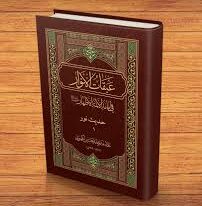
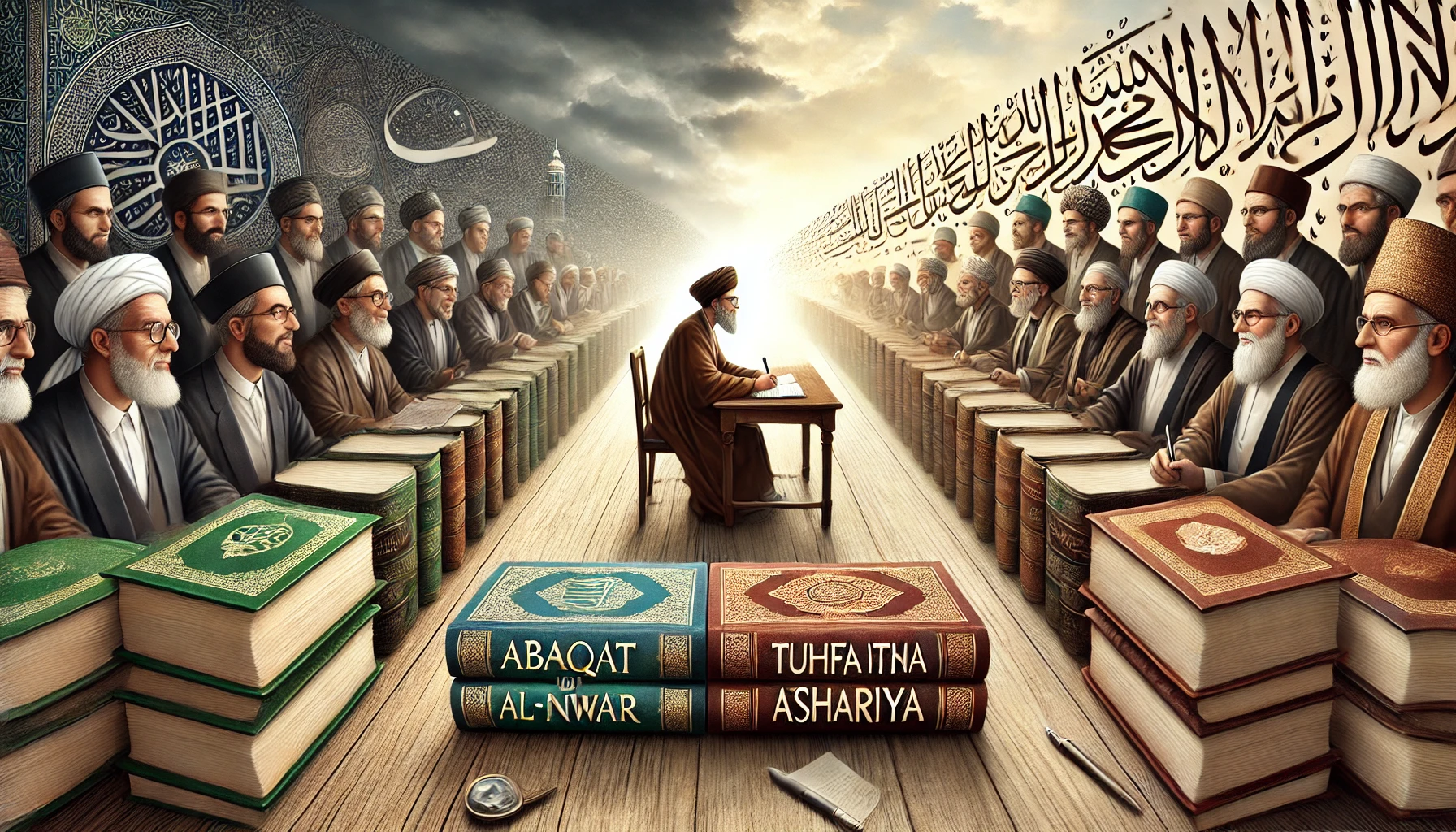
The article also reviews key theological works from both sides of the debate, including “Tuhfa Ithna Ashariyya” by Abdul Aziz Dehlavi and the Shi’a response found in “Abaqat al-Anwar” by Mir Hamid Husayn Hindi. These books represent scholarly dialogues between Shi’a theologist and their opponents, focusing on the theological and historical foundations of Imamate and caliphate.
This research shows that although Shi’a beliefs have been repeatedly challenged, these critiques have led Shi’a scholars to offer strong and well-documented responses. As a result, Shi’a theological literature has not only maintained its strength but has become more refined and precise. Moreover, such criticisms have pushed Shi’a scholars to articulate their core beliefs with greater clarity.
In conclusion, the article highlights the enduring importance of these theological debates in Islamic history and shows how they continue to shape differing perspectives on leadership in the Muslim world today.
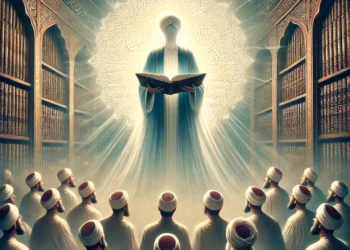
Explanation of the Article’s Illustration:
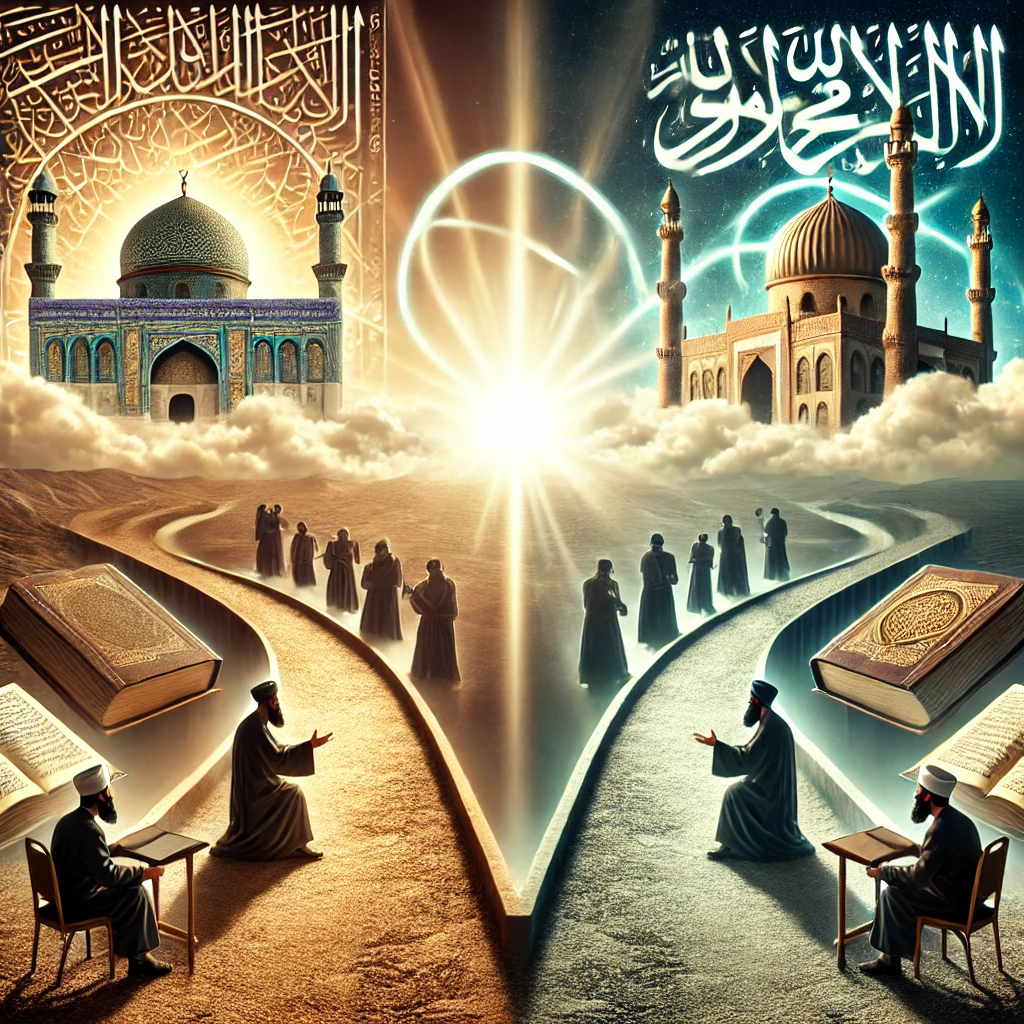
This conceptual image represents the two divergent paths in Islamic history, symbolizing the core disagreement over the issue of Imamate and Caliphate following the Prophet Muhammad (peace be upon him and his family). One path illustrates the divine Imamate and the immediate Caliphate of Imam Ali (peace be upon him), which is based on explicit designation and divine appointment. The other path depicts the Caliphate based on public selection and the theory of force and dominance, a view upheld by opponents of Shi’ism.
The light at the center of the image symbolizes divine truth and guidance, casting its presence over this historical divergence and drawing seekers of truth toward exploring documented evidence and theological discussions. This image serves as a visual metaphor for the scholarly debates and intellectual disputes surrounding Imamate and Caliphate—topics that this article aims to analyze.
In the history of Islam, no disagreement has been as influential as the dispute over the Prophet’s (peace be upon him and his family) succession and the issue of Imamate. This conflict is not only deeply rooted in the early history of the Muslim community, but due to its various dimensions, it also became the source of intellectual and social crises. It is a disagreement that still lingers at the heart of the Muslim world, having given rise to diverse religious and ideological movements.
The Dispute over the Prophet’s Succession: Divine Imamate or Popular Selection?
The most significant disagreement in the Muslim community—which continues to be discussed to this day—was the issue of the Prophet’s succession. This matter, which arose in the early days of Islam, became the foundation for later divisions and remained a central topic in theological and legal schools of thought.
Shi’a Muslims, known as the followers of the school of Shi’ism, believe that Imam Ali ibn Abi Talib (peace be upon him) was the immediate and divinely appointed successor of the Prophet. In this view, leadership is not a matter of public choice but a divine appointment. The Imam, from a Shi’a perspective, must be chosen by God, not elected by the people.
In contrast, opponents of the Shi’a believe that leadership should be established through the selection of the people. According to them, anyone chosen by the people may become the Imam and the Prophet’s successor. However, what is particularly striking is that—contrary to the outward appearance of this theory—none of the early Sunni caliphs actually came to power through a real process of public election, except for Imam Ali (peace be upon him), whose caliphate was indeed based on the genuine will and allegiance of the people during his time as the fourth caliph.
Force and Dominance: The Theory That Came to Dominate the Caliphate
The theory of “force and dominance” is one of the key ideas presented by opponents of Shi’ism. According to this view, anyone who manages to seize power—by any means, even through force, coup, or bloodshed—can be considered the legitimate caliph and successor of the Prophet. This perspective openly declares that what truly matters is strength and control, not the people’s choice.
This theory later gave rise to other ideas, such as the belief in the prohibition of rising against a ruler. According to this belief, even if the ruler is unjust, it is religiously and theologicaly forbidden to oppose him. Some traditions even suggest that if the ruler has the heart of a devil, resisting him is still not allowed.
Saqifah: The Starting Point of the Caliphate Dispute
After the Prophet of Islam (peace be upon him and his family) passed away, the first caliph was appointed at “Saqifah Bani Sa’idah” with the pledge of allegiance from just one person. Yet, in the discourse of the Shi’a opponents, this event is referred to as a “consensus,” even though in practice, only one person initiated and secured the decision. Interestingly, in this mindset, even a single person’s pledge is sometimes counted as a communal consensus!
These contradictions reveal that behind the so-called “theory of public choice” lies nothing but the reality of dominance and force. In practice, the one with more power and military strength becomes the caliph, regardless of true public approval.
Books and Debates: Scholarly Engagement Between the Shi‘a and Their Opponents
A Clash of Ideas: Theological Debates Between Shi‘a and Opposing Schools Throughout Islamic History
The Origins of Dispute in the Muslim Community
The most significant and impactful disagreement in the history of the Muslim community revolves around the issue of succession and leadership after the Prophet of Islam (peace be upon him and his family). This division became the root cause of many subsequent conflicts in Islamic history and led to the formation of two major ideological paths. One group, the Shi‘a, believes that leadership (Imamate) is divinely appointed, while the other groups believe that the caliph should be chosen by the people.
Shi‘a and Their Distinct Perspective on Imamate
Shi‘a Muslims believe that Imam Ali ibn Abi Talib (peace be upon him) was the immediate and divinely appointed successor of the Prophet. From their perspective, Imamate is a matter of divine designation and goes beyond popular vote or communal consensus. On the other hand, their opponents claim that leadership must be established through the people’s choice. However, in practice, many of the caliphs who ruled after the Prophet gained power not through a public election, but rather through force and dominance.
The Theory of Force and Domination: The Hidden Reality Behind Popular Choice
One of the central doctrines among Shi‘a opponents is the theory of “force and domination”, which holds that anyone who can seize power—through violence, military force, or political manipulation—can be recognized as a legitimate caliph. In this view, public consensus is often used as a façade to cover the reality of force and domination.
The Formation of Two Main Currents in Islam
After the passing of the Prophet, this dispute quickly manifested in the political sphere. One group firmly adhered to the Qur’an and the Prophet’s traditions, insisting that leadership must be designated by God. The other group rejected this notion and emphasized public selection as the basis of the caliphate.
Theological Writings and Scholarly Debates Between Shi‘a and Their Opponents
Both Shi‘a scholars and their opponents composed numerous theological texts to support their beliefs and respond to criticisms. Over time, a rich tradition of scholarly debate developed, especially in the form of systematic theological responses by Shi‘a scholars, continuing well into the 19th century CE.
Tuhfa Ithna Ashariyya
In the 19th century CE, during a time when Shi‘ism was expanding in India and some local rulers leaned toward Shi‘a beliefs, “Shah Abdul Aziz Dehlavi” published a book titled “Tuhfa Ithna Ashariyya” (Meaning A Gift to the Shiites). This work offered a harsh critique of Shi‘a doctrines, especially the concept of Imamate and the succession of Imam Ali (peace be upon him), structured across twelve chapters.
The Methodology of Tuhfa Ithna Ashariyya and Its Parallels With “Minhaj al-Sunnah”
The argumentative style and methodology of Tuhfa Ithna Ashariyya bear strong resemblance to that of “Minhaj al-Sunnah” by Ibn Taymiyyah. Both books are known for spreading baseless and ethically questionable arguments under the guise of scholarly criticism. These works represent a polemical approach aimed at discrediting Shi‘a beliefs rather than engaging in fair discourse.
Shi‘a Documentary Response: The Authoritative Work ‘Abaqat al-Anwar
In response, prominent Shi‘a scholar Sayyid Mir Hamid Husayn Hindi wrote “Abaqat al-Anwar”, a meticulously researched and well-argued refutation of the seventh chapter of Tuhfa Ithna Ashariyya. This monumental work was so comprehensive and methodical that none of the Shi‘a critics’ opponents could effectively counter it. ‘Abaqat al-Anwar remains a cornerstone in Shi‘a apologetics and theological defense.
Conclusion: The Enduring Legacy of ‘Abaqat al-Anwar
“Abaqat al-Anwar” is regarded as one of the most authoritative texts in Shi‘a theological literature. Due to its strong reasoning and extensive use of sources, it has stood the test of time and continues to serve as a key reference in defending Shi‘a doctrines and critically evaluating opposing beliefs.
Critique of the Tenth Chapter of “Tuhfa Ithna Ashariyya” and the Shi‘a Scholarly Response
The tenth chapter of Tuhfa Ithna Ashariyya is one of the most significant parts of the book, where Abdul Aziz Dehlawi addresses the Shi‘a criticisms regarding the first three caliphs. In this chapter, he attempts to refute the points raised by the Shi‘a about the caliphs and their legitimacy, claiming that they are not usurpers of the caliphate.
In Shi‘a theological works, there is often a section dedicated to critiquing the caliphs and examining their qualifications for the caliphate. Shi‘a scholars argue that several of the early caliphs were unqualified to succeed Prophet Muhammad. This critique has remained one of the central topics in Shi‘a theological texts Which is known as the “Muta’in”.
In response to Dehlawi’s criticisms, Father of Mirhamed Hossein Hendiwrote a book entitled “Tashid al-Mata‘in”. The term “Tashid” means “strengthening” or “reinforcing,” especially in the context of solid structures like towers, as referenced in the Quran. In this book, the author not only rejects Dehlawi’s critiques but also affirms and strengthens the Shi‘a criticisms against the caliphs, presenting them as more substantiated and firmly rooted in historical and theological evidence.
The purpose of Tashid al-Mata‘in was to affirm the correctness of the Shi‘a criticisms against the usurping caliphs. The author argues that the points raised by the Shi‘a regarding the caliphs are entirely valid and well-supported by sound arguments, demonstrating the unfitness of these rulers for the caliphate.
This book is especially significant due to its well-documented and well-reasoned responses to the issues raised in Tuhfa Ithna Ashariyya. the author Using credible sources and strong arguments to provides a scholarly defense of Shi‘a beliefs and gives a thorough rebuttal to Dehlawi’s critiques.
“Tashid al-Mata‘in” is regarded as a major scholarly work in the history of Shi‘a theology. The book highlights that the Shi‘a criticisms of the usurping caliphs are not baseless, but are instead backed by valid and credible evidence questioning the legitimacy of these rulers.
Conclusion
In conclusion, a comparative examination of Tuhfa Ithna Ashariyya and Shi‘a responses in works like Tashid al-Mata‘in demonstrates the depth and precision of Shi‘a theological debates. While Dehlawi attempts to reject the Shi‘a critiques of the first caliphs, Shi‘a authors strengthen and substantiate these critiques by drawing on reputable sources and scholarly reasoning. As such, Tashid al-Mata‘in not only serves as an academic rebuttal to Dehlawi’s criticism but also affirms the validity and robustness of Shi‘a beliefs regarding the caliphate and imamate. This ongoing intellectual and religious dialogue, which continues from the early centuries of Islam, highlights the vibrancy and depth of Shi‘a theological thought in confronting opposing ideologies.