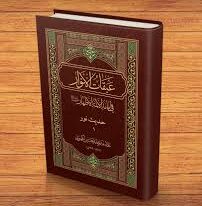






Al-Naba al-Azeem: A Forum for Shiite Research
Author: Hamed Sarem, A Free Interpretation of the Book Nafahat al-Azhar
Abstract
Seyed Mir Hamid Hussain, one of the most prominent Shia scholars, in his works, particularly Iqbaat al-Anwar, utilizes scientific and precise reasoning methods to defend the legitimacy of the Ahl al-Bayt (A) and critique the viewpoints of their opponents. This abstract reviews his most important methods and approaches in critiquing and analyzing hadiths and the arguments of opponents:
- Refuting Opponents’ Arguments: Seyed systematically refutes opponents’ arguments using mutawatir hadiths and analyzing the conduct of the companions (Sahabah).
- Examination of Hadith Chains and Meanings: He meticulously examines the chains of narration (Isnad) and the meanings of hadiths, exposing the weaknesses in the arguments of the opponents.
- Attention to the Context of Hadiths: Seyed gives special attention to the circumstances and time of the hadiths’ issuance, demonstrating that many hadiths were issued in specific contexts.
- Utilization of Sunni Hadiths: He employs Sunni hadiths to counter the arguments of opponents, providing a more comprehensive perspective.
- Opposition to Fabricated Hadiths: Seyed refutes the opponents’ arguments by rigorously examining and dismissing fabricated and weak hadiths.
These methods emphasize the importance of fairness, precision, and commitment to truth, showing that the virtues of the Ahl al-Bayt (A) are undeniable, and any attempt to distort them faces scientific and ethical challenges. This abstract can serve as a model for researchers in the fields of hadith studies, theology, and history.
Reason: A Shield Against Deception and Lies
Reason: A Shield Against Deception and Lies
Reason is a divine gift that enables humans to distinguish truth from falsehood. When reason encounters truth, it acknowledges it and does not rebel against it. This quality makes reason a divine proof for all humanity. God has based His guidance program on this reason, sending messengers whose truth is evident through rational reflection.
However, in opposition to guidance, misleaders have always sought to prevent reason from discerning the truth. Since reason never accepts falsehood in place of truth, misleaders resort to deceit and trickery. They attempt to confuse reason by hiding truths and distorting events, hoping to lead it astray. Their goal is to make humanity mistakenly choose the path of darkness instead of moving toward the light. Their mischief manifests in strange lies, document forgery, document destruction, distortion, concealment of truths, and even false testimony. These tactics have been repeated throughout history and continue to this day. The result of such actions is the reversal of truth, where falsehood is presented as truth to humanity.
Throughout history, the hypocrites who conspired during the life of Prophet Muhammad (PBUH) continued their betrayals after his death. They attempted to keep the society away from the truth and pushed the Ahl al-Bayt (A), the rightful heirs to the Prophet and the most knowledgeable among them, to the margins. Their main objective was to prevent humanity from benefiting from the knowledge and light of the Ahl al-Bayt (A). In this context, some writers also engaged in concealing the truth and obscuring the guiding light. They did everything they could to hide the divine light of guidance in darkness and introduced ignorant figures as the signs of guidance for future generations.
Allama Mir Hamid Hussain: The Scholar Who Turned Doubts into Ridicule
In the Face of Dark-Minded Efforts: The Dedication of Great Thinkers
In contrast to these dark-minded efforts, many great thinkers and scholars, with selflessness and sacrifice of worldly pleasures, dedicated their entire lives to research and writing. Through meticulous and methodical investigations, they disproved falsehood and established the truth. One of these great individuals was Allama Syed Mir Hamid Hussain Hindi. With tireless effort and unparalleled selflessness, he managed to introduce his master, Amir al-Mu’minin Ali (A), to the people in the light of truth. His work was so powerful that no one could deny this great truth with lies, concealment of facts, or distortion of established realities.
But how did he achieve this success? In previous writings, we explored his method of examining sources and reasoning according to established principles. In this
piece, we will examine his approach to responding to distortions and objections raised in the book Tuhfat al-Ifnashariyyah.
Allama Mir Hamid Hussain: A Scholar’s Commitment to Truth and Precision
Allama Syed Mir Hamid Hussain, beyond his scholarly prowess and meticulous attention to detail, exhibited unparalleled precision in ensuring the authenticity of quotes and the proper attribution of words to various individuals. Recognizing that falsehoods must be disguised to appear as truth in order to be accepted, he carefully and methodically scrutinized every line and word of the book Tuhfat al-Ifnashariyyah. His scrutiny was so thorough that it seemed as if not a single sentence in the book was in accordance with the truth. The contradictions and inconsistencies within the statements of the author of Tuhfat al-Ifnashariyyah, his students, and teachers were so glaring that no element of truth could be found within the book.
Like his great ancestor, Prophet Ibrahim (A), who left no excuse for idolaters, Allama Mir Hamid Hussain left no justification for those who sought to conceal the truth of Amir al-Mu’minin Ali (A) or turn away from him. Through his unwavering commitment to truth and his scholarly precision, he made it impossible for any distortion of Ali’s (A) dignity to remain unchallenged.
The Magnificence of the Author: Precision, Mastery, and Dedication to Truth
The greatness of the author, his meticulous attention to detail, mastery of the sciences, careful tracking of statements, integrity in quoting, and practical adherence to research principles all become evident in his methods of responding to objections or critiques of his arguments. With the strongest proofs and the most solid arguments, he closed all avenues and justifications, dispelling every doubt and suspicion. So much so that there was no room left for his opponents to attack the religion, challenge the evidence, or weaken the hadith. He addressed every objection with the best possible responses, employing fine research, beautiful attention to detail, logical reasoning, the imperatives of the Prophet, the reasoning of Ali (A), and the refutations of Imam Raza (A).
In all these efforts, he relied on the books of the Sunni scholars, drawing upon their teachings and the words of their greatest scholars in various fields of knowledge to substantiate his arguments. This demonstrated his deep scholarly commitment and broad intellectual capacity, making his work a towering example of academic excellence and integrity.
Allama Mir Hamid Hussain’s Rigorous Critique and Refutation of “Tuhfat al-Ifnashariyyah”
He addressed every single word in Tuhfat al-Ifnashariyyah, providing responses or critiques for each of the statements made. Often, he would counter the words of the author of Tuhfat with what the author himself had written in the same book or in other works. At times, he would refute them using the words of his father and other esteemed teachers. So thorough was his critique that the chapter on the twelve imams in Tuhfat was reduced to poetic letters and absurd phrases, which became the subject of ridicule among the people.
He would also engage with the words of his teacher, his father Wali Allah al-Dehlawi, as well as the writings of his students, particularly Muhammad Rashiduddin Khan Dehlawi and Haidar Ali Faizabadi. But his efforts didn’t stop there—he responded to the dismissals and distortions made by those who denied the truths of the Ahl al-Bayt, such as the followers of Ibn Taymiyyah, Ibn Qayyim, and others. These opponents, who sought to undermine the faith of the Ahl al-Bayt, were met with rigorous responses and scholarly investigations by Allama Mir Hamid Hussain.
This thorough and precise approach not only defended the Ahl al-Bayt’s honor but also systematically dismantled the arguments of those who sought to distort Islamic history and theology.
Iqbaat al-Anwar: The Encyclopedia that Illuminated the City of Knowledge to the World
Allama Mir Hamid Hussain’s Rigorous Analysis of the Hadith “I am the City of Knowledge and Ali is Its Gate”
Allama Mir Hamid Hussain, in his meticulous and profound study of the famous hadith “I am the City of Knowledge and Ali is Its Gate”, addressed every objection and criticism raised by figures such as Dehlawi and others with remarkable precision. In a single volume, he thoroughly established the authenticity of this hadith, focusing on its chain of narration (Isnad) with solid and comprehensive evidence.
Then, by examining the implications of the hadith, he clearly articulated the imamate of Amir al-Mu’minin Ali (A), using this hadith as a key proof. In one volume, Allama Mir Hamid Hussain responded to all the objections raised in the book Tuhfat al-Ifnashariyyah concerning this famous hadith. However, his work didn’t end there; in the second volume, he further addressed all individuals who raised objections to this hadith from any angle.
His thorough and detailed examination of the Hadith of the City of Knowledge in these two volumes stands as a monumental scholarly effort, reinforcing the importance of this hadith in establishing the rightful position of Amir al-Mu’minin Ali (A).
Allama Mir Hamid Hussain’s Comprehensive Response to the Objections of Sunni Scholars
Allama Mir Hamid Hussain, with unparalleled comprehensiveness and precision, responded to the objections of Sunni scholars—both from the classical and contemporary periods, from all corners of the world. This vast and profound research has transformed his work Iqbaat al-Anwar into an encyclopedia of doctrinal, scientific, and historical knowledge. The book stands as one of the most significant and extensive works in the field of theological discourse, written with a rigorous and scholarly approach, adhering to all the standards of investigative and academic research.
Through this monumental effort, Allama Mir Hamid Hussain not only refuted the criticisms against the Ahl al-Bayt (A) but also provided a comprehensive guide to understanding the foundational beliefs and historical truths that define the Shia perspective.
Iqbaat al-Anwar: A Unique Reference in Doctrinal, Scientific, and Historical Discourse
Iqbaat al-Anwar is not only recognized as a defensive work, but it has also become an unparalleled scientific and historical reference in the field of theological beliefs. With this monumental work, Allama Mir Hamid Hussain not only clarified the legitimacy of the Ahl al-Bayt (A) but also established a model of deep and methodical research for future scholars. As a result, this book has become an encyclopedia of doctrinal, scientific, and historical knowledge, and one of the most significant and extensive works ever written in the realm of doctrinal disputes.
In the following, we will highlight some of the key aspects of the book’s scholarly approach, showcasing its methodology in the discussion of scientific and theological issues. Through its rigorous research, Iqbaat al-Anwar sets a standard for academic inquiry, offering profound insights into the theological foundations of Islam and the rightful position of the Ahl al-Bayt (A).
Complete Quotation of the Opponent’s Words: A Fair and Scholarly Approach
The Methodology of Shiite Scholars: Full Quotation of Opponents’ Words and Responses
The traditional approach of Shiite scholars in addressing critiques is to fully quote the words of their opponents before providing a response. Allama Mir Hamid Hussain follows this method with remarkable accuracy and integrity. He does not paraphrase or omit any part of the criticism; instead, he quotes the words of Dehlawi and anyone else attempting to critique his stance verbatim, without any alteration or misrepresentation. This ensures that the reader can clearly understand the full scope of the opponent’s argument.
After presenting the complete quotation, Allama Mir Hamid Hussain proceeds to address the critique sentence by sentence, offering a detailed and methodical response to each point. This method not only demonstrates his commitment to intellectual honesty but also enhances the effectiveness of his rebuttals by allowing readers to see the opponent’s argument in its entirety before engaging with the response.
Through this approach, Allama Mir Hamid Hussain exemplifies the scholarly tradition of respect for opposing views while maintaining the strength and integrity of his own argument. It’s a clear demonstration of how scholarly debate should be conducted: transparently, thoroughly, and with a focus on truth.
Comprehensive Coverage: Rooted and Holistic Responses
Allama Mir Hamid Hussain’s Comprehensive and Rooted Responses
Allama Mir Hamid Hussain does not settle for brief or superficial answers. He believes that a simple refutation or brief response is never enough. Instead, he considers all aspects of an objection and addresses it from multiple angles. He leaves no aspect unexamined, ensuring that every part of the critique is thoroughly addressed. His responses are fundamental and deeply rooted, aimed at completely dismantling the falsehoods, distortions, and biases upon which the opponents of Shi’ism base their arguments.
In his approach, he goes beyond the surface to offer comprehensive, foundational responses that eliminate the very core of the arguments made by those who seek to distort the truth. By addressing every element of the critique, Allama Mir Hamid Hussain ensures that the misguided notions of his opponents are thoroughly refuted, leaving no room for doubt or misinterpretation. His method reflects a profound commitment to clarity and truth, ultimately safeguarding the integrity of Shi’a beliefs.
The Hadith of Thaqalayn and Ibn Jawzi’s Critique: A Detailed Examination of a Key Hadith
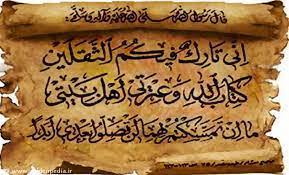
The Hadith of Thaqalayn is one of the most important hadiths used to argue for the Imamate of the Ahl al-Bayt (A). Ibn al-Jawzi mentions this hadith in his book Al-‘Ilal al-Mutanahiya fi al-Ahadith al-Wahiya (The Ultimate Causes of Weak Hadiths). In this book, he gathers unreliable and fabricated narrations. He narrates it as follows:
A Hadith about the Bequest to the Ahl al-Bayt: Abdul Wahhab al-Anmati informed us, saying: Muhammad bin al-Mazaffar informed us, saying: Ahmad bin Muhammad al-‘Atiqi informed us, saying: Yusuf bin al-Dakhil informed us, saying: Abu Ja’far al-Aqili informed us, saying: Ahmad bin Yahya al-Halwani informed us, saying: Abdullah bin Dahr informed us, saying: Abdullah bin Abdul Quddus from al-A’mash from Atiyah from Abu Sa’id, who said: The Messenger of Allah (peace be upon him) said: “I am leaving among you two precious things: the Book of Allah and my family (Ahl al-Bayt). These two will never separate from each other until they both return to me at the Pond . So see how you treat them after me.”
And regarding this hadith, he criticizes it, saying:
“This hadith is not authentic. Atiyah has been weakened by Ahmad, Yahya, and others. And Ibn Abdul Quddus, Yahya said: he is nothing, a vile Rafidi. And Abdullah bin Dahr, Ahmad and Yahya said: he is nothing, anyone who narrates from him is of no good.”
Allama Syed Mir Hamid Hussain provides 156 responses to Ibn al-Jawzi’s objections. Some of these responses include:
- Rejection of the claim of weakness of the hadith: Some Sunni scholars, citing reliable hadith books, have rejected the weakness of this hadith and have deemed it authentic.
- Examination of the narrators: The reliability of narrators such as Atiyah, Ibn Abdul Quddus, and Abdullah bin Dahr has been carefully examined.
- Criticism of Ibn al-Jawzi by Sunni scholars: A group of Sunni scholars, including Sibt Ibn al-Jawzi, al-Sakhawi, al-Samhudi, Ibn Hajar al-Makki, and al-Munawi, have criticized Ibn al-Jawzi’s mistake in mentioning this hadith in his book Al-‘Ilal al-Mutanahiya.
- Sibt Ibn al-Jawzi: He was astonished that this hadith had been overlooked by his grandfather.
- al-Sakhawi and al-Samhudi: They considered the mention of this hadith in Al-‘Ilal al-Mutanahiya to be incorrect and warned against this mistake.
- Ibn Hajar al-Makki and al-Munawi: They considered this mistake to be the result of Ibn al-Jawzi’s negligence or error.
Many Sunni scholars have deemed this hadith authentic and have rejected the claim of its weakness.
Criticism of the hadith attributed to the Prophet about Abu Bakr: An investigation into a historical fabrication.
When responding to the opponents of the famous hadith “I am the city of knowledge and Ali is its gate,” Ibn al-Jawzi narrated a hadith claiming that the Prophet (peace be upon him) said: “God did not pour anything into my chest except that I poured it into Abu Bakr’s chest.”
Criticisms of this hadith:
- Contradiction with reality: This hadith does not align with historical and logical evidence.
- Assertion of the hadith’s fabrication: Many Sunni scholars, including Ibn al-Jawzi, al-Tabari, Ibn Qayyim al-Jawziyah, and others, have deemed this hadith fabricated. – Ibn Qayyim: He described this hadith and others like it, which extol the virtues of Abu Bakr, as fabricated and without credibility. – Examples of such fabricated hadiths include:
– The manifestation of Allah on the Day of Judgment specifically for Abu Bakr.
– The Prophet’s fondness for Abu Bakr’s white hair as a sign of paradise.
Conclusion:
These hadiths, in addition to contradicting reality, have been recognized as fabricated by prominent Sunni scholars and are not reliable sources. This is a brief and summarized example of Allama Syed Mir Hamid Hussain’s research on an objection of Ibn al-Jawzi. As can be observed in this summary, he dismantled the foundation of concealing the truth about the Ahl al-Bayt (peace be upon them).
Allama Mir Hamid Hussain: Defender of the Sanctuary of Wilayat and Illuminator of Truths
Given the breadth of research and the scholarly comprehensiveness of Allama Mir Hamid Hussain, there is no room for objection or doubt in the sources that prove the legitimacy of Amir al-Mu’minin Ali (A.S.). Allama Syed Mir Hamid Hussain has worked in such a way that no space remains for the proliferation of doubts and objections. It should not be forgotten that the efforts of Syed Sahib al-‘Abqat al-Anwar reveal the reality that some, under the pretext of reviewing the chains of narration and warning the people about fabricated and forged hadiths, set aside many authentic and reliable narrations — in the name of goodwill — labeling them as fabricated or fabricated under the guise of falsification. This is a clear instance of concealing the truth.
In this scholarly struggle, Allama Mir Hamid Hussain did not limit himself to criticizing the book Tuhfat al-‘Ithna ‘Ashariyya. He completely dismantled everything that the opponents had fabricated using tools such as fabricating chains of narration, falsifying sources, concealment, and distortion. Not only did he expose the distortions in Tuhfat al-‘Ithna ‘Ashariyya, but he also critically examined and scrutinized all the companions and supporters of this movement in this regard. In every subject he addressed, he left no statement from the opponents unanswered and responded to all of their objections.
This scholar and defender of the sanctuary of Wilayat did not limit himself to responding only to the objections and statements of the opponents; he even addressed potential criticisms and objections that the opponents had not yet raised but could have. For example, regarding the famous hadith “The example of my Ahl al-Bayt among you is like that of Noah’s Ark…”, while Dahliwi only challenged the interpretation of the hadith and did not cast doubt on its chain of narration, Allama Mir Hamid Hussain, in addition to examining the meaning of the hadith, also addressed the issue of its chain of narration. Syed Rahmatullah (may Allah have mercy on him) mentions the names of 92 narrators of this noble hadith, beginning with prominent Sunni figures such as Shafi’i, Ahmad ibn Hanbal, and Muslim ibn Hajjaj, and continuing through his contemporaries. This action of his serves as a strong rebuttal to Ibn Taymiyyah, who harshly accused this hadith of being fabricated. Allama Mir Hamid Hussain, with firmness and scholarly precision, responded to these baseless claims and clearly established the authenticity of the hadith.
This comprehensive and precise approach of Allama Mir Hamid Hussain not only rendered the distortions and objections of the opponents ineffective but also showcased a unique model of scholarly research and defense of the truth of the Ahl al-Bayt (A.S.). Through these efforts, he has safeguarded the sanctity of Wilayat and preserved the truths from any distortion or concealment.
The Hadith of Ahl al-Bayt and the Ark of Noah: An Example of Allama Mir Hamid Hussain’s Scholarly and Comprehensive Method
The Hadith of the Ahl al-Bayt being likened to the Ark of Noah is an example of Allama Mir Hamid Hussain’s scholarly, comprehensive, and expansive method in examining the statements of opponents and responding to them. Allama Mir Hamid Hussain has discussed other narrations with the same breadth and comprehensiveness, even with regard to narrations such as the Hadith of the Station (Hadith al-Manzila), which is mutawatir (widely transmitted) and found in the Sahihayn (Sahih Bukhari and Sahih Muslim). This extensive discussion and critique of the opponents’ statements, along with the authentication of the narrations from the perspective of the great scholars of the opponents, has transformed his book ‘Abqat al-Anwar into a banner that reveals the depth of the bigotry and hostility of this group toward Amir al-Mu’minin Ali (A.S.). This book clearly demonstrates the extent of the slander, lies, and concealment employed to deprive Amir al-Mu’minin Ali (A.S.) of his rightful position. It seems that lies, slander, and distortion were the primary principles and scholarly methods of this group.
The Hadith “You are to me as Harun was to Musa”
The Hadith “You are to me as Harun was to Musa,” which is certainly mutawatir (widely transmitted) and is narrated in the two Sahihs (Sahih al-Bukhari and Sahih Muslim), with great scholars of the Imams emphasizing its authenticity and stability, has been thoroughly examined by Allama Mir Hamid Hussain. In several chapters, he has discussed the chain of narration of this hadith to respond to “Amadi” and his fanatical followers who claim that this hadith is not authentic.
It is clear that if he had not addressed this aspect of these two hadiths, no one would have objected to him, because Dahliwi—whose response is being considered—had not addressed this aspect. However, ‘Abqat al-Anwar, which was written to prove the Imamate of the Ahl al-Bayt, inevitably had to respond to these false claims that have been voiced by these individuals, and demonstrate to the scholarly community how deeply biased this group is and how they resort to lies and slander.
Referring to primary sources is one of the key methods of Allama Mir Hamid Hussain.
One of the important methods of Allama Syed Mir Hamid Hussain is referring to the original sources from which the objections have been quoted. This method uncovers many truths that are of great importance for those who genuinely seek the truth. Among these benefits is the identification of the intellectual theft committed by Dahliwi from others.
The revelation of Dahliwi’s intellectual theft.
One of the most important points that Allama Syed seeks to highlight is that Dahliwi did not present anything new; rather, everything he brought forth had already been mentioned in the works of earlier scholars. Syed (may Allah have mercy on him) has even proven that the book Tuhfat al-‘Ithna Ashariyya is plagiarized from the book Sawa’iq by Nasrullah Kabli, with additions from his father’s words and from Husam al-Din Saharnapuri, the author of Mara’fat. Additionally, the book Bustan al-Muhaddithin by Abdul Aziz Dahliwi is plagiarized from Kifayat al-Mutali‘ by Taj al-Din Dahan. This is a significant benefit, as it reveals that Dahliwi lacked originality in his research.
The revelation of the falsehood of many of the attributed claims.
By referring to the original sources that raised the objections, the baselessness of many of the attributed claims becomes clear. It becomes evident that in the words of this group in their disputes with the Shia, there are statements and attributions that have no foundation or truth. He points out these issues in his research and provides examples of them:
- Some have claimed in response to the Hadith of the Bird: “Ibn al-Jawzi mentioned it in his book Al-Mawdu’at.” This attribution is false.
- It has been attributed to Hafiz Yahya bin Ma’in that he said about the hadith “I am the city of knowledge”: “This hadith has no chain of narration.” This attribution is entirely invalid.
- It has been attributed to Tirmidhi that he said about the hadith “I am the city of knowledge”: “This hadith is rejected and strange.” This attribution is baseless.
- The criticism of the hadith “I am the city of knowledge” has been attributed to Shams al-Din Ibn Jazari. This attribution is false.
- Ibn Taymiyyah has attributed a hadith that is found in the Sahihs to these two books, claiming:
“Do you not see that it is established in the two Sahihs that the Prophet (peace be upon him), when consulting about the prisoners, asked Abu Bakr, who suggested a ransom, and then asked Umar, who suggested killing them? The Prophet then said: ‘I will inform you of your friend. O Abu Bakr, you are like Ibrahim who said: “Whoever follows me is of me, and whoever disobeys me, indeed You are Forgiving, Merciful” and like Isa (Jesus) who said: “If You punish them, indeed they are Your servants, and if You forgive them, indeed You are the Exalted in Might, the Wise.” And O Umar, you are like Nuh (Noah) who said: “My Lord, do not leave upon the earth any dwellers from among the disbelievers” and like Musa (Moses) who said: “Our Lord, wipe out their wealth and strengthen their hearts so that they will not believe until they see the painful punishment.”‘
However, such a hadith does not exist in the two Sahihs.”
- Some have denied the narration from Bayhaqi of the hadith of Ashbah: “Whoever wants to look at someone in knowledge, let him look at Ali ibn Abi Talib.” This denial was in response to Allama Hilli, who had used Bayhaqi’s narration as evidence. Syed has responded in detail to this denial.
- Fakhr al-Razi claimed that Ibn Ishaq did not narrate the Hadith of Ghadir, and his failure to do so is evidence of the weakness of this hadith. This claim is false, because Ibn Ishaq was not negligent in narrating the Hadith of Ghadir. In fact, he was one of its narrators, and a group of people have narrated it from him.
- Sheikh Ali Qari and Waliullah Dahliwi have falsely attributed the following hadith:
“Follow those after me, Abu Bakr and Umar” (Follow me and after me, follow Abu Bakr and Umar) to the two Sahihs. This attribution is false and baseless. Al-Hakim in his Mustadrak has explicitly stated that these two (Bukhari and Muslim) did not narrate this hadith.
One of the benefits of this method is the revelation of some of the distortions made by this fanatical and hostile group in the hadiths and the statements of scholars. This subject is very vast, and if compiled, it would itself become an independent book. It is worth mentioning an example of this:
The distortions of this group in the hadiths: Examples of deliberate alterations and changes.
One of the obvious examples of tampering with the hadiths is the alteration of the hadith “Indeed, Ali is from me and I am from Ali, and he is the guardian (wali) of every believer after me.” Tirmidhi narrates this hadith in full, but al-Baghawi omits the word “after me” and attributes it to Tirmidhi. This change has been repeated by a group, including Saharnapuri, the author of Al-Mara’fat, and Mawlawi Hassan Ali Muhaddith, a disciple of Mawlawi Abdul Aziz Dahliwi.
Even Muhammad bin Mu’tamid Khan Badakhshi, in a treatise entitled Rad al-Bid’ah, claimed that the word “after me” in this hadith is fabricated.
Shah Waliullah Dahliwi also narrates this hadith in full in his book Izalat al-Khifa, but when responding to it, he replaces “he is” with “I am” and omits the word “after me,” just as al-Baghawi and his followers did.
These deliberate alterations in the hadiths demonstrate an attempt to distort the facts and diminish the position of Amir al-Mu’minin Ali (A.S.). These actions not only question the scholarly credibility of these individuals but also highlight their bigotry and hostility toward the Ahl al-Bayt (A.S.).
Examining the Chains of Narration and Implications of Hadiths: The Scholarly Method of Allama Mir Hamid Hussain
In order for a hadith to be credible, its chain of narration must first be evaluated, and then its implication for the claim must be fully established. This principle is the core of many of the responses and debates of Syed Mir Hamid Hussain. His method of examining chains of narration is as follows:
- Narrating the hadith along with its chain of narration: He presents the hadith along with its complete chain of narration or through all available reliable sources when multiple chains exist.
- Evaluating the status of the primary narrator: The status of the primary narrator of the hadith is examined across all available chains.
- Examining common narrators: The status of narrators who appear in multiple chains, or all of them, is analyzed.
- Analyzing the conditions of other narrators: The conditions of other narrators are evaluated based on the views of the scholars of Jarh wa Ta’dil (criticism and evaluation) from the Ahl al-Sunnah.
- Attention to weaknesses in the chain: Weaknesses in the chain, such as isnad (broken chains) and other deficiencies, are carefully considered.
Syed even if the opponent has not cited a particular hadith, but a similar one exists in the sources of the opponent, he examines and refutes its chain of narration to highlight the weakness of the opponent’s argument.
Examining the Hadith Quoted by Asami
Asami, in order to counter the hadith “I am the city of knowledge and Ali is its gate,” cites a hadith from the Prophet Muhammad (PBUH) that attributes specific qualities to certain companions:
- Abu Bakr: The most compassionate among the Ummah.
- Umar: The strictest in matters concerning Allah.
- Uthman: The most truthful due to his modesty.
- Mu’adh bin Jabal: The most knowledgeable about what is lawful and unlawful.
- Zayd bin Thabit: The most knowledgeable in jurisprudence.
- Ubayy bin Ka’b: The best reciter of the Quran.
- Abu Ubayda: The trustworthy of the Ummah.
Examining the Chain of Narration of the Hadith:
Syed Mir Hamid Hussain has thoroughly examined this hadith and identified its weaknesses as follows:
- The centrality of Anas bin Malik in all chains: Anas bin Malik, who is famously known for his animosity towards Amir al-Mu’minin Ali (A.S.), is the main narrator of this hadith.
- Weak narrators: Some chains include narrators like Abu Qilabah, Khalid al-Haddaa, Abdul Wahhab al-Thaqafi, Muhammad bin Mathni, Waki’ bin Jarrah, and others, who have been considered weak or accused of lying by the scholars of Jarh wa Ta’dil.
- Mursal chains: Some chains are mursal, and mursal hadiths are considered weak and unreliable by the majority of hadith scholars.
The opinions of hadith scholars about the hadith:
Syed has quoted scholars such as Ibn Hajar, Nawawi, and Suyuti, who emphasized the weakness of the hadith and regarded it as mursal. He also refers to Asami’s direct transmission from Abu Qilabah and Qatadah without mentioning the chain, and critiques these instances from various perspectives.
Final Analysis:
This analysis shows that the hadith quoted by Asami has fundamental flaws in both its chain of narration and content. Relying on weak and mursal narrations to counter authentic and credible hadiths is an unprincipled approach, and the contradictions in Asami’s reasoning reveal the groundlessness of his viewpoint.
Examining the Conditions of the Issuance of Hadiths and Analyzing Them
One of the methods employed by Syed Mir Hamid Hussain in examining hadiths is paying attention to the conditions under which they were issued. This approach plays a significant role in uncovering the truth and understanding the texts correctly. For instance, two hadiths are examined:
The Hadith of Abdullah bin Mas’ud’s Approval:
Dahliwi narrates a hadith in which the Prophet (PBUH) is reported to have said: “I am pleased with what Ibn Umm Abd (Abdullah bin Mas’ud) is pleased with.” At first glance, this hadith seems to indicate the Prophet’s absolute approval of Ibn Mas’ud’s decisions. However, Syed Mir Hamid Hussain, by closely examining the conditions under which the hadith was issued and the accompanying evidence, shows that this hadith is limited to a specific issue and cannot be used to counter the Hadith of Thaqalayn (which emphasizes the position of Ahl al-Bayt).
This hadith is found in Mustadrak al-Hakim and refers to an incident where the Prophet asked Ibn Mas’ud to recite the Qur’an. After hearing the verses, the Prophet
praised him and said: “I am pleased with what Ibn Umm Abd is pleased with.” However, the context of the narration indicates that this statement was limited to his approval of Ibn Mas’ud’s adherence to Allah, the Prophet, and the religion of Islam.
Summary and Analysis:
Examining the conditions under which hadiths were issued reveals their precise meaning and prevents misinterpretations. Syed Mir Hamid Hussain has demonstrated that many hadiths, when viewed superficially or even distorted, have been used to counter the authentic hadiths of the Ahl al-Bayt (A.S.). However, a careful analysis shows that these hadiths not only fail to counter the Ahl al-Bayt’s position, but in their more accurate versions, they serve as an endorsement of the elevated status of the Ahl al-Bayt.

A lasting legacy of research and defense of the truth.
Allama Mir Hamid Hussain, with these precise and scholarly methods, has not only nullified the distortions and objections of the opponents but has also showcased an unparalleled model of scientific research and defense of the truth of Ahl al-Bayt (A.S.). Through these efforts, he has safeguarded the sanctity of Wilayat and preserved the truths from any distortion or concealment.
Dahliwi’s Challenges with the Hadith of Thaqalayn: An Analysis of Syed Mir Hamid Hussain’s Responses
Abdul Aziz Dahliwi, in an attempt to counter the virtues of the Ahl al-Bayt (A.S.), compared the Hadith of Thaqalayn with other hadiths to undermine the position of the Ahl al-Bayt. Syed Mir Hamid Hussain (may Allah have mercy on him), in response to this approach, has provided prominent scholarly and historical critiques. Below is a summary of these critiques, along with analysis.
Guidance of Ammar: Contradiction in the Actions of the Companions
Dahliwi compares the Hadith of Thaqalayn with another hadith from the Prophet (PBUH): “Follow the guidance of Ammar.”
Syed Mir Hamid Hussain emphasizes that Ammar ibn Yasir was a loyal Shi’a of Amir al-Mu’minin Ali (A.S) and refrained from pledging allegiance to Abu Bakr. He then points out the behavioral contradictions of other companions with this hadith:
- Umar ibn al-Khattab turned away from Ammar’s guidance.
- Uthman wronged him.
- Many leaders of Quraysh and companions, such as Talhah, Zubair, and Muawiya, opposed him, and ultimately, Muawiya’s army was responsible for his martyrdom.
If Ammar’s guidance is a criterion for truth, why was this standard not followed? This contradiction shows that the hadith relied upon by Dahliwi cannot replace the Hadith of Thaqalayn.
The Approval of Ibn Mas’ud: Contradiction in the Actions of Uthman
Dahliwi compares the Hadith of Thaqalayn with another narration from the Prophet (PBUH): “I am pleased with what Ibn Umm Abd (Abdullah bin Mas’ud) is pleased with.”
Syed points to the opposition and wrongful behavior of Uthman toward Ibn Mas’ud, including humiliating him in public. Such behavior toward someone whose approval was presented as a standard of truth is contradictory.
These actions demonstrate that Ibn Mas’ud’s approval as a standard of truth was disregarded in practice. Therefore, this hadith cannot replace the Hadith of Thaqalayn.
The Knowledge of Mu’adh ibn Jabal: Ignorance of Religious Rulings
Another hadith quoted by Dahliwi is: “The most knowledgeable among you in matters of halal and haram is Mu’adh ibn Jabal.”
Syed Mir Hamid Hussain, referencing history, points out Mu’adh’s ignorance regarding religious rulings and his financial misconduct. How can someone who was ignorant of legal rulings be presented as a standard of knowledge?
This hadith contradicts historical reality and cannot be used as a standard of knowledge.
The Companions as Stars: Contradictions in the Actions of the Companions
The famous hadith “My companions are like stars; whoever follows them will be guided…” is also cited by Dahliwi to counter the Hadith of Thaqalayn.
Syed Mir Hamid Hussain, however, provides multiple examples of the ignorance of the companions regarding the Qur’an and Islamic rulings, and even their involvement in major sins such as usury and lying. Can such behavior represent stars that are meant to guide humanity?
This hadith contradicts the wrongful actions of many companions and cannot be used as a standard of truth.
Syed Mir Hamid Hussain’s Analysis of Dahliwi’s Approach
Dahliwi, in many cases, has relied on hadiths that are either weak in chain of narration or contradict history and reason. This indicates his failure to adhere to the standards of scholarly research.
Syed Mir Hamid Hussain demonstrated that Dahliwi engaged in systematic distortion, as he selectively quoted and distorted texts in an attempt to weaken the position of the Ahl al-Bayt.
Throughout his critiques, Syed emphasized the importance of adhering to scholarly ethics and criticized Dahliwi for his bias and reliance on unreliable sources.
Summary: A Lasting Legacy of Research and Defense of the Truth
Syed Mir Hamid Hussain’s method not only demonstrates his scholarly depth but also serves as a model for researchers, emphasizing the importance of fairness, precision, and commitment to the truth. A review of his critiques leads us to the conclusion that the virtues of the Ahl al-Bayt (A.S) are not only undeniable but that efforts like those of Dahliwi’s works, rather than succeeding in undermining these virtues, expose the ethical and scholarly flaws within those very works.
Through his precise and scholarly methods, Syed Mir Hamid Hussain has not only nullified the distortions and objections of his opponents but has also presented an unparalleled example of scientific research and defense of the truth of the Ahl al-Bayt (A.S). With these efforts, he has safeguarded the sanctity of Wilayat and preserved the truths from any distortion or concealment.
Critique and Refutation in Syed Mir Hamid Hussain’s View: Scientific and Argumentative Methods
Syed Mir Hamid Hussain, in his analysis and research, has employed strong scientific and argumentative methods, with one of the most prominent being the method of refutation. He has skillfully critiqued the opinions and arguments of his opponents in a way that makes responding to them almost impossible. His books are filled with strong and thought-provoking refutations that challenge the reader’s mind. Below, we will examine examples of these methods:
Refutation of Dahliwi’s Arguments Regarding the Hadith of Ghadir
Abdul Aziz Dahliwi, in his critique of the Hadith of Ghadir, stated that if the Prophet (PBUH) intended to designate an Imam and Caliph, he should have explicitly stated it so that no dispute would arise. In response, Syed Mir Hamid Hussain, by citing the hadith “The Imams after me will be twelve” (الأئمة من بعدي اثنا عشر), demonstrates that this hadith, in its meaning, is clear to the followers of the Imamite sect. He argues that the Sunni scholars, in their efforts to distort its meaning, resort to unwarranted interpretations to deviate from its true significance.
Refutation of the Hadith of “Khawkhat Abu Bakr”
Some have cited the hadith of “Khawkhat Abu Bakr” to argue for Abu Bakr’s caliphate. In response, Syed Mir Hamid Hussain critiques this reasoning, prioritizing the hadith “Man Kunto Mawlah Fa-Ali Mawlah,” which clearly points to the Imamate of Ali (A.S). He demonstrates that the Hadith of Ghadir explicitly and decisively affirms the wilayah (leadership) of Amir al-Mu’minin Ali (A.S), and that the hadith of “Khawkhat Abu Bakr” cannot replace it.
Refutation of Ibn Kathir’s Claim Regarding the Virtue of Fasting on the Day of Ghadir
Ibn Kathir, in his critique of the hadith from Abu Huraira regarding the virtue of fasting on the Day of Ghadir, argued that it is impossible for the fast of a single day to equal the reward of sixty months, especially when the fast of Ramadan is equivalent to ten months. In response, Syed Mir Hamid Hussain refutes this claim by referencing hadiths from Sunni sources that highlight the virtues of fasting on specific days, such as the 27th of Rajab and the Day of Arafah. He demonstrates that special virtues for certain days are well-established in Sunni hadiths, and therefore, Ibn Kathir’s argument is baseless.
Refutation of Ibn Rozbihan’s Claim Regarding the Prayers of Amir al-Mu’minin
Regarding the prayers of Amir al-Mu’minin (A.S) for those who concealed the Hadith of Ghadir, such as Anas bin Malik and Jarir bin Abdullah Bajali, Ibn Rozbihan claimed that this was against the ethics of Amir al-Mu’minin. In response, Syed Mir Hamid Hussain refutes this claim by citing the prayers of the Prophet (PBUH), Imam Ali (A.S), and other companions, showing that praying for the guidance or punishment of those who conceal the truth was consistent with the practices of the Prophet and the Imams (A.S).
Opposition to Fabricated Hadiths:
- Opposition to the Hadiths Exalting the Companions: Syed, through a detailed examination of the hadiths that extol the companions, demonstrates that many of these hadiths contradict the actual behavior of the companions. For instance, in critiquing the hadith “The most merciful of my Ummah towards my Ummah is Abu Bakr,” he points out behaviors of Abu Bakr that contradict this claim.
- Opposition to the Hadith of Shura: Syed critiques the hadith “Shura is for the Muhajirun and Ansar” and shows that the caliphate of the first three caliphs did not occur through genuine consultation with the Muhajirun and Ansar, and therefore this hadith cannot be used as proof of the legitimacy of their caliphate.
- Opposition to Fabricated Hadiths on Imamate: Syed analyzes hadiths like “If there were to be a prophet after me, it would be Umar” and highlights the weakness in both the chain of narration and the implications of these hadiths, arguing that they cannot be used as proof of Umar’s superiority.
Syed Mir Hamid Hussain, in his critique and analysis of hadiths, employs ruthless and precise methods to refute the arguments of his opponents, responding to any
attempt to distort the truth with strong and solid evidence.
The Ruthless Pen of Allama Mir Hamid Hussain

The pen of Syed Mir Hamid Hussain has relentlessly engaged in a battle against treacherous pens. His pen, with unparalleled decisiveness and unwavering resolve, has risen to confront those pens that have sought to distort, fabricate, and erase the truth. With a serious and uncompromising approach, he has identified even the smallest errors and deviations, and with solid arguments and decisive reasoning, he has refuted every doubt and distortion. His intellectual rigor and commitment to truth have set a powerful example in the defense of the rightful position of the Ahl al-Bayt (A.S) and the preservation of Islamic heritage.
In this intellectual battle, his pen does not merely settle for simple refutation; rather, with meticulous scrutiny and reliance on rational and historical standards, it uncovers the truth from among the incorrect and fabricated interpretations. His ruthless decisiveness in this endeavor reflects the depth of his knowledge and his commitment to safeguarding the authentic teachings. This seriousness and steadfastness in defending the truth have transformed his writings into a lasting model in the history of scholarly critique and analysis.
The End of the Words, the Beginning of Enlightenment
Allama Syed Mir Hamid Hussain, through the composition of his unparalleled work ‘Abqat al-Anwar, not only provided a firm and scholarly defense of the truth of Ahl al-Bayt (A.S), but also presented an unmatched model for hadith and theological research. The comprehensiveness of his work, which includes a meticulous examination of chains of narration, a comprehensive analysis of the implications of hadiths, attention to the conditions under which the hadiths were issued, and the use of credible sources from Ahl al-Sunnah, offered a decisive and irrefutable response to the distortions of Abdul Aziz Dahliwi in Tuhfat al-Ithna Ashariyya.
His methods, including the systematic critique of fabricated hadiths and the identification of distortions, were not only successful in discrediting Dahliwi’s doubts but also paved the way to prevent any similar attempts in the future. He demonstrated that the virtues of Ahl al-Bayt (A.S) are a truth that not only remains immune from distortions but is further clarified through scientific and ethical reasoning.
Allama Mir Hamid Hussain, with courage and steadfastness, exposed numerous distortions and slanders, clearing the path for those seeking reason and truth. Although the proponents of Saqifah and Umayyad-leaning ideologies have always attempted to create ambiguity and taint the scholarly environment, his great intellectual jihad pierced through this darkness and revealed the truth of Amir al-Mu’minin (A.S) and the purified Imams (A.S).
In the end, he emerged not only as a defender of the truth but also as a monumental and timeless example for researchers and truth-seekers. His jihad in defense of faith and the legitimacy of Islam has made him a great and honorable figure in the history of Shia and Islamic scholarship.
Today’s Responsibility, Tomorrow’s Enlightenment
O seekers of truth and lovers of justice! Now that another chapter in the history of enlightenment and defense of truth has been written by the pen of Allama Mir Hamid Hussain, it is time for you to step onto this illuminated path. Through his great intellectual jihad, he has cleared the darkness of distortion and fabrication from the face of truth, paving the way for thinkers and truth-seekers. However, this path still requires the light of your pens and the loud voice of justice.
Distortions and lies will never remain silent unless truth’s lovers rise against them. You, who carry the love for light and knowledge in your hearts, can continue this journey. Every word you speak, every pen you write to defend the truth, and every moment you spend in spreading enlightenment is a step towards revealing the truth.
Let us, through learning, research, and tireless effort, protect the invaluable legacy of the scholars before us and preserve the truth against the waves of darkness. This responsibility is not just an academic duty but a moral commitment. Now is the time for each of us, with a pen in hand and love in our hearts, to light another lamp on the path of truth-seeking.

Let us share this text, discuss it, and give our opinions. Every conversation, every opinion, and every reflection you contribute will be a part of the enlightenment and a step in supporting the truth. By sharing these thoughts, you too can be a part of this great movement in defense of the truth. Every word you publish will be a light that breaks the darkness.
Together, through dialogue and unity, we can keep the truth alive and shine light into the heart of darkness. Rise up and take on this responsibility. Today, the support of truth rests in your pen, your thoughts, and your actions.
Author: Hamed Sarem
This text has been freely condensed, summarized, and rewritten based on the valuable book Nafahat al-Anwar by Ayatollah Milani. In this process, the concepts of the book have been presented in a simple and accessible manner to facilitate understanding for the audience. Additionally, the scientific value and core content of the work have been preserved. These efforts have been made solely to convey the concepts in the best possible way, with full respect for the original author’s rights.