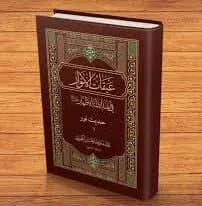
From “the Two Weighty Things” to the Obligation to Take from and Act in Accordance with the ʿItrah: An Analysis of the Fourth Aspect of the Signification of Hadith al-Thaqalayn in ʿAbaqāt al-Anwār and a Critique of ʿAbd al-ʿAzīz Dihlawī’s Claim
Author: Hamed Sarem
Sometimes a single word bears the entire weight of a historical dispute; in the Hadith of the Two Weighty Things, that word is “thaqalayn.” In the fourth line of argument in ʿAbaqāt al-Anwār, Mīr Ḥāmid Ḥusayn Hindī demonstrates that placing the Qurʾan and the Prophet’s progeny side by side is not merely an expression of respect. When dozens of Sunni lexicographers, hadith scholars, and commentators speak of “taking hold,” “acting upon,” “following,” “submission,” and “observing rights,” one can no longer relegate the progeny from the center of the hadith to its margins and then claim that this statement has no bearing on authority and leadership. This article rereads one of the most precise links in the argument of ʿAbaqāt: the point at which an apparently simple designation becomes the testing ground for a major claim. Can one be a “weighty thing,” stand alongside the Qurʾan, be an object of adherence and following, and still be excluded from the question of guiding the community?
Abstract
This study examines the fourth line of argument concerning the implications of the Hadith of the Two Weighty Things in ʿAbaqāt al-Anwār, in which Mīr Ḥāmid Ḥusayn Hindī argues for the obligation to follow the Ahl al-Bayt on the basis of the Prophet’s own expression “thaqalayn” and the explanation of the reason for this designation. The study’s central question is whether designating the Qurʾan and the progeny as the “Two Weighty Things” refers solely to their greatness and nobility, or whether, within the Sunni lexicographical and hadith tradition, it also carries practical and prescriptive implications. The research method consists of an intratextual analysis of the argument presented by the author of ʿAbaqāt and an inductive classification of the extensive collection of statements by Sunni lexicographers, hadith scholars, and commentators that he assembled to explain “thaqalayn.” Examination of these statements shows that, in addition to “greatness of worth” and “loftiness of standing,” expressions such as “الأخذ بهما” (“taking hold of both”), “العمل بهما” (“acting upon both”), “اتباعهما” (“following both”), “الانقياد لهما” (“submitting to both”), and “وجوب رعاية حقوقهما” (“the obligation to observe the rights of both”) recur in explanations of this designation. Accordingly, the progeny is presented in the hadith not merely as an object of honor and love, but, alongside the Qurʾan, as that which must be adhered to, acted upon, and followed. The article demonstrates that the author of ʿAbaqāt does not leap from the mere lexical meaning of “thaqal” to the obligation to follow; rather, his argument rests on the connection between the designation itself, the reason for the designation, and the practical obligation. The study concludes that ʿAbd al-ʿAzīz Dihlawī’s response—that “the object of adherence need not possess supreme leadership”—does not account for all the evidence at issue, because it abstracts the concept of the “object of adherence” from the actual attributes specified in the hadith. Although the fourth line of argument does not, on its own, establish every component of the theory of the Imamate, it presents a serious and documented challenge to the absolute denial of any connection between the Hadith of the Two Weighty Things and the religious authority of the progeny.
Keywords: Hadith of the Two Weighty Things; ʿAbaqāt al-Anwār; Mīr Ḥāmid Ḥusayn Hindī; ʿAbd al-ʿAzīz Dihlawī; thaqalayn; obligation to follow the Ahl al-Bayt; adherence and practice; religious authority.
1. Introduction: The Fourth Line of Argument as a Continuation of the Three Preceding Links
The dispute between the author of ʿAbaqāt and ʿAbd al-ʿAzīz Dihlawī in the discussion of the implications of the Hadith of the Two Weighty Things is not a dispute over an isolated word or a disconnected lexical interpretation. Mīr Ḥāmid Ḥusayn Hindī unpacks the structure of the hadith part by part and, in each line of argument, subjects the same negative judgment by Dihlawī to examination from a fresh perspective. Dihlawī had written: “This hadith, too, like the preceding hadiths, has no bearing on the claim, because the object of adherence need not possess supreme leadership.” The question that the author of ʿAbaqāt poses against this proposition addresses precisely this general formulation: Can the “object of adherence” in the Hadith of the Two Weighty Things be separated from the full set of contextual indications, attributes, and relations that the hadith itself establishes for it, and then be subjected to the same judgment that might hold for any other object of adherence? Or must one first examine the attributes with which the prophetic text presents the Qurʾan and the progeny, and the kind of relationship it establishes between the community and these two?
The first three arguments each examined one of these contextual indicators independently. The first concerned the meaning of “holding fast” (tamassuk), and the author of ʿAbaqāt, drawing on the statements of Sunni scholars, demonstrated that holding fast to the Prophet’s progeny cannot be reduced to mere love and respect, but is connected with seeking guidance, taking them as exemplars, and following them. The second argument addressed the degree of this following, examining adherence to the progeny alongside adherence to the Quran with respect to obligation and necessity. The third highlighted the function of holding fast in the period after the Prophet, where holding fast to the two weighty things is linked to “لن تضلوا بعدي” (“you will never go astray after me”) and protection from misguidance after the Messenger of God. The fourth argument repeats none of these three approaches. This time, the very designation that the Prophet chose for the Book of God and his progeny—namely, “ثقلین” (“the two weighty things”)—becomes the subject of the argument.
The author of ʿAbaqāt’s reasoning in this argument consists of two distinct but interconnected stages. The first is the very designation of the Quran and the progeny as “ثقلین” (“the two weighty things”). The author of ʿAbaqāt explicitly writes that “this designation alone” is itself “a clear proof and a manifest demonstration” of the obligation to follow the Ahl al-Bayt. The starting point of the argument thus precedes consultation of the lexicographers’ statements: the Prophet introduced the Book of God and the Ahl al-Bayt under a shared designation, using the dual form, “ثقلین.”
As an analytical explanation of this passage—and not as a formulation used by the author of ʿAbaqāt himself—a structural point may be added. The dual form “ثقلین” is meaningful when the “Book” and the “progeny” each independently constitute an instance of a “ثقل” (“weighty thing”). Just as, in a sound classification, different things are placed in a single set only by virtue of an encompassing designation, so too the Quran and the progeny, despite their difference in nature, are brought under the encompassing designation “ثقل” in this prophetic statement. If we count an apple and a pear together, we call the result “two fruits,” because “fruit” is the shared aspect encompassing both individuals; it is not that one is an apple while the other falls outside the designation of fruit altogether. In the hadith, likewise, applying the designation “ثقلین” means that the Quran is one “ثقل” and the progeny is also one “ثقل,” and that both share the designation “ثقل” with respect to the aspect that gave rise to this naming.
What can be established with certainty at this stage is that the progeny, alongside the Quran, has been made an independent instance of the same designation that the Prophet applied to the two in the form “ثقلین.” Accordingly, one cannot regard the Quran in this expression as possessing a substantive status and a guiding role, while without justification reducing the progeny to a ceremonial element devoid of practical function. The decisive question begins precisely here: what is the shared aspect that led the Prophet to bring the Book and the progeny together under the single designation “ثقلین”?
The second stage of the author of ʿAbaqāt’s argument answers this very question: what does “ثقل” mean in this hadith, and why are the Quran and the progeny called “ثقلین”? At this stage, the author of ʿAbaqāt does not content himself with a personal interpretation; rather, he assembles an extensive collection of statements by Sunni lexicographers, hadith scholars, and commentators to clarify how they themselves understood this designation. The significance of this extensive survey lies in the fact that the answers are not entirely identical, yet converge on several meaningful themes: some understand “ثقل” as referring to the greatness of the Quran’s and the progeny’s worth, their preciousness, and their exalted standing; some emphasize the weightiness of observing the rights of both; and a considerable number explicitly identify the reason for the designation as the weightiness of “taking hold of” both and “acting upon” them. In some transmitted statements, this meaning is made still more explicit through expressions such as “اتباع” (“following”), “انقیاد” (“submission”), “المحافظة على رعايتهما” (“maintaining due observance of both”), “القيام بواجب حرمتهما” (“fulfilling the duty of reverence owed to both”), and “العمل بما يتلقى عنهما” (“acting upon what is received from both”).
Contrary to what might initially be supposed, this diversity of expressions does not render the author of ʿAbaqāt’s argument diffuse; rather, it clarifies the semantic range of “ثقلین.” These statements are not all on the same level, and a single meaning should not be forcibly extracted from them. The expression “greatness of worth” does not, by itself, have the same implication as “العمل بهما” (“acting upon both”) or “اتباعهما” (“following both”); likewise, “observing rights” is not identical to “obeying commands.” The strength of the author of ʿAbaqāt’s method lies in preserving these differences in his quotations while relying on those explicit statements that speak directly of taking hold of, acting upon, and following both weighty things. In the abridgment, Nafaḥāt al-Azhār, this same theme is also brought together more explicitly: the reason for this designation is discussed in terms of “العمل والأخذ بهما والانقياد لهما والمحافظة على حقوقهما ورعايتها وما يجب لهما” (“acting upon and taking hold of both, submitting to both, safeguarding and observing their rights, and what is due to both”). This formulation is a concise explanation of the body of evidence that the author of ʿAbaqāt assembled in detail.
At this point, the fourth argument moves beyond a purely lexical discussion and directly engages al-Dihlawī’s claim. If, in the explanations of a number of Sunni scholars, the designation “the Two Weighty Things” (al-thaqalayn) is applied to the Qurʾān and the Prophet’s progeny because adhering to both and acting upon both is burdensome, then the presence of the progeny in the hadith can no longer be reduced to respect, affection, or a merit unrelated to the practical guidance of the community. The author of ʿAbaqāt focuses precisely on this link: adhering to the rulings of the Qurʾān and acting upon them is obligatory and binding; and when the scholars of the opposing side have themselves included the progeny in the same formulation, “adhering to both and acting upon both” (الأخذ بهما والعمل بهما), the progeny, too, appears in the text of the hadith as an object of adherence and practice. From the perspective of the author of ʿAbaqāt, the conclusion of these premises is clear: “Thus, adhering to the commands of the progeny and acting upon them will likewise be obligatory and binding.”
Thus, the argumentative force of the fourth argument takes shape through an orderly chain: first, the Qurʾān and the progeny are both “weighty things” (thaqal); next, the basis for their sharing this designation must be clarified; and then, on the basis of numerous explicit statements by Sunni scholars, “adhering to both and acting upon both” is identified as one of the most important grounds for this designation. At this point, the discussion is no longer about an honorific title; within the structure of the hadith, the progeny becomes one of the two objects toward which the community stands in a relationship of “adherence,” “practice,” “following,” and “submission.” It is precisely the strength of this meaning that must be assessed in the remainder of the article through a detailed examination of the statements of Sunni scholars.
2. ʿAbd al-ʿAzīz al-Dihlawī’s Statement and the Point of Departure for the Fourth Argument
In denying that the Hadith of the Two Weighty Things indicates the Imamate, ʿAbd al-ʿAzīz al-Dihlawī writes:
“And this hadith, too, like the preceding hadiths, has no bearing on the claim, because it is not necessary that the one to whom adherence is enjoined should possess supreme leadership.”
ʿAbaqāt al-anwār, vol. 20, p. 26; PDF: 37.
The structure of Dehlavi’s argument is general and abstract: merely being “something to which one holds fast” does not entail “supreme leadership.” In the fourth argument, the author of ʿAbaqāt challenges this abstraction by returning the discussion to the actual wording of the hadith. The subject of the hadith is not some indeterminate, neutral “thing to which one holds fast”; it concerns the Book of God and the Prophet’s progeny, both of which the Prophet introduced under the single designation “the Two Weighty Things” (al-thaqalayn). Accordingly, before a general rule concerning anything to which one holds fast can support the conclusion that the hadith “has no bearing” on the question of the Imamate, it must first be established how these two particular objects are characterized within the hadith itself and what significance that characterization has acquired in the tradition of hadith commentary.
The fourth argument begins at precisely this point. The author of ʿAbaqāt first focuses on the very expression “the Two Weighty Things” and then, to explain the reason for this designation, cites an extensive collection of statements by Sunni lexicographers, hadith scholars, and commentators. These statements are not uniform: some interpret “the Two Weighty Things” in terms of the immense worth and exalted standing of the Qurʾan and the Prophet’s progeny; some emphasize the weightiness of observing the rights of both; and others explicitly state that the reason for this designation is the weightiness of adhering to and acting upon both. Some of the cited passages also contain expressions such as “following,” “submission,” “maintaining observance,” and “fulfilling the obligatory reverence.” From this collection, the author of ʿAbaqāt places particular emphasis on those interpretations that make both the Qurʾan and the Prophet’s progeny objects of “adherence” and “practice.”
Consequently, the issue is no longer whether everything to which one can hold fast necessarily possesses leadership; this formulation does not represent the dispute in its entirety. The real question is this: when the Prophet introduced his progeny alongside the Qurʾan as one of the two “Weighty Things,” and a number of Sunni scholars understood the reason for this designation to be the weightiness of adhering to, acting upon, following, or observing the rights of both, can the progeny in this hadith be reduced to something merely deserving respect, without any guiding or practical authority? It is the answer to this question that clarifies how the fourth argument relates to Dehlavi’s claim.
3. The Full Text of the Fourth Argument in ʿAbaqāt al-Anwār
“Argument 4: The indication of the expression ‘the Two Weighty Things’ that following the Ahl al-Bayt is obligatory, together with quotations from the scholars. The fourth argument is that His Eminence the Messenger—may God bless him and his pure family—has, in this noble hadith, designated the Book of God and the Ahl al-Bayt, peace be upon them, as ‘the Two Weighty Things.’ This eloquence-imbued expression alone is clear evidence and a manifest proof that following the Ahl al-Bayt, peace be upon them, is obligatory. For the eminent scholars and illustrious authorities of the Sunnis have explained that among the reasons for designating the Book and the progeny as ‘the Two Weighty Things’ is this: adhering to and acting upon these two things is weighty and difficult for those who undertake to do so. It is abundantly clear that adhering to and acting upon the ordinances of the Qurʾan is obligatory and binding; thus, adhering to and acting upon the commands of the progeny will likewise be obligatory and binding. And this is precisely the praiseworthy conclusion sought. As for the fact that Sunni scholars have explained the aforementioned reason for this designation, this is neither hidden nor concealed from the knowledgeable investigator.”
3–1. A Fluent Restatement of the Words of the Author of ʿAbaqāt
In his fourth argument, the author of ʿAbaqāt states: In the Hadith of the Two Weighty Things, the Noble Prophet identified the Book of God and his Ahl al-Bayt as “the Two Weighty Things” (al-thaqalayn), and this expression alone indicates the obligation to follow the Ahl al-Bayt.
One reason for this designation is that adhering to these two and acting in accordance with them is difficult and burdensome for human beings. Moreover, it is clear that adhering to the Quran and acting in accordance with its rulings is obligatory and necessary; therefore, adhering to the ʿitrah and acting in accordance with their commands must likewise be obligatory and necessary. This is precisely the conclusion sought in this argument.
The author of ʿAbaqāt then adds that this reason for the designation is neither unfamiliar nor obscure to a researcher who has sufficiently investigated and examined the sources.
3–2. A Logical Reconstruction of the Argument of the Author of ʿAbaqāt
To make the structure of the argument clear, the words of the author of ʿAbaqāt may be formulated in two stages—not as a verbatim quotation from him, but as a logical reconstruction of his argument by the author of these lines.
The First Stage: From the Designation “the Two Weighty Things” to the Quran and the ʿItrah Sharing the Requirement of Adherence and Practice
First premise: The Noble Prophet jointly called the Book of God and the ʿitrah (his progeny) “al-Thaqalayn” (the Two Weighty Things).
Second premise: One reason for naming these two “al-Thaqalayn” is that adhering to and acting upon both is weighty and difficult.
First conclusion: Thus, the Quran and the ʿitrah are both addressed with respect to “adhering to and acting upon” them; that is, just as adhering to and acting upon the Quran is meaningful, adhering to and acting upon the ʿitrah is also meaningful and applicable.
This stage alone does not yet establish the obligation to follow; rather, it establishes the central premise of the argument: in the hadith, the ʿitrah, like the Quran, is an object of “adherence and practice,” rather than merely an object of love or veneration.
Second Stage: From Adherence and Practice to the Obligation to Follow
First premise: In the rationale for their designation as “al-Thaqalayn,” the Quran and the ʿitrah are both objects of adherence and practice.
Second premise: Adhering to the Qur’an and acting in accordance with its rulings is obligatory and necessary.
Implicit premise of the argument: When the rationale for the designation expresses “adhering to and acting in accordance with both” through a single construction and the dual pronoun “bihimā” (“both of them”), one cannot, without evidence, regard adherence and action as binding in one case and nonbinding in the other.
Conclusion: Therefore, adhering to and acting in accordance with the commands of the ʿitrah is also obligatory and necessary.
And since, in the context of the community’s religious conduct, “adhering to and acting in accordance with the commands of the ʿitrah” is nothing other than following them in practice, the final conclusion of the author of ʿAbaqāt is formulated as follows:
The ʿitrah in the Hadith of al-Thaqalayn must be followed.
The argument, in condensed form, is as follows:
Naming the Qurʾān and the ʿitra (the Prophet’s family) “the Two Weighty Things” (al-thaqalayn) ← adhering to and acting upon both ← the obligation to adhere to and act upon the Qurʾān ← the applicability of the same obligation to the ʿitra ← the obligation to follow the ʿitra.
4. The Common Ground among Sunni Scholars’ Statements on the Interpretation of “al-Thaqalayn”
In continuing his discussion of the fourth rationale, the author of ʿAbaqāt has assembled an extensive collection of statements by Sunni lexicographers, hadith scholars, and commentators concerning the reason for naming the Qurʾān and the ʿitra “the Two Weighty Things.” Quoting each of these similarly structured statements individually, although it demonstrates the value of the exhaustive documentation in ʿAbaqāt, would cause repetition and disrupt the progression of the argument within an article. Accordingly, in this section—as an analytical classification by the author of these lines, rather than a classification made by the author of ʿAbaqāt himself—the statements are organized according to their shared semantic content. Nevertheless, the names of those who made these statements and the sources cited are retained so that the breadth and multiplicity of the scholarly evidence are not lost.
4.1. “Adhering to Both and Acting upon Both”: The Most Frequently Cited Reason for the Designation
The most frequently recurring formulation in the collection of quotations in ʿAbaqāt conveys the following meaning:
“They were named the Two Weighty Things because adhering to both is weighty, and acting upon both is weighty.”
That is, the Qur’an and the Prophet’s progeny (ʿitrah) are called “the Two Weighty Things” (al-thaqalayn) because holding fast to them both and acting in accordance with them both is weighty and difficult.
This meaning recurs in numerous sources. Al-Azhari, in Tahdhīb al-Lughah, transmits it from Thaʿlab; Majd al-Din Ibn al-Athir gives the same meaning in al-Nihāyah and also in Jāmiʿ al-Uṣūl. Ibn Manzur in Lisān al-ʿArab, al-Tibi in al-Kāshif, Muhammad ibn Khalifah al-Ubbi in Ikmāl Ikmāl al-Muʿlim, Dawlatabadi in Hidāyat al-Suʿadāʾ, al-Sanusi in Mukammil Ikmāl al-Ikmāl, al-Suyuti in al-Durr al-Nathīr, Muhammad Tahir al-Fattani in Majmaʿ al-Biḥār, ʿAbd al-Haqq al-Dihlawi in Lamaʿāt, al-Zurqani in Sharḥ al-Mawāhib al-Ladunniyyah, and al-Zabidi in Tāj al-ʿArūs likewise transmit this explanation or a formulation close to it. Al-Daylami, too, after transmitting the hadith in Firdaws al-Akhbār, explains “al-thaqalayn” as follows:
“It means that holding fast to them both is weighty.” («يعني الأخذ بهما ثقيل.»)
In some of these works, the exact wording is “الأخذ بهما والعمل بهما” (“holding fast to them both and acting in accordance with them both”), while in others it recurs with slight variations. The basic structure, however, is the same: the dual pronoun in “بهما” (“to/in accordance with them both”) makes both the Qur’an and the Prophet’s progeny the objects of holding fast and acting. This point plays a central role in the argument of the author of ʿAbaqāt, since, in this interpretation, the Prophet’s progeny are not merely the object of love, veneration, or an attribution of excellence; rather, alongside the Qur’an, they fall within the sphere of “holding fast” and “acting.”
The multiplicity of sources should not, of course, be equated with a corresponding multiplicity of wholly independent origins for these statements. Some of these works retransmit Thaʿlab’s statement or the wording of earlier sources. Thus, the value of this multiplicity lies less in counting “independent statements” than in demonstrating the prevalence and continuity of this explanation for the designation across different strata of Sunni lexicographical and hadith literature. This very precision makes the scholarly rigor and soundness of the exhaustive survey in ʿAbaqāt all the more apparent.
4–2. From “Holding Fast and Acting” to “Following” and “Submission”
In some accounts, the implication goes beyond the general expression “adhering to and acting upon” and refers more explicitly and directly to following, submission, and receiving guidance.
In Mafātīḥ Sharḥ Maṣābīḥ, Muḥammad ibn Muẓaffar al-Khalkhālī, after explaining the weightiness of adhering to and acting upon the Two Weighty Things, speaks of “safeguarding,” “respect,” and, especially, “submission” in relation to the Ahl al-Bayt:
“... Likewise, safeguarding the members of his household, respecting them, and your submission to them if they are caliphs after me.”
Al-Sayyid al-Sharīf al-Jurjānī uses a clearer expression in his gloss on Mishkāt:
“And the Book and the Ahl al-Bayt were so named because following them both is weighty.”
In this statement, the reason for the designation is directly linked to following the Book and the Ahl al-Bayt.
ʿAbd al-Ḥaqq Dihlawī likewise expresses this same meaning in Persian in Ashiʿʿat al-Lamaʿāt:
“The Book of God and the Ahl al-Bayt have been called thaqal because adhering to and following them is weighty, such that not everyone can bear its burden.”
This explicit statement has particular significance for the argument, because the designation of the Prophet’s progeny as a “weighty thing” can no longer be reduced merely to greatness, love, or respect; “following” itself has been included in the explanation of this designation.
Along the same lines, al-Taftāzānī writes in Sharḥ al-Maqāṣid:
“Holding fast to the Book means nothing other than taking the knowledge and guidance it contains; the same therefore applies to the Prophet’s progeny.”
In other words, holding fast to the Book means nothing other than drawing upon its knowledge and guidance, and this same meaning also applies to the Prophet’s progeny. This formulation shows that, in these commentators’ understanding, placing the Prophet’s progeny alongside the Qur’an is not merely a verbal juxtaposition; rather, it is connected with acquiring knowledge and guidance, and with following them.
Consequently, this group of evidence makes the implication of the fourth interpretation one degree more explicit: what is at issue concerning the ʿitrah is not merely “observance”; rather, some of the texts cited speak of following, submission, and receiving guidance.
4–3. Observing Their Rights and Fulfilling the Duty of Reverence
Another group of statements explains the reason for the designation “al-Thaqalayn” in terms of the weightiness of the rights and duties pertaining to the Qur’an and the ʿitrah.
In Naẓm Durar al-Simṭayn, Muḥammad ibn Yūsuf al-Zarandī speaks not only of “adhering and acting” but also of “maintaining due observance of them both” (المحافظة على رعايتهما). Nūr al-Dīn al-Samhūdī expresses this meaning more clearly in Jawāhir al-ʿIqdayn:
“Because adhering to them both, acting upon what is received from them both, maintaining due observance of them both, and fulfilling the duty of reverence toward them both is weighty.”
In this statement, several levels of the community’s relationship with the two weighty things are placed alongside one another: adhering to them both, acting upon what is received from them, maintaining due observance of them, and fulfilling the reverence owed to them.
Ibn Hajar al-Makki likewise gives one explanation for the designation in al-Sawaʿiq as follows:
“It has also been said that he called them the Two Weighty Things because of the weightiness of the obligation to uphold their rights.” («وقيل سماهما ثقلين لثقل وجوب رعاية حقوقهما.»)
Elsewhere, he discusses the Prophet’s encouragement of:
“Following their example, holding fast to them, and learning from them” («الاقتداء والتمسك بهم والتعلم منهم»).
This is what he speaks of.
The same theme also appears in the statements of Mirza Makhdum Sharifi in Nawaqid, Jahromi in Barahin-i Qatiʿa, al-Munawi in al-Taysir, ʿAli ʿAzizi in al-Siraj al-Munir, Shihab al-Din al-Khafaji in Nasim al-Riyad, Ahmad ibn ʿAbd al-Qadir al-ʿUjayli in Dhakhirat al-Maʾal, and Wali Allah ibn Habib Allah al-Ansari in Mirʾat al-Muʾminin. Their formulations range among “maintaining due care for them” («المحافظة على رعايتهما»), “fulfilling the duty of honoring their sanctity” («القيام بواجب حرمتهما»), and “the weightiness of the obligation to uphold their rights” («ثقل وجوب رعاية حقوقهما»).
This category of statements is important in establishing that the relationship between the Muslim community and the Prophet’s progeny is not merely emotional and devoid of binding obligations. In these texts, the progeny are presented as possessing rights that must be observed; observing these rights is regarded as part of the meaning of “thiq l” (a weighty thing).
4–4. Greatness of Stature and Nobility: Corroboration of Their Status, Not Direct Proof of the Obligation to Follow Them
Not all the statements cited in ʿAbaqāt focus directly on adherence, practice, or following. A number of scholars have interpreted “al-thaqalayn” in terms of the greatness of stature, the loftiness of standing, and the preciousness of the Qur’an and the Prophet’s progeny.
Al-Nawawī states in his commentary on Ṣaḥīḥ Muslim:
“They were called the two weighty things because of their greatness and the loftiness of their standing; and it has been said: because of the weightiness of acting in accordance with them.”
Al-ʿAlqamī quotes this same wording from al-Nawawī. In Istijlāb Irtiqāʾ al-Ghuraf, al-Sakhāwī first speaks of “magnifying their stature and exalting their standing,” and then also adds the explanation of “adhering to them and acting in accordance with them.” Al-Suyūṭī likewise mentions “the greatness of their stature” alongside the weightiness of adhering to them and acting in accordance with them.
Mulla ʿAli al-Qari, in Sharh al-Shifa and Mirqat al-Mafatih, presents several explanations alongside one another: greatness of rank, the numerous rights owed to the two, firmly holding fast to them, and even the meaning that:
“The flourishing of religion is through them both, just as the world flourishes through humankind and jinn.”
That is, the sustenance and flourishing of religion are through the Quran and the ʿitrah, just as the flourishing of the world is through humankind and jinn.
Al-Zurqani, al-ʿUjayli, al-Khafaji, and Siddiq Hasan Khan likewise mention “greatness of standing and nobility” alongside “the onerousness of acting upon them” or “the onerousness of observing their rights.”
Analytically, this category must be distinguished from the preceding statements. Greatness of rank and preciousness do not, by themselves, establish the obligation to follow, and these statements should not be made to bear more than their evidentiary capacity allows. Their function is to show that applying the designation “the Two Weighty Things” (al-thaqalayn) to the Quran and the ʿitrah is neither a neutral nor a ceremonial expression; rather, in the view of these commentators, both possess an exceptional standing and a prominent position. The more direct evidence adduced by the author of ʿAbaqat for the obligation to follow is precisely the category of statements that explicitly speak of holding fast, acting upon, following, submitting, and observing rights.
4–5. Findings of the Inductive Survey of the Statements
The collection of statements assembled by the author of ʿAbaqāt concerning this aspect, despite differences in wording, is organized around several clear axes: the greatness and nobility of the Two Weighty Things; the obligation and gravity of observing their rights; and, at the most explicit level, taking from, acting upon, following, submitting to, and receiving knowledge and guidance from the Qur’an and the ʿItrah.
The significance of the author of ʿAbaqāt’s exhaustive survey does not lie in the claim that all these scholars used one identical expression or accepted the same theological conclusion. Such a claim is neither necessary for the argument nor yielded by the texts of their statements. The value of this collection lies in the fact that, across a broad range of sources—from lexical works such as Tahdhīb al-Lughah, Lisān al-ʿArab, and Tāj al-ʿArūs, to hadith commentaries such as Sharḥ Ṣaḥīḥ Muslim, Mirqāt, Lumaʿāt, and Sharḥ al-Mawāhib, as well as works such as Sharḥ al-Maqāṣid and al-Ṣawāʿiq—the expression “the Two Weighty Things” is repeatedly explained through concepts such as taking from, acting upon, following, submission, guidance, and observing rights.
Accordingly, the abundance of these sources must be understood in its proper place. Some reports were taken from one another, and not all of them count as independent evidence; yet this very repetition and circulation show that interpreting “the Two Weighty Things” as requiring the gravity of taking from them and acting upon them was not a marginal or unknown interpretation. At the same time, the differences in wording serve the analysis, because they show that the indication under discussion does not depend on a single sentence; rather, a network of mutually aligned expressions—from “taking and acting” to “following and submission” and “observing rights”—has taken shape in multiple sources.
The result of this survey can therefore be condensed into one proposition: in a considerable portion of the sources cited by the author of ʿAbaqāt, the designation of the ʿItrah as “weighty” is not merely a sign of nobility and affection; alongside the Qur’an, the ʿItrah is presented as the object of taking from, acting upon, following, seeking guidance through, and observing rights. This common denominator is the premise on which the author of ʿAbaqāt relies in the fourth aspect to move from the designation “the Two Weighty Things” to the obligation of following the Ahl al-Bayt.
5. The Fourth Aspect’s Response to ʿAbd al-ʿAzīz Dehlawī: The Problem in Formulating the “Object of Adherence”
The point at which the fourth aspect directly addresses ʿAbd al-ʿAzīz Dehlawī’s statement can now be identified more precisely. Dehlawī says: “It is not necessary that the object of adherence possess supreme authority.” If considered as a general and abstract proposition, this statement is not, in itself, a matter of dispute; for it is obvious that whatever one adheres to does not necessarily possess authority. The problem begins when this general proposition, without taking into account the specific attributes of the object of adherence in the Hadith of the Two Weighty Things, is treated as a response to the hadith’s indication.
The Hadith of the Two Weighty Things does not speak of an unknown and unqualified “object of adherence.” The subject of the hadith is the Prophet’s progeny, introduced alongside the Book of God as the “Two Weighty Things”; and the fourth argument in ʿAbaqāt demonstrates that, in a substantial portion of the commentaries and sources cited, this very designation is explained in terms of “taking,” “acting upon,” “following,” “submission,” and observing rights. These attributes therefore cannot be detached from the object of adherence, only for the hadith’s connection with the question of authority then to be denied by invoking a general proposition concerning “every object of adherence.”
More precisely, the response of the author of ʿAbaqāt is not that “every object of adherence is an imam,” such that the argument as a whole could be dismissed by citing a single counterexample. His discussion concerns this particular object of adherence, with this set of attributes. In the hadith, the Prophet’s progeny is one of the two “weighty things,” and, in the interpretation of this very designation, it is placed alongside the Qur’an as an object of taking and acting upon. The discussion must therefore concern this specific subject, rather than a general concept from which a significant portion of the information supplied by the hadith has been removed.
From this perspective, the problem with Dehlavi’s response is not merely a disagreement over the conclusion, but a reduction of the subject before passing judgment on it. The actual question is not, “Does everything to which one adheres possess leadership authority?” Rather, it is this: what position in the religious guidance of the community is held by the Prophet’s progeny, which is introduced alongside the Qur’an as one of the Two Weighty Things and, in the interpretation of this very designation, is spoken of as something to be taken, acted upon, and followed? Answering this question requires engaging with the full range of contextual indications in the hadith, rather than merely repeating a general rule concerning the concept of an “object of adherence.”
It is here that the value of the argumentative method employed by the author of ʿAbaqāt becomes apparent. To bind his interlocutor to a conclusion, he does not claim that all Sunni scholars have accepted the Imami position in its entirety; such a claim is neither necessary nor the basis of his argument. What he does is extract, from sources accepted by his interlocutor, premises that are incompatible with Dehlavi’s categorical negation. If, within that same scholarly tradition, the Prophet’s progeny has been recognized as one of the Two Weighty Things and as an object of taking, acting upon, following, or observing rights, then denying any connection whatsoever between the hadith and religious authority can no longer be accepted without further argument. Here, the argument takes the clear form of holding the opponent to the premises and evidence accepted within his own scholarly framework.
5–1. The Limits of What the Fourth Argument Establishes
At the same time, observing the limits of what the argument establishes is essential to the scholarly rigor of the discussion. Although the fourth argument, on its own, does not seek to establish every component of the theory of the imamate, it may nevertheless be possible to derive all the discussions concerning infallibility, superior knowledge, and preeminence from the term “Two Weighty Things” alone. The author of ʿAbaqāt has other, independent arguments for these issues, and transferring their conclusions to this argument blurs the boundaries between the arguments.
The precise conclusion of the fourth argument is more limited, yet decisive in relation to Dihlawī’s statement: in the Hadith of the Two Weighty Things, the ʿitra is not merely an object of love and veneration; rather, alongside the Qur’an, it is placed within the sphere of accepting, acting upon, and following. Accordingly, the claim that the hadith “has no bearing” on the question of leadership and authority requires, at the very least, an independent response and argument addressing this aspect of the hadith’s implications and the interpretations that the author of ʿAbaqāt has assembled from Sunni sources.
The fourth argument therefore does not, on its own, carry the entire case through, but it closes off the possibility of categorical denial. There may subsequently be discussion of the limits of the ʿitra’s authority, its implications, or the precise relationship between this implication and the other pillars of the theory of the Imamate; before entering these stages, however, one cannot dismiss altogether the hadith’s connection with the religious authority of the ʿitra.
6. The Supplementary Explanation in Nafaḥāt al-Azhār
In its abridgment of the fourth argument, Nafaḥāt al-Azhār presents the structure of the reasoning more concisely and explicitly. It first states expressly that the Prophet introduced the Book of God and the ʿitra using the expression “the Two Weighty Things,” and that this very expression indicates the obligation to follow them. Then, in explaining the reason for this designation, it brings together the concepts that were scattered across the statements of Sunni scholars: “acting upon and accepting both” («العمل والأخذ بهما»), “submitting to both” («الانقياد لهما»), “safeguarding the rights of both” («المحافظة على حقوقهما»), and observing what is obligatory with respect to both.
At the end, the conclusion of the argument is also clearly summarized: accepting and acting upon the rulings of the Qur’an is obligatory; “so too is it with the ʿitra, and this is what was to be established” («فكذلك العترة، وهذا هو المطلوب»). This formulation does not construct a new argument independent of ʿAbaqāt, but restates the same logic of the fourth argument in a concise form: if the Qur’an and the ʿitra are both “weighty things,” and the reason for this designation has been explained in terms of accepting, acting upon, and submitting to both, one cannot acknowledge the practical obligation with respect to the Qur’an and dispense with it, without justification, with respect to the ʿitra.
Nafaḥāt al-Azhār, vol. 2, p. 251; PDF: 295–296.
7. Conclusion
The fourth argument in ʿAbaqāt al-Anwār rests on a precise and independent point: what the designation “the Two Weighty Things” (al-thaqalayn) itself, and the reason for this designation, indicate about the practical role of the Prophet’s progeny alongside the Qur’an. The author of ʿAbaqāt begins his argument from the fact that the Prophet introduced the Book of God and his progeny under a single shared designation. Then, to clarify the meaning of this designation, he consults an extensive range of Sunni lexical works, hadith sources, and hadith commentaries, demonstrating that in a substantial portion of these works, the Qur’an and the progeny are described as “weighty” in view of the burdens involved in adhering to and acting upon both, following them, submitting to them, and observing their rights.
The significance of this comprehensive survey does not lie merely in the number of quotations. Some of these statements are quoted from earlier sources, and they cannot all be regarded as wholly independent evidence. The scholarly value of the collection lies in the breadth of circulation of a particular meaning across several layers of the Sunni heritage: from lexicography and works on uncommon hadith vocabulary to hadith commentaries and theological writings. Moreover, not all the statements carry the same degree of evidentiary force: “greatness of standing” alone does not amount to an obligation to follow, whereas expressions such as “adhering to both” (الأخذ بهما), “acting upon both” (العمل بهما), “following both” (اتباعهما), “submission” (الانقياد), and “the obligation to observe their rights” (وجوب رعاية الحقوق) indicate a clearer relationship involving practice and religious obligation. Distinguishing these degrees does not weaken the argument; rather, it protects it from hasty generalizations.
On the basis of these findings, the argument of the author of ʿAbaqāt may be summarized as follows: the Qur’an and the progeny have both been designated as “weighty”; one important reason for this designation is adherence to and acting upon both; adherence to and acting upon the Qur’an in matters of religious guidance is obligatory; and the progeny, too, have been made the object of adherence and practice within that same formulation. Thus, in the view of the author of ʿAbaqāt, the progeny possess a role that entails binding obligations in the religious guidance of the community, and this is the very link through which he arrives at the obligation to follow the Ahl al-Bayt.
At this point, ʿAbd al-ʿAzīz Dihlawī’s response also comes under final assessment. His statement that “that which is held fast to need not possess supreme leadership” concerns a general and abstract concept; yet the subject of the Hadith of the Two Weighty Things is not something to be held fast to that lacks any defining attributes. The progeny are one of the Two Weighty Things, and this very designation is interpreted, in the sources gathered by the author of ʿAbaqāt, through a network of concepts concerning practice and guidance. Consequently, denying the hadith’s connection to religious authority cannot be substantiated merely by invoking this general proposition; rather, an explanation is required as to why this set of attributes and contextual indications has no bearing on determining the position of the progeny.
The strength of the fourth argument lies precisely here. This argument does not claim that every component of the doctrine of the Imamate has been established solely through the term “the Two Weighty Things”; such a claim would exceed the limits of this argument. What it demonstrates forcefully is that the progeny in the Hadith of the Two Weighty Things cannot be reduced to a ceremonial element, an object of mere respect, or an entity without a practical role. Alongside the Qur’an, the progeny are the object of adherence, practice, and following; and this alone suffices to establish that the claim that the hadith has “no bearing” on the question of religious authority and leadership is entirely unfounded.
The expression “the Two Weighty Things” (al-thaqalayn), in light of the explanations for this designation found in the sources cited by the author of ʿAbaqāt, places the Prophet’s progeny within the sphere of the community’s practical guidance; any reading that seeks to remove this status from the hadith must therefore confront not the abstract concept of “that to which one holds fast,” but the very structure of the hadith and the evidence available for its interpretation.
Sources and References
1. Mīr Ḥāmid Ḥusayn al-Hindī, ʿAbaqāt al-anwār fī imāmat al-aʾimma al-aṭhār, vol. 20, section on the Hadith of the Two Weighty Things, fourth aspect, pp. 37–42 (PDF: 48–53).
2. Nafaḥāt al-azhār fī khulāṣat ʿAbaqāt al-anwār, vol. 2, section on the aspects of the import of the Hadith of the Two Weighty Things, fourth aspect, p. 251 (PDF: 295–296).
3. Al-Azharī, Tahdhīb al-lugha; the quotation used is taken from ʿAbaqāt al-anwār.
4. Ibn al-Athīr al-Jazarī, al-Nihāya fī gharīb al-ḥadīth and Jāmiʿ al-uṣūl; the quotations are taken from ʿAbaqāt al-anwār.
5. Al-Nawawī, al-Minhāj: Sharḥ Ṣaḥīḥ Muslim; cited on the basis of ʿAbaqāt al-anwār.
6. Ibn Manẓūr, Lisān al-ʿArab; al-Ṭībī, al-Kāshif; al-Taftāzānī, Sharḥ al-Maqāṣid; al-Jurjānī, Ḥāshiyat Mishkāt; citations based on ʿAbaqāt al-anwār.
7. Al-Sakhāwī, Istijlāb irtiqāʾ al-ghuraf; al-Samhūdī, Jawāhir al-ʿiqdayn; Ibn Ḥajar al-Haytamī, al-Ṣawāʿiq al-muḥriqa; citations based on ʿAbaqāt al-anwār.
8. Mullā ʿAlī al-Qārī, Sharḥ al-Shifāʾ and Mirqāt al-mafātīḥ; al-Munāwī, al-Taysīr; al-Zurqānī, Sharḥ al-Mawāhib al-ladunniyya; citations based on ʿAbaqāt al-anwār.
9. ʿAbd al-Ḥaqq al-Dihlawī, Lamaʿāt al-tanqīḥ and Ashiʿʿat al-lamaʿāt; citations based on ʿAbaqāt al-anwār.