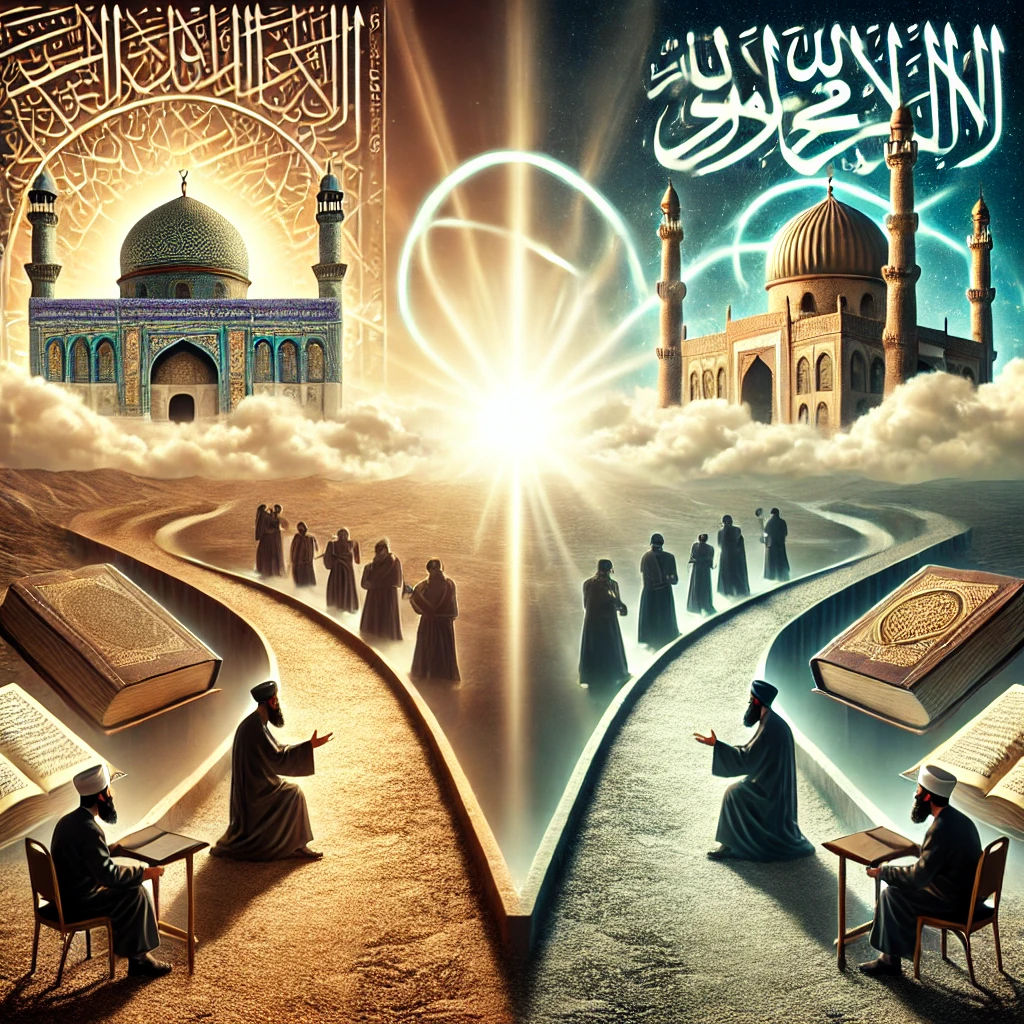
Reinforcing the Critiques: A Scholarly Analysis Refuting the Claim of the Legitimacy of the First Caliphs (1) (A Critique of the Theory of Election)
Author: Hamed Sarem
Shi'ism and Its Opponents: A Theological Analysis of the Theory of “Selection” and the Concept of the Caliphate
Abstract
This article analyzes the historical and theological disagreements surrounding the issue of the Imamate and the succession to the Prophet of Islam. The principal subject of disagreement within the Muslim community after the Prophet (may Allah bless him and his family) centered on the caliphate and the manner of selecting the caliph. Shi'ites believe in divinely ordained Imamate and in the immediate caliphate of the Commander of the Faithful, Ali ibn Abi Talib (peace be upon him), whereas their opponents believe that the caliphate is determined by the people's selection. From the very outset, this theoretical disagreement gave rise to various intellectual and political currents in Islamic history. One of the most important discussions raised in this connection is the theory of “conquest and domination,” advanced by opponents of Shi'ism to justify the early caliphates; according to it, the caliphate was acquired through force and power rather than through the people's selection. In contrast, Shi'ism has continually criticized this view and, especially in theological works, articulated its foundations concerning the necessity of Imamate from God and the lack of qualification of certain early caliphs to succeed the Prophet. The article then examines the theological books of both sides on this issue, including *Tuhfa-yi Ithna 'Ashariyya* by Abd al-Aziz Dihlawi and Shi'ite counter-critiques, especially *Abaqat al-Anwar* by Mir Hamid Husayn Hindi. These books are examples of scholarly debates between Shi'ites and their opponents, focusing particularly on the theological and historical questions of Imamate and the caliphate.
This research shows that, although the opponents sought to refute Shi'ite theories, their criticisms led Shi'ite scholars to offer well-documented and robust responses. As a result, Shi'ite theological texts not only retained their coherence, but their arguments also became stronger and clearer. Moreover, these critiques compelled Shi'ites to exercise greater precision in articulating the foundations of their beliefs.
Finally, the article emphasizes the importance of these theological debates in Islamic history and shows that these scholarly discussions continue to have a major influence on shaping different views of Imamate and the caliphate in the Muslim world.
In Islamic history, no disagreement has been as consequential as the dispute over succession to the Prophet (may Allah bless him and his family) and the issue of the Imamate. This disagreement was not only rooted in the history of the community; because of its various dimensions, it also became the source of many intellectual and social crises and challenges. It remains within the Muslim community and has given rise to diverse religious and intellectual currents.
The Dispute over Succession to the Prophet: Imamate or the People's Selection?
The most important disagreement that arose in the Muslim community—and is still discussed today—was the dispute over succession to the Prophet. In the early period of Islam, this issue laid the foundation for other disagreements and continued to receive attention even in later theological and jurisprudential currents. Shi'ites, whom we recognize as followers of the Shi'a school, believe that the Commander of the Faithful, Ali ibn Abi Talib (peace be upon him), was the immediate caliph of the Prophet of Islam, and that this caliphate and Imamate were determined by God. In other words, from the Shi'ite perspective, the Imam must be divinely appointed, and this matter lies entirely beyond the people's selection. In contrast, opponents of Shi'ism believe that leadership must be realized through the people's selection. In their view, anyone whom the people choose may become the Imam and successor to the Prophet. The significant point here, however, is that contrary to the apparent claim of this theory, in practice none of the Sunni caliphs truly attained the caliphate through the people's selection, except the Commander of the Faithful Ali (peace be upon him), who, during the fourth caliphate, genuinely attained it through the people's selection.
Coercion and Domination: A Theory That Came to Prevail in the History of the Caliphate
The theory of "coercion and domination" is one of the most important issues raised in the thought of Shi'a opponents. According to this theory, anyone who manages, by any possible means, to seize power—even through a coup or bloodshed—may be recognized as caliph and successor to the Prophet. This view plainly holds that what truly matters is "force" and "power," not the people's choice. This theory also led to the formulation of other doctrines, such as "the prohibition of rising against the ruler." According to this view, even if the ruler is unjust, rising against him is religiously forbidden. Some narrations even state that if the ruler has a satanic heart, it is still impermissible to protest against him.
Saqifah: The Beginning of Disputes over the Caliphate
When the Prophet of Islam (may Allah bless him and his family) passed away, the first caliph was appointed at the Saqifah of Banu Sa'idah solely through the allegiance of one person. Yet in the discourse of Shi'a opponents, such a selection is called "consensus," even though, in practice, only one person was responsible for it. Interestingly, in their thought, any selection made with the allegiance of even one person can be regarded as consensus! These contradictions show that, in reality, what lies behind the theory of "the people's choice" is nothing but "coercion and domination." That is, whoever possesses greater force and power can take control of the caliphate.
Books and Debates: Scholarly Encounters between the Shi'a and Their Opponents
The Meeting of Ideas: Theological Debates between the Shi'a and Their Opponents in Islamic History
The beginning of disputes in the Muslim community
The most important and greatest disagreement that arose in the Muslim community was the question of succession to and leadership after the Prophet of Islam. This dispute became the source of many other disagreements in Islamic history and led to the formation of two distinct currents. One of these currents is the Shi'a, who hold that the Imamate is designated by God; the other is the groups opposed to the Shi'a, who believe that the caliphate is determined by the people's choice.
The Shi'a and their distinct views on the Imamate
The Shi'a believe that Amir al-Mu'minin 'Ali ibn Abi Talib (peace be upon him) was the immediate successor of the Prophet of Islam, and that this caliphate was designated by God. Their opponents, however, consider the Imamate and caliphate to belong to the majority of the people and believe that whomever the people choose must become the Imam and successor of the Prophet. Although this theory appears to be based on the people's choice, in practice many caliphs chosen by the people in Islamic history attained the caliphate through coercion and domination.
The Theory of Domination and Conquest: The Hidden Reality Behind the Claim of Popular Choice
One of the important theories advanced by opponents of Shi‘ism is the theory of domination and conquest, according to which anyone who has managed to attain the caliphate through power, a coup, or war may present himself as the Prophet’s legitimate caliph. In this view, the people’s consensus or their choice as the basis for the legitimacy of the caliphate is largely a façade or display, whereas the reality behind the matter is coercion, domination, and conquest.
The History of the Formation of Two Main Currents in Islam
After the martyrdom of the Prophet of Islam, this disagreement appeared more seriously in the sphere of politics and government. One group firmly relied on Qur’anic verses and the Prophet’s narrations and believed that the Imam must be appointed by God, whereas the other group opposed this theory and emphasized the people’s choice for the caliphate.
Theological Books and Scholarly Debates Between Shi‘ism and Its Opponents
Subsequently, both Shi‘ites and their opponents wrote many books to establish and defend their beliefs. Shi‘ites also continually responded to the books of their opponents, and extensive scholarly debates took shape between the two groups. These discussions and theological critiques continued from the very beginning until the thirteenth century CE.
“Tuhfa Ithna ‘Ashariyya”: A Critique and Examination of the Book by ‘Abd al-‘Aziz Dihlawi
In the thirteenth century, when Shi‘ism had spread in India and some Indian rulers also inclined toward Shi‘ism, a book by ‘Abd al-‘Aziz Dihlawi entitled “Tuhfa Ithna ‘Ashariyya” was published. This book strongly criticized Shi‘ite beliefs and, in twelve chapters, examined and challenged the foundations of Shi‘ite doctrine, especially the issue of the Imamate and the caliphate of ‘Ali (peace be upon him).
The Argumentative Style of “Tuhfa Ithna ‘Ashariyya” and Its Similarity to “Minhaj al-Sunna”
The Argumentative Style of “Tuhfa Ithna ‘Ashariyya” and Its Similarity to “Minhaj al-Sunna.” The writing style and methodology of “Tuhfa Ithna ‘Ashariyya” may resemble Ibn Taymiyya’s “Minhaj al-Sunna.” These books, in a sense, circulated false and unfounded material and had ethical shortcomings. In fact, such scholarly approaches sought to criticize the foundations of Shi‘ism through unethical and erroneous means.
Documented Shi‘ite Responses: “Abaqat al-Anwar”
Documented Shi‘ite Responses: “Abaqat al-Anwar.” In response to “Tuhfa Ithna ‘Ashariyya,” Shi‘ites—especially the late Mir Hamid Husayn Hindi (Sayyid Mir Hamid Husayn Hindi)—wrote a book entitled “Abaqat al-Anwar.” This work was a comprehensive and documented critique of the seventh chapter of “Tuhfa Ithna ‘Ashariyya,” and it was so complete in its research and so firm in its arguments that no opponent was able to write an effective refutation of it. “Abaqat al-Anwar” became one of the most prominent Shi‘ite defensive works against the critiques of opponents.
Conclusion: The Enduring Impact of “Abaqat al-Anwar”
Conclusion: The Enduring Impact of “Abaqat al-Anwar.” “Abaqat al-Anwar” is recognized as a reliable scholarly work in the theological history of Shi‘ism and, owing to the strength of its arguments and the diversity of its sources, has been able to remain without any refutation from opponents to this day. This book continues to be regarded as one of the principal sources for proving Shi‘ite beliefs and criticizing the beliefs of opponents.
Critique of the Tenth Chapter of “Tuhfa Ithna ‘Ashariyya” and the Shi‘ite Scholarly Response
Chapter Ten of "Tuhfa-yi Ithna Ashariyya"
is among the most important parts of the book "Tuhfa-yi Ithna Ashariyya." In this chapter, Abd al-Aziz Dihlawi addresses the Shi‘a criticisms of the first three caliphs. He attempts to critique the claims made by the Shi‘a concerning the caliphs and rulers whom they regard as usurpers of the caliphate.
Shi‘a Criticisms of the Caliphs
In Shi‘a theological books, a section is usually devoted to criticizing the caliphs and examining their qualifications for the caliphate. For various reasons, the Shi‘a believe that some of the early caliphs of Islam lacked the qualifications to succeed the Prophet. This issue has therefore remained one of the principal discussions in Shi‘a theological works.
A Critique of Dihlawi’s Response and the Book "Tashīd al-Matā‘in"
In response to Dihlawi’s criticisms, the late father of Hamid Husayn al-Hindi wrote a book entitled "Tashīd al-Matā‘in." The word "tashīd" means strengthening and fortification, particularly in solid structures such as towers, to which the Qur’an also refers. In this work, the author, relying on theological and historical arguments, not only does not reject the criticisms advanced by the Shi‘a, but confirms them and establishes them more firmly than before.
Emphasis on the Validity of Shi‘a Criticisms
The book "Tashīd al-Matā‘in" was written to establish the validity of Shi‘a criticisms against the usurping caliphs. The author holds that the points raised by the Shi‘a concerning the caliphs are entirely sound and that there is sufficient evidence of their lack of qualification for the Prophet’s caliphate.
The Importance of "Tashīd al-Matā‘in"
This book is especially significant because of its well-documented and forceful responses to the issues raised in "Tuhfa-yi Ithna Ashariyya." Drawing on reliable sources and strong arguments, the author offers a scholarly defense of Shi‘a views and seriously responds to Dihlawi’s criticisms.
Conclusion: The Influence and Scholarly Importance of "Tashīd al-Matā‘in"
"Tashīd al-Matā‘in" is recognized as an outstanding scholarly work in the history of Shi‘a theology. The book shows that Shi‘a criticisms regarding the usurping caliphs are not unfounded; rather, there are documented and convincing reasons for the lack of qualification of these rulers.
Conclusion
Overall, a comparative examination of "Tuhfa-yi Ithna Ashariyya" and Shi‘a responses in books such as "Tashīd al-Matā‘in" demonstrates the depth and precision of Shi‘a theological discussions. While Dihlawi seeks to refute Shi‘a criticisms of the early caliphs, Shi‘a authors, by drawing on reliable sources and scholarly arguments, make these criticisms firmer and better documented. Thus, "Tashīd al-Matā‘in" is recognized not only as a scholarly response to Dihlawi’s criticisms, but also as a work that emphasizes the validity and solidity of Shi‘a beliefs concerning the caliphate and the Imamate. This scholarly current and these religious debates, which have continued from the earliest centuries to the present, demonstrate the dynamism and depth of Shi‘a theological thought in confronting opposing ideas.