Reinforcing the Critiques: A Scholarly Analysis Refuting the Claim of the Legitimacy of the First Caliphs (12): The Scandal of Abu Bakr and Umar in Crime and Betrayal
Author: Hamed Sarem
“The Caliphate’s Fall into the Abyss of Murder and Lust: The Scandal of Abu Bakr and Umar in the Crime against Malik ibn Nuwayra and the Betrayal of Justice”
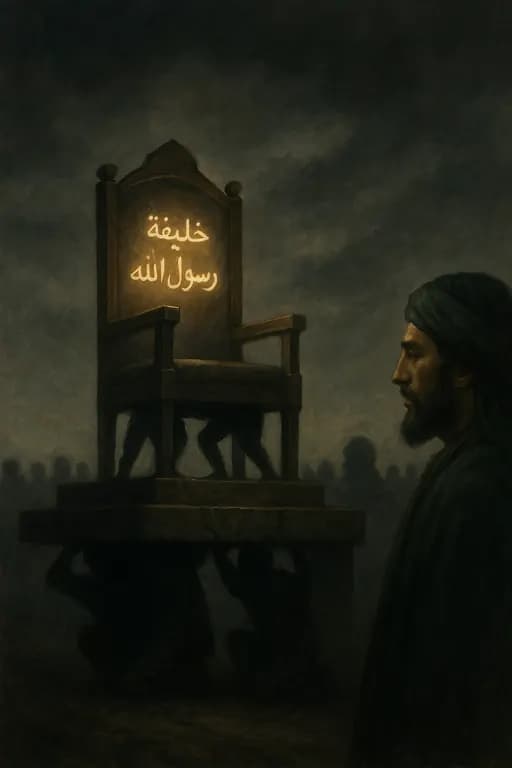
Through historical and theological analysis, this paper demonstrates that the doctrine of infallibility—being the rational, religious, and historical foundation of the Imamate—fundamentally invalidates the legitimacy of the caliphate of Abu Bakr and Umar. Even if this doctrine is set aside and the Sunni premise of the “uprightness of the Companions” is accepted, the established evidence concerning Khalid’s crime and Abu Bakr’s support still shows that the caliphate of these two was not merely devoid of religious legitimacy, but also assumed a usurping and disgraceful form under the guise of justice.
Abstract:
The doctrine of infallibility, defended only in the Shi‘i school and founded upon explicit texts of the Qur’an and the Prophet’s tradition (PBUH), as well as reasoned historical evidence, is recognized as the unquestionable criterion for the legitimacy of the rule of the infallible ones. By contrast, the doctrine of justice, generally advanced by Sunnis and lacking an explicit religious text and strong rational proof, is regarded as a minimal criterion of legitimacy. Citing historical documentation of the killing of Malik ibn Nuwayra and the reactions of Umar and Abu Bakr, this article demonstrates that even on the assumption that the doctrine of justice is accepted, the caliphate of Abu Bakr and Umar lacks religious and moral legitimacy and clearly constitutes the usurpation of the right of the infallible ones. This brings the common Sunni defenses justifying the conduct of the caliphs to an impasse on the basis of their own premises, and makes the need for a profound reconsideration of the understanding of caliphal legitimacy and the theological principles of Islam more evident than ever.
Keywords:
The theory of infallibility, the theory of justice, legitimacy of the caliphate, usurpation of the caliphate, the killing of Mālik ibn Nuwayra, Abū Bakr, ʿUmar ibn al-Khaṭṭāb, juridical critique, Ahl al-Sunna, Shiʿa, the rule of ilzām, theological foundations, Islamic justice, historical contradiction
Introduction
One of the controversial and consequential events in early Islamic history is the account of the killing of Mālik ibn Nuwayra at the hands of Khālid ibn al-Walīd and Abū Bakr ibn Abī Quḥāfa’s response to it. This was not merely an individual error, but a profound indication of the fundamental challenges concerning political legitimacy, religious justice, and the ethics of governance during the first period of the caliphate after the Prophet of Islam (PBUH). Despite the vehement objection of ʿUmar ibn al-Khaṭṭāb, Abū Bakr not only refrained from punishing Khālid, but also retained and supported him—a decision that has raised serious questions regarding the moral credibility and religious legitimacy of his caliphate.
In this context, certain justificatory currents, including Shāh Walī Allāh al-Dihlawī in Tuḥfat al-Ithnā ʿAshariyya, have sought to justify this event by relying on a particular theory known as the justice of the Companions. According to this view, unlike the Imāmī theory that considers infallibility a condition of the caliphate, the justice of the Companions is sufficient for the legitimacy of rule. This article, however, shows that this theory not only lacks an independent rational and textual basis, but is fundamentally a retrospective response designed to justify historical events that had already occurred, rather than a pre-formulated scholarly and theological foundation. In other words, the events occurred first; then this theoretical framework was constructed to preserve the sanctity of the Companions.
Nevertheless, even according to this very theory of justice, the killing of Mālik ibn Nuwayra, the assault upon his wife, and the caliph’s silence are incompatible with any acceptable definition of justice. Therefore, Abū Bakr would not possess legitimacy for the caliphate even within the theoretical framework of his own supporters. And even if one moves beyond the condition of justice and takes as the basis of legitimacy merely minimum criteria such as observance of religious law or human morality, Abū Bakr’s response in this incident remains plainly in breach of ethical and rational principles, and contrary to the Prophetic tradition and Islam’s humanistic spirit.
Supporters of the earliest caliphs have, in many historical sources, attempted through concealment, omission, or confused interpretations to present a sanitized image of their conduct. In an analytical yet forthright and honest language, this article seeks, through a critical rereading of Tashyīd al-Maṭāʿin by the late Sayyid Muḥammad Qulī Kintūrī, to offer a scholarly and reasoned response to al-Dihlawī’s theories defending Abū Bakr’s conduct. On this basis, it exposes the mechanisms of retrospective theorization, the process of sanitizing historical figures, and the internal weaknesses of these defenses.
The aim of this article is not merely to negate or affirm a historical event, but to analyze the epistemological, theological, and ethical foundations constructed to preserve the legitimacy of the early rulers. Along this path, it seeks to reconsider, with precision, the relationship among history, theology, and ethics in the Islamic tradition. Although the language used in this writing is at times sharp and questioning, it appears necessary and warranted for breaking through the wall of justifications and restoring honesty to history.
Exposing the Dark Reality of Abu Bakr’s Conduct in the Killing of Malik ibn Nuwayra and the Violation of His Wife
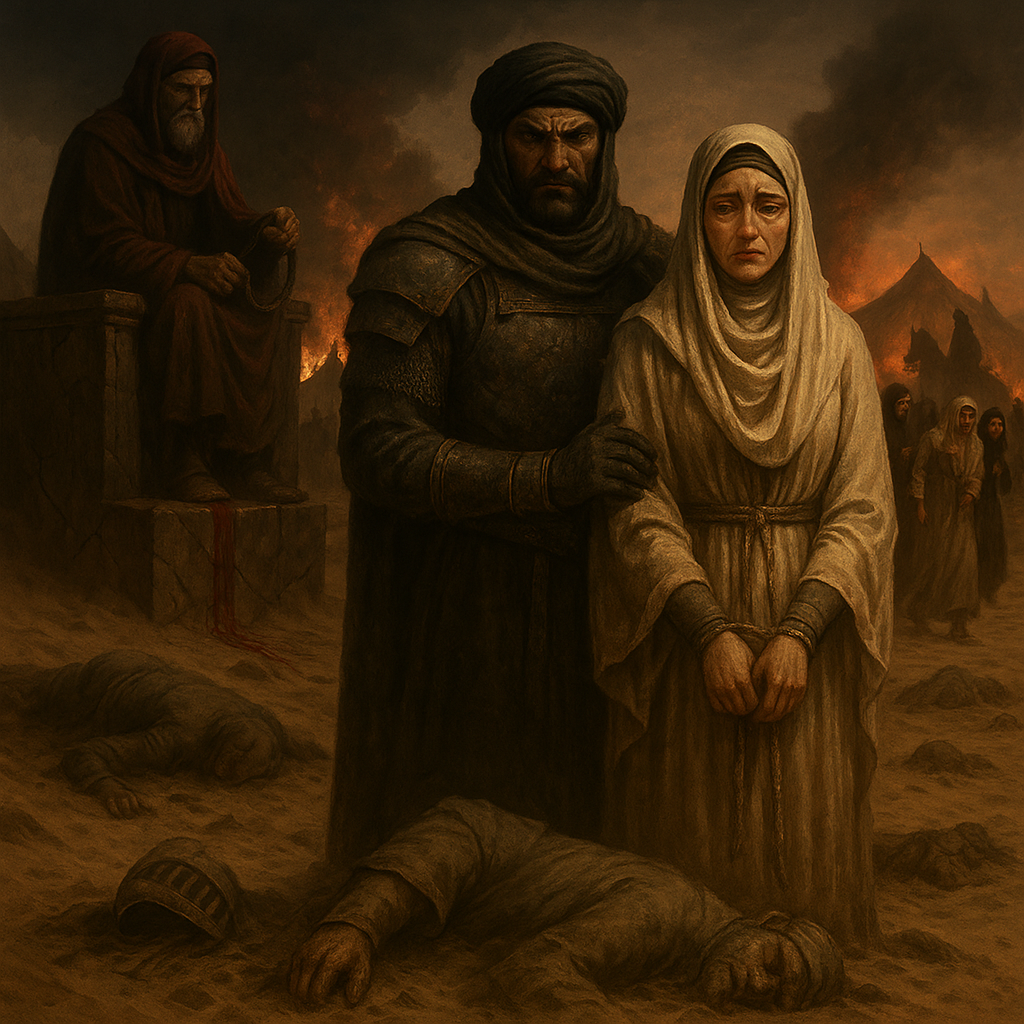
One of the most important and challenging grounds for criticism of the first caliph’s conduct is the killing of Malik ibn Nuwayra by Khalid ibn al-Walid—Abu Bakr’s appointed commander—and his sexual act with Malik’s wife on that same night. Apart from the killing itself, which is intensely disputed in its own right, what makes this event still more horrifying from a jurisprudential and criminological perspective is the complete disregard for the definitive rulings of the Sharia concerning the “waiting period” (‘iddah) of Muslim women. According to explicit Islamic texts, even when a husband dies, a woman must observe a specified waiting period before a new marriage or relationship may be regarded as lawful. Yet Khalid not only disregarded this divine ruling, but immediately after killing Malik, without any interval or even fulfillment of the conditions of the ‘iddah, had intercourse with his wife. This conduct clearly constitutes rape; and even if it occurred with alleged consent, it is regarded in Islamic jurisprudence and ethics as “fornication” and a “violation of the Sharia’s prescribed limits.” Therefore, this action admits of neither interpretation nor defense within any Islamic legal framework. Umar ibn al-Khattab strongly objected to Khalid’s conduct, deeming it reprehensible and unacceptable. He raised the matter with the first caliph, Abu Bakr ibn Abi Quhafa, and demanded that Khalid be investigated and punished. But Abu Bakr’s response, rather than answering the demand for justice, was feeble and vague: he confined himself to two statements: “إنما خالد رجل من المسلمین” (Khalid is only a man among the Muslims) and “أول فَأخطَأَ تأویلاً” (He exercised independent judgment and erred in his interpretation). The expression “ta’wil” in this context has been interpreted to mean “ijtihad.”
On the basis of this response, Abu Bakr, by relying on the theory of ijtihad, not only overlooked an evident crime but also classified Khalid’s act among errors of independent judgment—that is, an act covered by a religious excuse and not subject to judicial or jurisprudential prosecution. This position entails accepting the claim that if someone makes a decision based on personal opinion and ijtihad, even when its result is wrong or catastrophic, that person cannot be held responsible or called to account. Such a justification, in effect, paves the way for every kind of abuse and transgression under the banner of “ijtihad” and calls the foundations of justice and accountability into question.
Here, a distinction must be drawn between two meanings of “ijtihad.” The first is the ijtihad advanced in the Imami tradition: a rational and evidence-based process of examining religious proofs and texts in order to derive a legal ruling. This type of ijtihad rests on belief in the infallibility of the Infallibles and on reliance upon sacred texts such as the Qur’an and reliable narrations; its aim is to discover the true view of the Infallible. But the ijtihad invoked to justify Khalid ibn al-Walid’s conduct is nothing more than reliance on personal opinion and individual decision-making without recourse to revelation, tradition, or rational principles—an ijtihad that may rest on personal interests, carnal desires, or even opposition to the Qur’an, reason, and human ethics.
From this perspective, not only is the very basis of such “ijtihad” a grave error, but error within an ijtihad that is itself erroneous constitutes a compounded and unforgivable error. It is clear that the opinions of persons who follow their interests and, often, their desires can never serve as a standard for judgment and the administration of justice; indeed, they possess no validity or legal basis whatsoever in this matter. Nevertheless, Abu Bakr simply called this kind of conduct “ijtihad” and even accepted error within it as a valid excuse for refraining from judicial pursuit and enforcement of the ruling—something that fundamentally lays a dangerous foundation for justifying every kind of crime and abuse.
This kind of ijtihad or interpretation is the darkest and most inhumane mode of governance, exceeding even despotism and dictatorship. While the proponent of this theory—namely Abu Bakr—readily deemed error in this method permissible as well, it clearly demonstrates a departure from the principles of justice and ethics.
From Being Just to Demanding a Camel Tether: The Rift Between the Prophet and the Caliph
One of the thought-provoking—and indeed troubling—dimensions of the killing of Malik ibn Nuwayra is Abu Bakr’s response to Khalid ibn al-Walid’s conduct. Khalid not only killed a well-known and prominent Muslim, but also raped his wife, confiscated his tribe’s property, and took captives from among them. Yet the first caliph’s response entailed not the slightest interrogation, punishment, or even verbal reproach; on the contrary, it was followed by a series of meaningful silences and overt supports for Khalid. The plundered property was not returned, the captives were not released, the killer of a believer was neither detained nor rebuked, and not even a juristic question was raised concerning sexual relations with a woman who had not completed her waiting period. Before all these acts, Abu Bakr not only adopted no critical position, but explicitly defended Khalid by standing against Umar’s and others’ objections. This degree of support was not an ordinary political response, but a full-throated alignment with violence, injustice, and violations of Islamic law and ethics—under circumstances in which the ruler of the community regarded himself as the successor of a prophet described as one who «does not speak from desire» (وما ینطق عن الهوی).
Among the most striking and, at the same time, regrettable aspects of the killing of Malik ibn Nuwayra was Abu Bakr’s treatment of the undeniable fact that he and his tribe were Muslims. Numerous reports—from hadith-based sources—agree that Malik and his companions not only pronounced the two testimonies of faith, but also gave the call to prayer, performed prayer, and observed exactly the same religious rites practiced by Khalid’s army. The testimony of Khalid’s companions and the field evidence leave not the slightest doubt about their being Muslims. Nevertheless, Abu Bakr plainly refused to accept this fact; and this denial was not out of ignorance, but proceeded from a wholly calculated approach grounded in consolidating power.
In this context, Umar ibn al-Khattab’s explicit and sincere objection is noteworthy. Citing directly the Prophet’s saying (PBUH)—who had stated: «I fight the people until they pronounce the two testimonies; once they do so, their lives and property are safe»—he asked Abu Bakr: How do you shed the blood of those who have pronounced the two testimonies? This question was precise and consistent with the Prophetic criterion; yet Abu Bakr’s response was not only devoid of any religious evidence, but also exposed an outlook bearing no sign of following the Prophet. Abu Bakr said: «If they refuse to give me even a single ‘iqal (camel tether) that they used to give to the Messenger of God, I will fight them!» This statement indicates that, in the first caliph’s view, the criterion of being Muslim and of preserving life and property was not faith and monotheism, but economic and financial submission to the apparatus of power.
In fact, what Abu Bakr offered in response to Umar was not a religious ijtihad, but a form of naked political practice: a policy that gave priority not to the principles of monotheism, but to control over resources, unquestioning obedience, and the consolidation of central authority. In this view, even «the slightest financial defiance» is deemed sufficient grounds for war, plunder, killing, and even violation of women’s honor. This approach stands in clear opposition to the course of the Prophet of Islam—a prophet who founded Islam upon faith, not upon tribute and almsgiving.
The contradiction between Abu Bakr’s approach and the Prophet’s explicit statement was so evident that even Umar ibn al-Khattab could not tolerate it. Yet Abu Bakr, disregarding the prophetic text, plainly declared that the priority was “political and financial obedience,” not “the profession of faith.” This was not merely a distortion of the criterion of faith; it was also a green light for legitimizing organized violence, religious repression, and crimes such as the killing of Malik and the violation of his wife.
In fact, Abu Bakr’s response should be regarded as the meeting point of two outlooks: one, the prophetic outlook, centered on guidance, mercy, and human dignity; and the other, Abu Bakr’s outlook, centered on authority, submission, and ownership of the resources of the Muslim community.
Within this framework, being Muslim had value only when it aligned with the interests of the ruling power; whoever resisted those interests—even by refusing to pay a single ‘iqāl—was condemned to destruction. In the view of every monotheistic Muslim, the explicit Sunnah and command of the Prophet of Islam, peace and blessings be upon him and his family, are the final authority and the unquestionable criterion of truth and falsehood; for his speech was not born of whim, but was revealed inspiration, and opposing it is opposition to religion itself and to the truth of Islam. Nevertheless, in the affair of the war against Malik ibn Nuwayra, Abu Bakr adopted a position that clearly not only contravened the Prophet’s Sunnah, but consciously set it aside. The Noble Prophet had explicitly said: “Fight the people until they pronounce the two testimonies; if they do so, their lives and property are secure, except where a right is involved.” There is no doubt concerning either the chain of transmission or the implication of this report; even Umar ibn al-Khattab invoked it against Abu Bakr and, on that basis, deemed war against Malik and his people illegitimate.
But Abu Bakr not only refused to accept this prophetic text; in practice, he stood against it. He neither denied the report nor ignored it; rather, he openly said: “If they refuse to give me the zakat equivalent of an ‘iqāl (a camel’s nose-rope) that they used to give in the Prophet’s time, I will fight them!” This explicit statement by Abu Bakr meant turning an insignificant financial dispute into a pretext for declaring war, killing, plunder, and violation. This position was not merely a departure from the Messenger of God’s Sunnah, but its practical denial. Thus, a wholly material and power-centered criterion was substituted for the divine criterion of faith and Islam.
What Abu Bakr established was not the Prophet’s Sunnah, but an emergent tradition of rule founded on force and taxation. In this new outlook, neither people’s faith, nor the two testimonies, nor observance of the Sharia mattered; rather, the criterion of governance was unconditional submission to central political power. Through such a policy, Abu Bakr explicitly departed from prophetic Islam and laid the foundations of a caliphate-centered Islam reliant on force—an Islam in which people’s lives and property remained inviolable only on condition of paying the “’iqāl,” rather than on condition of faith. Here the reality of the difference between the Prophet and Abu Bakr—and indeed between revelation and personal opinion—becomes manifest.
The Caliphate on Trial before Justice: When Force Replaces the Prophet’s Sunnah
The Legitimacy of War against Muslims: Personal Opinion or Divine Command?
One of the most fundamental questions concerning Abu Bakr’s decision to wage war against the tribe of Malik ibn Nuwayra is the basis upon which this decision was made. Did Abu Bakr have the right, on the basis of Qur’anic verses or reliable hadiths of the Prophet (PBUH), to act against Muslims who had professed the two testimonies of faith and observed religious rites? Or was this decision formed merely on the basis of the caliph’s personal opinion and discretionary approval?
If such a decision lacked an explicit legal basis, then this act must be regarded as having no religious legitimacy; indeed, it constitutes a clear departure from the tradition of the Prophet of mercy and justice. A decision that resulted in bloodshed, the plundering of property, and the violation of the sanctity of Muslim women cannot bear a divine or legal character; rather, it reflects a power-seeking and individualistic political practice.
Ijtihad or Arbitrariness: The Roots of Fragile Legitimacy
Abu Bakr’s claim that he would fight those who withheld even the smallest amount of zakat, such as an “ʿiqāl” (a camel-tether), indicates a fundamental change in the standard for safeguarding the lives and property of Muslims. More than a juristic opinion, this statement reveals an interest-centered and authoritarian outlook in which faith and monotheism were displaced by financial and political obedience.
In effect, through this approach Abu Bakr set aside the criterion of faith and religious commitment that the Prophet of Islam had repeatedly emphasized, replacing it with material and power-seeking criteria. Such an ijtihad is not only devoid of legal validity from a religious perspective; throughout history, it has also been criticized as an example of arbitrariness and deviation from the path of religious justice.
Catastrophic Consequences: From the Prophetic Tradition to a Caliphate Founded on Force
Abu Bakr’s conduct in this episode was not merely a jurisprudential disagreement; it challenged the foundations of justice and human dignity in Islamic governance. While the Prophet of Islam (PBUH) had emphasized safeguarding Muslims’ lives, property, and honor even in wartime, Abu Bakr set this principle aside and, rather than mercy and guidance, established force and repression as the basis.
This decision reveals a clear distance between the caliphate and the Prophetic tradition: legitimacy of leadership came to rest on centralized power and financial control rather than ethics and justice. Thus, the caliphate faced a severe test—one in which force and power prevailed in place of justice and mercy, diverting the course of the caliphate from the path of the Prophet of Islam.
The Consequences of Abu Bakr’s Personal Ijtihad: Injustice or Legitimacy?
An Ijtihad Beyond Religion: Muslim Blood Under the Shadow of Personal Opinion
The discussion of Abu Bakr’s conduct in the episode of the attack on the tribe of Malik ibn Nuwayra is no longer merely a historical dispute. Rather, it is a broad issue that returns to the foundations of the legitimacy of the conduct of the early Islamic rulers, the concept of ijtihad and its limits, and the inviolability of Muslims’ lives and honor.
If Abu Bakr, merely on the basis of “personal ijtihad,” endorsed the killing of Muslims such as Malik ibn Nuwayra, the captivity of their families, the plundering of their property, and even the seizure of their women, then this question arises: can such ijtihad justify this degree of violence and transgression? Accepting this approach means affirming that an individual may, on the basis of his own opinion, accuse Muslims of apostasy, deem their blood lawful, and confiscate their property and honor.
Umar’s Repeated Objection; Abu Bakr’s Silence and Its Bitter Consequences
A significant point is Umar ibn al-Khattab’s clear and repeated objection to these crimes. Umar described these actions as “among the most astonishing manifestations of injustice” and as an “egregious innovation.” During his own caliphate, he even restored the usurped property of Malik’s tribe and returned pregnant and captive women to their lawful husbands. Umar’s action indicates an implicit acknowledgment of Abu Bakr’s error and a restoration of justice.
If Umar’s corrective measures were sound, then it is plainly established that Abu Bakr’s conduct was erroneous and that its consequences inflicted profound violence and injustice upon Muslims. But if Abu Bakr’s actions are to be considered correct, then one must accept that Umar, by returning women to their husbands without a marriage contract or dowry, caused the spread of adultery—a conclusion whose implications are disastrous either way.
A Divided Authority: Which Caliph Was Rightly Guided?
In this matter, there are only two possibilities: either Abu Bakr erred and committed injustice, or Umar, in correcting the earlier mistake, committed a juristic and moral error. In either case, one of the caliphs not only erred, but also violated the teachings of the Qur’an and the Prophetic Sunnah.
The reality is that what occurred among the tribe of Malik ibn Nuwayrah was an example of systematic oppression carried out under the cover of “ijtihad”; an oppression that the religion of the Prophet of mercy cannot authorize, and that every rational person condemns as injustice.
The Manifest Contradiction in the Conduct of the Two Caliphs: Justice or Tragedy?
This incident is among the most bitter and significant events after the passing of the Prophet of Islam, and its legal, moral, and social consequences remain unanswered to this day. The following key points in this affair deserve attention:
Killing without legal justification and the accusation of apostasy: Malik ibn Nuwayrah and his tribe were Muslims who had professed the two testimonies of faith and observed religious rites. Their only accusation was refusal to pay zakat, which provides no justification whatsoever for killing or captivity. Yet Khalid ibn al-Walid, by Abu Bakr’s order or approval, massacred them on the charge of apostasy. Plundering and enslaving Muslim women: after the men were killed, the Muslim, married women of the tribe were distributed as slave women; some were pregnant and even had lawful husbands. This act was a blatant violation of their honor and of the rights of Muslim women and families.
A Muslim Woman with a Husband: A War Captive or a Lawful Wife?
The central question, then, is this: in the religion of the Prophet of mercy, can a woman who is married and Muslim be placed at another person’s disposal as a slave woman merely because of a political or financial disagreement? Certainly not. Such a thing directly contradicts the Qur’an and the Prophetic Sunnah and has no legal justification.
Umar’s Response: Acknowledgment of the Disaster and Efforts at Redress
By contrast, when Umar ibn al-Khattab assumed the caliphate, he clearly recognized the mistakes that had occurred. He regarded the conduct of Abu Bakr and Khalid as a grave innovation, manifest injustice, and a cause of disgrace; he not only condemned these actions, but also took practical measures to redress the effects of the disaster:
Ordering the return of the usurped property of Malik’s tribe; recovering the enslaved persons and captured women; handing over pregnant women—including women transferred from the regions of Tustar—to their lawful husbands.
These measures taken by Umar were both an acknowledgment that the earlier decisions had been disastrous and a cause of a profound juridical contradiction.
A Juridical Contradiction: The Return of Women as Wives or Concubines?
These juridical contradictions are as follows:
If Abu Bakr’s and Khalid’s actions were correct, why did Umar return these women? If these women had become slave concubines, how could they be returned as lawful wives, especially when some were pregnant? If the women remained lawful wives of others, how can their return be justified without a marriage contract and dower? Does this return not itself constitute adultery?
A Juridical Impasse: Adultery through Abu Bakr’s Ijtihad or through Umar’s Ijtihad?
The crisis of legitimacy in the decisions of the first and second caliphs reaches its peak:
If Abu Bakr’s act was correct, then Umar, by returning the women to their former husbands, caused adultery. If Umar’s act was correct, then Abu Bakr handed married Muslim women over to others without any legal justification, and those who had relations with those women committed adultery.
This tragedy becomes even more profound when one realizes that these relations took place without a marriage contract, without dower, and without the consent of the parties; that is, they amounted to official and systematic sexual immorality under the label of war booty.
The Greater Consequence: Institutionalizing Oppression under the Cover of Ijtihad
With the well-known statement, “Khalid was a mujtahid and exercised ijtihad,” Abu Bakr effectively laid the groundwork for justifying every kind of crime under the guise of “ijtihad.” If ijtihad authorizes the killing of a Muslim, the plundering of property, the violation of pregnant women, and their division [as captives], then what limit remains for the sanctities of God? If this ijtihad is correct, then why did God raise up a Prophet and send down the Qur’an? Unrestrained ijtihad existed even before the revelation of the Qur’an and the coming of the Prophet; thus, this act is in fact a denial of the Prophet and the Qur’an in the garb of affirming Islam, and no deeper or more hypocritical blow than this can be imagined. If Umar sought to correct the error by returning the women, he must acknowledge that what Abu Bakr had approved was oppression, immorality, and fornication.
This episode is not merely a historical event; rather, it is a doctrinal and intellectual test for Muslims: does the religion of mercy permit such ظلم against the honor, property, and lives of Muslims in the name of ijtihad? This tragedy showed that silence in the face of innovation and oppression leads to officially sanctioned fornication, and that even Umar was unable to erase its effects completely.
The important point is that Umar’s conduct, too, was not the implementation of genuine justice; rather, it was carried out within the framework of the system of ijtihad, not on the basis of the Book, the Sunnah, and reason. He took no action even to compensate those who had been killed, and he never objected to Abu Bakr’s oppressive premises. He accepted that one person’s personal opinion, even if based on interests and animalistic desires, could authorize killing, rape, the violation of women’s honor, and plunder.
A Detailed Examination of the Killing of Malik ibn Nuwayra and Its Consequences for the Justice of the Caliphates of Abu Bakr and Umar
The Killing of Malik ibn Nuwayra: Opposition to Paying Zakat or Apostasy?
For juridical and doctrinal reasons, Malik ibn Nuwayra did not accept paying zakat to Abu Bakr. He believed that, during his lifetime, the Prophet (PBUH) gave zakat only to specific representatives, not to Abu Bakr. He refused, yet he remained a Muslim and one who performed prayer.
Malik himself had been appointed to collect zakat and was well able to distinguish friend from foe. He did not accept that people who had gained power merely by force should have the right to receive zakat.
For this reason, he advanced two logical arguments: “I have no command to pay zakat to you,” and “You have no command to take zakat from me.”
But because Abu Bakr’s caliphate lacked the necessary legitimacy and had no answer to this argument, the best course was to label Malik and his tribe “apostates” and massacre them.
Does refusing to pay zakat justify war and killing?
Malik’s tribe prayed and was Muslim, yet Abu Bakr regarded this refusal as equivalent to apostasy and ordered a military campaign. Khalid ibn al-Walid was tasked with it, after which killing, plunder, and the captivity of women occurred—acts that were not merely a war against apostates, but crimes against Muslims.
Three key accusations against Abu Bakr in this episode:
1. Failure to carry out retaliation (qiṣāṣ) for the killing of Mālik ibn Nuwayra: Despite Umar’s objections, Abu Bakr pardoned Khalid on account of his ijtihād and did not punish him. 2. Failure to enforce the prescribed punishment for adultery upon Khalid: After the killing, Khalid had relations with Mālik’s wife without a lawful marriage contract and before the end of her waiting period (ʿidda), for which the prescribed Islamic penalty should have been enforced. 3. Military campaign based on a specious pretext: Refusal to pay zakat is not a lawful authorization for war unless supported by an explicit Qur’anic proof or a mutawātir hadith, rather than personal ijtihād.
The Contradiction Between Abu Bakr’s and Umar’s Conduct: Which One Was Right?
After assuming the caliphate, Umar returned the usurped property and handed the captive women back to their husbands, amounting to an implicit admission that the war and captivity had been unjust.
Two possibilities arise:
If Abu Bakr acted correctly, then Umar, by returning the women, caused adultery. If Umar acted correctly, then Abu Bakr committed the crimes of killing, captivity, and rape.
Pregnant Women: The Height of the Humanitarian and Legal Tragedy
The condition of the captured pregnant women reveals the height of the crime:
The rape of innocent married Muslim women; the birth of illegitimate children on the basis of fornication; the heavy emotional and religious burden placed upon the women and their husbands; the violation of the sanctity of the family and its social foundations.
A Clear Contradiction
There is no escape from the conclusion that one of the two caliphs committed a grave legal and moral error in this case. Yet, given the extent of the crimes during Abu Bakr’s era and the failure to pursue justice, his conduct is open to question both legally and humanely.
Final Analysis of Historical Positions Regarding Malik ibn Nuwayra and Abu Bakr’s Caliphate
Three fundamental criticisms of Abu Bakr in this incident—the failure to exact retribution, the failure to enforce the punishment for fornication, and the initiation of war on the basis of a weak argument—together with Umar’s uncertainty regarding the legitimacy of the fighting, show that the basis of Abu Bakr’s conduct is doubtful. This matter was also among the reasons for the caliphate’s deviation from the Prophet’s Ahl al-Bayt.
Al-Suyuti’s Report in *al-Durr al-Manthur* on Fighting Those Who Pay Zakat
The eminent scholar Jalal al-Din al-Suyuti, in *al-Durr al-Manthur* (under a verse concerning zakat or fighting), reports from Ibn al-Mundhir and al-Hakim:
“From Umar: There are three matters about which I wished I had asked the Messenger of Allah ﷺ: Who would be the caliph after him? What of a people who say, ‘We acknowledge zakat upon our property, but we will not deliver it to you’—is it lawful to fight them? And [what is the ruling] concerning al-kalalah?”
Translation: Umar said: There were three matters about which I wished to ask the Prophet, peace be upon him and his family: 1. Who would be the caliph after the Prophet? 2. Regarding a people who say, “We accept the obligation of zakat upon our property, but we will not give it to you,” is it permissible to fight them? 3. Concerning “al-kalalah” (an inheritance issue).
This report constitutes Umar ibn al-Khattab’s direct acknowledgment of a juristic ambiguity concerning the permissibility of fighting a Muslim who accepts the obligation of zakat but refuses to pay it to the ruler. This explicit admission undermines Abu Bakr’s entire claim regarding the permissibility of fighting Malik ibn Nuwayrah and his people.
A Report from *Madarij al-Nubuwwah* by Shaykh Abd al-Haqq al-Dihlawi: Malik ibn Nuwayrah’s Status with the Prophet
Shaykh Abd al-Haqq Dihlawi, in his renowned work Madārij al-Nubuwwah, explicitly speaks of Malik ibn Nuwayrah’s standing and status before the Prophet (PBUH), stating that Malik was not only a Muslim but had also been appointed to collect alms from his own people:
“Malik ibn Nuwayrah al-Yarbu‘i, whose kunyah was Abu Hanzalah and who was known by the لقب ‘Mutammim,’ was a noble poet and a distinguished horseman among the cavalrymen of Banu Yarbu‘ in the Age of Ignorance. The Messenger of Allah, peace be upon him and his family, had appointed him as the collector of the alms of his people. When news of the death of the Messenger of Allah, peace be upon him and his family, reached him, he distributed the alms among his people.”
Translation: Malik ibn Nuwayrah al-Yarbu‘i, known as Abu Hanzalah and bearing the لقب “Mutammim,” was a noble poet and a brave horseman among the cavalrymen of the Banu Yarbu‘ tribe in the Age of Ignorance. The Prophet of Allah (PBUH) had appointed him to collect alms from his people. After learning of the Prophet’s death, he distributed the collected zakat among his people.
The Poems of Malik ibn Nuwayrah: Emphasis on His Faith and Adherence to Islam
Shaykh Abd al-Haqq also relates a well-known poem by Malik that clearly demonstrates his faith and adherence to the religion of Islam:
“So I said: Take your wealth without fear, and do not look to what may come through destiny. The religion of the one who affirms the truth stands firm; we obeyed and said: the religion is the religion of Muhammad.”
Translation: I said: Take your wealth without fear, and without concern for what destiny may decree; it is a lasting and firm religion. We obeyed, and said: the religion is the religion of Muhammad.
Analysis and Conclusion: The Juristic and Historical Position of Mālik ibn Nuwayra
These verses and reports clearly establish that:
Mālik ibn Nuwayra was a Muslim and had professed the faith. He accepted the obligation of zakāt, but instead of delivering it to Abū Bakr, he returned it to its rightful owners. In his poetic language, he emphasized adherence to the religion of Muhammad. Not only was he not an apostate, but he regarded himself as a follower and preacher of Islam.
Therefore, the fighting against Mālik ibn Nuwayra, his killing, the violation of his wife, the captivity of the women, and the plundering of his people’s property were based on a juristic error or a political decision whose correctness even ʿUmar ibn al-Khaṭṭāb seriously doubted.
Criticism of Abū Bakr from ʿUmar’s Own Perspective and Reliable Historical Reports on the Killing of Mālik ibn Nuwayra
A Double Critique Drawn from Umar’s Statement
After it has become clear that Malik ibn Nuwayrah was a Muslim and acknowledged the obligation of zakat, the more significant point is that the criticisms and doubts regarding Abu Bakr’s decision to fight Malik and his people are derived directly from the words of Umar ibn al-Khattab.
In Mishkat al-Masabih, citing Sahih al-Bukhari and Sahih Muslim, and also on the authority of Abu Hurayrah, it is reported:
“When the Messenger of Allah, peace and blessings be upon him and his family, died, and Abu Bakr succeeded him, and those Arabs who disbelieved disbelieved, Umar said: ‘How can you fight the people when the Messenger of Allah, peace and blessings be upon him and his family, said: I have been commanded to fight the people until they say: There is no god but Allah. Whoever says it, his property and life are protected from me except by its due right, and his reckoning is with Allah?’ Abu Bakr replied: ‘By Allah, I shall surely fight whoever differentiates between prayer and zakat, for zakat is the due right of wealth. By Allah, if they withheld from me even a rope which they used to pay to the Messenger of Allah, peace and blessings be upon him and his family, I would fight them for withholding it.’”
Persian translation: When the Prophet, peace be upon him and his family, died and Abu Bakr succeeded him, and a group of Arabs apostatized, Umar said to Abu Bakr: “How can we fight the people when the Messenger of Allah said: I have been commanded to fight the people until they say ‘There is no god but Allah.’ Whoever says it, his property and life are protected from me, except for a right due from him, and his reckoning is with Allah.”
Abu Bakr replied: “By Allah, I will fight anyone who separates prayer from zakat. Zakat is the due right of wealth. If they withheld from me even a rope which the people used to give to the Messenger of Allah, I would fight them.”
Analysis and Significance of the Report
This dialogue, which appears in the most authoritative hadith sources, including al-Bukhari and Muslim, and is also recorded in «Mishkat al-Masabih», clearly demonstrates:
Umar harbored serious doubts about the legitimacy of fighting those who withheld zakat; his reasoning was precisely the same as that advanced in criticism of Abu Bakr’s action: namely, that paying zakat is part of faith, and that one who has embraced Islam has his life and property protected unless he has himself apostatized. Abu Bakr, on the other hand, held a stricter and more political view, regarding any refusal to pay zakat as grounds for fighting.
Conclusion
This historical disagreement between Umar and Abu Bakr calls for serious reflection on the killing of Malik ibn Nuwayrah and others who affirmed their belief in the obligatory nature of zakat but did not give it to Abu Bakr. Not only was Malik ibn Nuwayrah a Muslim, but fighting him rested on a political decision or a particular juristic interpretation about which even Umar ibn al-Khattab had doubts.
Therefore, reliable historical and hadith reports show that the issue of fighting those liable for zakat was, from the very beginning, a matter of serious dispute, and that Abu Bakr’s decision did not rest on an absolute and unquestionable foundation. Abu Bakr’s military order from the perspective of al-Tabari’s History
In al-Tabari’s History, a report is transmitted from Talha ibn Abdullah ibn Abi Quhafa, the son of Abu Bakr, describing how Abu Bakr instructed his troops in warfare:
“Among Abu Bakr’s instructions to his armies was: ‘When you come upon one of the people’s dwellings and hear within it the call to prayer, spare its inhabitants until you ask them what they disavow. But if you do not hear a call to prayer, launch a raid: kill and burn.’”
Translation: Abu Bakr had instructed his troops: Whenever you reach one of the people’s houses and hear the call to prayer, refrain from killing its inhabitants and ask them what they disavow (that is, whether or not they are Muslims). But if you do not hear the call to prayer, attack, kill, and burn.
Explanation: This command indicates that, in Abu Bakr’s view, “hearing the call to prayer” was regarded as the criterion of being Muslim and as a sign of the Islam of the inhabitants of that house. Their fate was determined on the basis of this sign.
Abu Qatada’s Testimony to the Islam of Malik ibn Nuwayra
In the episode of the killing of Malik ibn Nuwayra, one of the Prophet’s Companions, Abu Qatada al-Harith ibn Rib‘i of the Banu Salama clan, was present alongside Khalid ibn al-Walid. It is reported that, after this incident, Abu Qatada made a covenant with God that he would never again take part with Khalid in any war.
He narrates the event as follows:
“It would happen that when they came upon the people under cover of night, the people took up their weapons. We said: ‘We are Muslims.’ They replied: ‘We too are Muslims.’ We said: ‘Then why do you have weapons with you?’ They said: ‘Then why do you have weapons with you?’ We said: ‘If you are as you claim, then lay down your weapons.’ So they laid down their weapons; then we prayed, and they prayed as well.”
Translation: Abu Qatadah says: When we attacked Malik’s tribe at night, they too took up weapons. We said to them: ‘We are Muslims.’ They replied: ‘We too are Muslims.’ We asked: ‘Then why do you have weapons?’ They said: ‘Why do you have weapons?’ We said: ‘If you are Muslims as you claim, then lay down your weapons.’ They laid down their weapons, and then we prayed, and they prayed as well.
Explanation: This report clearly demonstrates that the tribe of Malik ibn Nuwayrah was Muslim and was prepared for dialogue and a peaceful resolution of the disagreement; nevertheless, war took place. Khalid ibn al-Walid’s excuse for killing Malik ibn Nuwayrah
Regarding the killing of Malik ibn Nuwayrah, it has been reported that Khalid ibn al-Walid offered the following excuse:
“He said: ‘By God, I do not think that your companion used to say anything other than such-and-such.’ He was told: ‘Do you not regard him as your companion?’ Then he brought him forward and struck off his neck, as well as the necks of his companions.”
Translation: Khalid said, “By God, I do not think that your companion said anything other than ‘such-and-such’” (vague and unspecified expressions). He was asked, “Did you not regard him as your companion and associate?” He then ordered that the man be brought forward, and had him and his companions beheaded.
Explanation: Khalid’s conduct and justification demonstrate the absence of any decisive legal proof or religious evidence for killing Malik and his people. This action appears to have been based on conjecture and suspicion, rather than on a definitive juristic ruling.
In the incident of the killing of Malik ibn Nuwayra, one of the Prophet’s Companions, Abu Qatada al-Harith ibn Rib‘i of the Banu Salama clan, was present with Khalid ibn al-Walid. It is reported that after this event, Abu Qatada made a covenant with God never again to take part with Khalid in any battle.
He narrates the event as follows:
“He used to relate that when they came upon the people by night, the people took up their weapons. We said, ‘We are Muslims.’ They replied, ‘We too are Muslims.’ We said, ‘Then why do you have weapons with you?’ They said, ‘Then why do you have weapons with you?’ We said, ‘If you are as you claim, then lay down your weapons.’ So they laid down their weapons; then we prayed, and they prayed as well.”
Translation: Abu Qatada says: When we attacked Malik’s tribe at night, they too took up their weapons. We said to them, ‘We are Muslims.’ They replied, ‘We too are Muslims.’ We asked, ‘Then why do you have weapons?’ They said, ‘Why do you have weapons?’ We said, ‘If you are Muslims as you claim, lay down your weapons.’ They laid down their weapons; then we prayed, and they prayed as well.
Explanation: This report clearly shows that the tribe of Malik ibn Nuwayrah was Muslim and prepared for dialogue and a peaceful resolution of the dispute; nevertheless, war occurred. Khalid ibn al-Walid’s excuse for killing Malik ibn Nuwayrah
Regarding the killing of Malik ibn Nuwayrah, it has been reported that Khalid ibn al-Walid offered the following excuse:
“He said: By God, I do not think that your companion would say anything other than such-and-such. He was told: Do you not regard him as your companion? Then he brought him forward and struck off his neck, as well as the necks of his companions.”
Translation: Khalid said: By God, I do not think that your companion would say anything except “such-and-such” (vague and unspecified expressions). He was told: Did you not consider him your friend and companion? He then ordered that he be brought forward, and had his neck and the necks of his companions struck off.
Explanation: This conduct and justification by Khalid indicate the absence of any decisive legal evidence or proof for killing Malik and his people. This action appears to have been based on conjecture and suspicion, rather than on a definitive juristic ruling.
Final Conclusion
By placing the evidence and reports alongside one another, it can be concluded that:
ʿUmar ibn al-Khaṭṭāb’s hesitation regarding fighting those who acknowledged zakāt but did not pay it; Abū Bakr’s military order, which regarded the adhān as the criterion of being Muslim and as a sign warranting the protection of people’s lives and property; Abū Qatāda’s testimony, which clearly affirmed the Islam of Mālik ibn Nuwayra and his people; and Khālid ibn al-Walīd’s untenable excuse, which justified Mālik’s killing on the basis of conjecture;
All of this shows that the conduct of Abū Bakr and Khālid in this affair was subject to serious juridical objection and, from ethical and political perspectives, damaged their historical standing. ʿUmar’s explicit accusation against Khālid ibn al-Walīd
Khālid ibn al-Walīd offered no convincing justification for killing Mālik ibn Nuwayra and, even under the most charitable interpretation, acted to kill him merely on the basis of certain reports he had heard and conjectures. When news of this incident reached ʿUmar ibn al-Khaṭṭāb, he reacted strongly. He explicitly said to Abū Bakr:
“The enemy of God assaulted a Muslim man and killed him, then mounted his wife!”
Translation: The enemy of God assaulted a Muslim man and killed him, then committed adultery with his wife!
Umar’s Angry Confrontation with Khalid ibn al-Walid
Unaware of the heated exchange between Umar and Abu Bakr, Khalid entered the mosque. His appearance—with a worn, patched cloak and a turban into which arrows had been placed—was theatrical and boastful. Umar immediately went toward him, pulled the arrows from his turban and broke them, then angrily said to him:
“You killed for ostentation and arrogance!”
“You killed a Muslim man out of self-display and arrogance!”
He then issued a severe warning under oath:
“By God, I shall stone you with your own stones!”
“By God, I shall surely stone you with your own stones!”
In the face of this anger and verbal assault, Khalid remained silent and gave no response.
Khalid’s Claim and Malik’s Denial
It is reported in the sources *Kanz al-‘Ummal*, by Mulla ‘Ali al-Muttaqi al-Hindi, and al-Suyuti’s *Tahdhib Jam‘ al-Jawami‘* that Khalid ibn al-Walid claimed:
“Malik apostatized on the basis of words that had reached him concerning him.”
That is, Malik ibn Nuwayra had apostatized, according to a statement that had reached Khalid’s ears.
However, those same sources report that Malik rejected this allegation, saying:
“I remain upon Islam; I have neither changed nor altered anything.”
That is: I remain committed to the religion of Islam; I have neither changed anything nor introduced any innovation.
The Testimony of Abu Qatadah and Abdullah ibn Umar Against Khalid’s Accusations
During this episode, two trusted Companions—Abu Qatadah al-Harith ibn Rib‘i and Abdullah ibn Umar—testified that Malik and his people were Muslims and had not apostatized. Nevertheless, Khalid disregarded their testimony and ordered Malik’s execution:
“Khalid brought him forward and ordered al-Asadi to strike off his neck.”
Khalid brought Malik forward and ordered one of his men, named al-Asadi, to strike off his neck.
The Second Crime: Marriage to, or Fornication with, the Wife of Malik ibn Nuwayrah
The killing of Malik ibn Nuwayrah by Khalid ibn al-Walid was carried out on the basis of unsubstantiated accusations and without a trial. Khalid then either married Malik’s wife or, as some sources put it, entered into an unlawful relationship with her. When this matter reached Umar ibn al-Khattab, it provoked a very severe and critical reaction from him.
The Dialogue Between Umar and Abu Bakr Regarding Khalid’s Punishment
The Dialogue Between Umar and Abu Bakr Regarding Khalid’s Punishment
Umar: “Khalid has committed fornication, so stone him!” Abu Bakr: “I will not stone him; he exercised independent judgment and erred.” Umar: “He has killed a Muslim, so retaliate against him!” Abu Bakr: “I will not retaliate against him, because he exercised independent judgment and erred.” Umar: “Then at least dismiss him from command!” Abu Bakr: “I will not sheath the sword that God has drawn from its scabbard against the disbelievers!”
Key Points and Analysis
The intensity of the disagreement: ʿUmar ibn al-Khaṭṭāb strongly opposed Khālid’s conduct and considered him deserving of severe punishment. Abū Bakr, however, excused him on the grounds of ijtihād and error. Disregarding testimony: the testimony of Abū Qatādah and ʿAbd Allāh ibn ʿUmar concerning Mālik’s Islam and his not having apostatized was disregarded by Abū Bakr and Khālid. Lack of trial and proof: Mālik was killed without a trial or proof of apostasy, which was problematic from the perspective of Islamic law. Abū Bakr’s political outlook: Abū Bakr’s response indicates that preserving military forces and commanders for the continuation of jihād and the consolidation of power was a priority. Historical impact: this incident has been the subject of reproach and criticism by many historians and jurists, and it has been addressed in authoritative Sunni sources, including the History of al-Ṭabarī, Ibn al-Athīr, Ibn Khallikān, Kanz al-ʿUmmāl, and Musnad Aḥmad.
The Principle of “Ilzām” and the Use of ʿUmar ibn al-Khaṭṭāb’s Statements in Theological Debates
Definition of the Principle of Ilzām
The principle of ilzām is a fundamental rule in logic and debate which states: “We hold an opponent to the foundations and principles that he himself accepts, even if we do not accept those foundations ourselves.”
The Sunni Basis Regarding the Authoritativeness of ʿUmar ibn al-Khaṭṭāb’s Statements
Ahl al-Sunna have widely transmitted that the Prophet (PBUH) said: “Indeed, Allah has placed the truth upon Umar’s tongue and in his heart.” That is: “God has placed the truth on Umar’s tongue and heart.” Therefore, in the Sunni view, whatever Umar ibn al-Khattab says accords with the truth, and his statements carry legal and theological authority.
It is self-evident that this narration is not accepted by the Shi'a and conflicts with many verses.
The Fundamental Question
If Umar’s statements on this matter (concerning Malik’s killing, adultery with his wife, and Khalid’s punishment) are true, how can Abu Bakr’s opposition to Umar’s demands also be true?
The conclusion of the argument based on the rule of ilzām
In view of the rule of ilzām and acceptance of the Sunni premise that Umar’s words are true, it must be accepted that:
Enforcing the hadd punishment of rajm (stoning) upon Khalid ibn al-Walid for adultery is right. Retaliating against Khalid for killing a Muslim is right. Removing Khalid from command because of these acts is right.
On the other hand:
Abu Bakr’s opposition to these demands is false.
Consequences of This Analysis
The Shi‘i criticisms of Abu Bakr, advanced by relying on these very statements of Umar, do not in practice contradict the foundations of Ahl al-Sunnah; rather, they are entirely based on those foundations. The defenses offered by some Sunni scholars, who have sought to justify Abu Bakr’s conduct, conflict with Umar’s own words and with Sunni principles, and thus lose their validity. Therefore, concerning this matter, Ahl al-Sunnah must either accept that Umar’s statements are false—which is contrary to their beliefs—or that Abu Bakr erred in this case. Since Ahl al-Sunnah are unwilling to accept either the falsity of Umar’s words or Abu Bakr’s error, they fall into contradiction on this issue.
From the perspective of logic and theology, according to Sunni principles, the Shi‘i argument—grounded in the “rightness of Umar’s statement”—is entirely valid and sound, and it shows that:
Either Umar’s statements are valid and true, in which case the criticism of Abu Bakr on this matter is warranted, or Umar’s statements are unacceptable, which is incompatible with Sunni principles.
Final Conclusion
Based on the comprehensive juridical, historical, and theological examination presented in this article, it may be asserted with scholarly certainty that the killing of Malik ibn Nuwayra and the events that followed were not merely a simple error of ijtihad; rather, they constitute a clear example of a structural deviation in the process of legitimizing the caliphate of the early caliphs, especially Abu Bakr ibn Abi Quhafa. Drawing on authoritative Sunni sources and on debate principles such as the rule of ilzam, the analysis shows that Abu Bakr’s justification of Khalid ibn al-Walid’s conduct, in contrast to Umar ibn al-Khattab’s severe and reasoned objection, created a profound rupture in the foundations of justice, legitimacy, and rationality of the caliphate.
According to the foundations accepted by Sunnis, especially the well-known narration, “God has placed truth upon Umar’s tongue” («جعل الله الحق على لسان عمر»), Umar’s statement concerning Malik’s killing, intercourse with his wife, and the necessity of enforcing the prescribed Islamic punishments is the criterion of truth and the standard of judgment. Therefore, Abu Bakr’s manifest opposition to Umar’s view is not merely a simple juridical disagreement; from a logical and theological perspective, it entails the collapse of the first caliph’s religious and moral authority. If truth is with Umar, as Sunnis themselves explicitly maintain, then Abu Bakr’s ruling was erroneous, and his defense of Khalid ibn al-Walid effectively amounts to supporting oppression, adultery, plunder, and the unjust killing of Muslims.
Moreover, the justifications offered by certain Sunni theologians, such as Shah Wali Allah Dihlawi in «تحفه اثناعشریه», were also found, through a detailed critical examination based on the book Tashyid al-Mata'in, to lack epistemic validity, logical coherence, and reliable transmitted evidence. These justifications arose more from the historical need to exonerate the caliphs and preserve the political standing of the caliphal structure amid historical contradictions than from a scholarly and principled foundation.
The article also showed that Abu Bakr’s very conduct toward those liable for zakat lacked an explicit scriptural text and was adopted on the basis of istihsan and personal opinion—an issue about which even Umar ibn al-Khattab had serious doubts. Umar’s return of property and captive women during his own caliphate constituted a practical admission of the incorrectness of the measures taken in Abu Bakr’s era and, on the other hand, produced an evident juridical contradiction within the legal foundations of Sunnism. These contradictions clearly show that the doctrine of the justice of the Companions, especially in its functional and historical dimension, is not only ineffective but also promotes rationalization and reductionism in understanding such fundamental religious concepts as justice, ijtihad, and the caliphate.
Ultimately, the analytical conclusion of this study is that the doctrine of infallibility, unlike the doctrine of justice, not only rests on firm transmitted and rational foundations, but also proves far more capable, when confronted with historical tests such as the killing of Mālik ibn Nuwayra, of safeguarding human dignity, the sanctity of the Sharīʿa, and social justice. The doctrine of justice—whether as a principle of legitimacy or as an instrument of justification—collapses before this historical event and its juridical and social consequences. It is precisely through this that the necessity of a fundamental reconsideration of Sunni theological foundations concerning the legitimacy of the caliphs, ijtihād, and the limits of political authority in Islam becomes fully evident.