Six Reasons Showing That the Sedition of Saqifah Had Been Planned in Advance
Author: Hamed Sarem
Whenever history is examined, it has a new lesson. History shows us how a people reaches honor, and with careful attention to history and by taking lessons from it, the path of salvation in times of sedition can be found more easily.
History is full of people whose names shine and of whom all humanity is proud. Opposite them stand people who blackened the pages of history with oppression and bloodshed. Some were bloodthirsty, brutal, and makers of sedition; they prepared the grounds for turmoil.
But history cannot be reviewed simply, because according to a natural pattern the pen of historians has always been in the hands of those who held power, and they did not allow their opponents to write freely. For this reason, observing history is not a simple task.
Historical Study Is a Very Delicate Task
Many an oppressor has been portrayed as just, and many a just person has been introduced as a wrongdoer. Much effort has been made to hide the actions of certain groups from future generations, or not to state them explicitly, or, if they are mentioned, to justify them in a way that makes them acceptable. Therefore, although historical study has many benefits, it has great delicacy. If the reader does not have these sensitivities, he will never be able to judge correctly.
When a historical event acquires doctrinal value for a religious community, this issue must be considered with much greater precision, because the motives for concealment, distortion, and disguise become much stronger.
Concealing the Event of Ghadir in Some Important Books
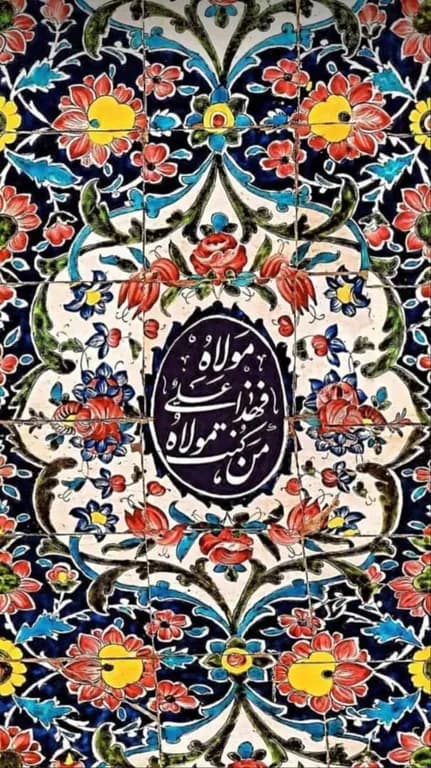
The history of early Islam, especially its first century, is full of events that affected the beliefs of all Islamic schools and sects. The conclusion one reaches in this part of history is one hundred percent influential in the belief and school one adopts. Naturally, the events of this period are exposed to the greatest harm of distortion and concealment. One example is the concealment of the very great event of Ghadir, to which verses of the Qur'an are devoted.
Sahih al-Bukhari, which is the most important book for many Islamic sects, makes no mention of this event at all. Some other books that mention it try to observe extreme brevity. This omission, or this excessive abbreviation, is itself concealment and distortion in history.
Can the Action of a Companion Be Used as Evidence for a Legal Ruling?
Some people, to escape this reality and to stabilize this concealment and distortion, have forbidden investigation into the events of that period. By creating a rule that all the Prophet's companions are just, they have forbidden speaking about them. Beyond that, they consider their actions and deeds a religious source; that is, the action of a companion can serve as evidence for a legal ruling, just as the Prophet's Sunnah or a verse of the Qur'an can serve as evidence for a fatwa.
The justice of the companions is almost the belief of most famous historians, and this is one of the motives that caused distortion. Through this distortion they have brought misguidance to a great many people. In any case, it is an established matter that for centuries history was written by those connected to the courts of the caliphs.
The most prominent of them is Ibn Jarir al-Tabari, who, under the pretext of neutrality in reporting events, distorted reality and concealed truths. Allamah Sayyid Murtada Askari writes: "Al-Tabari surpassed other historians in spreading fabrications" (1).
He transmits 701 reports from Sayf ibn Umar, even though among researchers Sayf is famous as a liar and fabricator of hadith (2).
Al-Khatib al-Baghdadi writes: "The greatest liar on the face of the earth is Abu Ma'shar" (3), and al-Tabari made extensive use of his statements in his book (4).
How Can All Companions Who Fought Each Other Be People of Paradise?
On the other hand, the lives of the companions were not free of deep disputes that led to long wars, wars in which the blood of thousands of Muslims was shed and both sides were among the great companions. Truly, how can all companions be considered just and people of Paradise while they drew swords against one another and spared no effort to kill one another? Were all sides in these wars right? Does both the killer and the killed go to Paradise?
Alas, some people hold precisely this belief in order to hide their falsehood under the mask of the companions' justice. Even stranger is the narration of a hadith that conflicts with obvious reason and with the decisive verses of the noble Qur'an. They claim that the Prophet gave ten people glad tidings of Paradise, while some of these ten stood against one another in the Battle of Jamal, prepared armies, ignited the fire of war, and shed much blood. Yet, according to them, both sides are people of Paradise!
A Just Companion and Man of Paradise Whose Name Is Tied to the Sedition of Jamal
Woe to the day when the Qur'an's command to reason is trampled. On that day, the hadith of the Ten Given Glad Tidings is treated as the Prophet's Sunnah and made a criterion. Among those named in the Ten Given Glad Tidings is Talhah ibn Ubayd Allah, whose name is tied to the sedition of Jamal. Yet to this day he is still considered a just companion and a man of Paradise.
The greed for caliphate was not only in Talhah. It also existed among a group who accompanied the Prophet while, from the beginning, they harbored the desire for caliphate. Talhah was one of the people of that greedy party of caliphate, which was able to draw the caliphate to its own benefit, though they fell into a major disagreement among themselves.
The Killing of Uthman by Talhah
It was he who, in order to seize the caliphate, set himself to killing the third caliph, Uthman, even though he gained nothing from this act. Then, to reach the caliphate, he lit the fire of the Battle of Jamal, as a result of which thousands of Muslims were killed.
To study accurately and understand why Uthman was killed and why the Battle of Jamal occurred, it is necessary to review briefly the history of the party of Saqifah and the internal conflicts within that party, so that the reason Talhah killed Uthman becomes clear. Therefore, the internal currents of Saqifah are briefly examined.
Saqifah Was Not the Beginning of the Deviation of the Islamic Ummah
Saqifah should not be considered the beginning of deviation. Without doubt, Saqifah was the continuation of a deviation that had already taken shape. As time passed after the event of Saqifah, several proofs and signs indicated that the group that triumphed in Saqifah had long been thinking and planning to gain power, defeat the rival, and trample Ghadir.
Leaving aside reports that tell of a pact signed during the Prophet's lifetime to betray him, and leaving aside the narrations about the attempted assassination of the Prophet, there are signs showing that the usurpation of the caliphate was a prearranged plan.
Had the People Forgotten Ghadir?
Without doubt, the most important evidence for this is that, despite the Prophet's many emphases on Ali's caliphate, which are found abundantly in non-Shi'i sources, everything could not suddenly turn in another direction unless a rooted and coordinated group was at work. Did none of the people remember Ghadir?
They certainly remembered it, and it did not leave their memory for a long time. Twelve years after that day, in the year 23 AH, Ali ibn Abi Talib (peace be upon him) argued with the members of the council and the people, listed forty of his merits, including Ghadir and the verse of purification, and then called all those present to testify in confirmation of them. Except for a few opponents, no one denied him.
Six Reasons Showing That the Sedition of Saqifah Had Been Planned in Advance
Although the proofs and evidence for this view are many, some of them are mentioned here:
1. The first subject raised in the sermon of Ghadir Khumm was warning against the opponents and enemies of Ali ibn Abi Talib. The Prophet emphasized that they were not few and that they were constantly thinking of conspiracy and had plans for the future.
2. In public gatherings where the Prophet wanted to speak of the virtues of Ali (peace be upon him) and of his Imamate, they would cause uproar and commotion. Many times, as soon as he said: "The Imams after me are twelve," the order and silence of the gathering would break, and the commotion and movement would reach such a point that the Prophet would be prevented from continuing his speech (5).
3. When Abu Bakr was making his testament for his successor, he lost consciousness, and Uthman wrote the name of Umar ibn al-Khattab according to his own judgment. When Abu Bakr regained consciousness, he confirmed and signed what Uthman had written (6). Truly, how did Uthman know what was in Abu Bakr's mind?
4. Given the nature of Abu Bakr's testament, it is also important that the second ruler, at the time of his death, said: "If Abu Ubaydah were alive, I would have given the caliphate to him without consulting anyone" (7). Then he appointed a council in which, in any case, Uthman would come to power. Is there any room for doubt that these few men had agreed on this decision years before?
5. Among the opponents of Ali ibn Abi Talib there were several well-known figures who had long had friendship and kinship with one another. Strangely, all of them accepted Islam at Abu Bakr's invitation. They were Uthman, Talhah, Zubayr, Sa'd ibn Abi Waqqas, Abd al-Rahman ibn Awf, and Abu Ubaydah al-Jarrah (8). Except for Abu Ubaydah, who was not alive during Umar's time, those five became members of the six-person council of caliphate.
6. In the Fadak sermon, Lady al-Zahra (peace be upon her) said: "You were waiting for calamities to befall us and watching for news."
Talhah Was at the Helm of the Sedition of Jamal
Of course, the evidence goes far beyond these few examples. The events that occurred at Saqifah are among these signs, and many questions arise about Saqifah. But the point here is that the Battles of Jamal and Siffin were the continuation of those designs, or, in clearer and smoother terms, the continuation of the betrayal and conspiracy of that group. This time in Jamal, Talhah was at the helm of the sedition and made every effort to take back the caliphate that had settled in its rightful place.
The truth is that these misguided people, although they were victorious in the first stage and were able through pre-planned schemes and seditions to take the caliphate from the Prophet's executor, fell into disagreement and conflict among themselves. This conflict led to the killing of many of their own party members. Uthman was the victim of this internal war of the sedition-making group. As a result of this internal conflict and war, the Commander of the Faithful gained apparent caliphate for a short time.
Abu Bakr's Suspicious Death and Its Main Suspect
In summary, the group opposed to Ali's caliphate divided into two parties: one party was Abu Bakr's party and his tribe, Banu Tamim, and the other was Umar and Banu Umayyah. As a result of this disagreement, Abu Bakr died a very suspicious death.
Interestingly, the main suspect in Abu Bakr's death is the second ruler. He considered himself deceived at Saqifah and believed that Abu Bakr had taken the caliphate from him contrary to their prior agreement. In this regard, it is narrated from Mughirah ibn Shu'bah that he said to Umar: When Abu Bakr entrusted the caliphate to you, why did you not accept it, and why do you now criticize Abu Bakr's conduct that day and remember it with regret?
Umar said: I used to know you as one of the intelligent men of the Arabs. It seems you were not present that day to see how Abu Bakr deceived me. Of course, I deceived him too (9). Umar, who was a very political man, was speaking to Mughirah, who was known as one of the clever men of the Arabs. His words can be analyzed as meaning that our previous decision was that I would become caliph. But the part where he says, "I deceived him too," can only mean taking the caliphate back from Abu Bakr.
Elsewhere Umar said to Abu Musa al-Ash'ari: "By God, if I had obeyed my brother Zayd ibn al-Khattab and acted on his words, Abu Bakr would never have tasted the sweetness of caliphate... After he trapped the caliphate in his snare, I saw no option except to wait for a time and await the return of the caliphate to myself" (10).
The Operation to Usurp the Caliphate Had Begun Before Saqifah
It is clear that Saqifah was not the beginning of the usurpation of the caliphate. Rather, the operation to usurp the caliphate had begun before Saqifah, and during the Prophet's lifetime the caliph had already been chosen by the Samiris. At Saqifah, the quarrel and conflict occurred among the Samiris of the ummah.
After Abu Bakr managed to prevail at Saqifah and his government became formal, the factional division between Abu Bakr's supporters and Umar's supporters began seriously. After Abu Bakr became caliph, Umar's faction gained a more mysterious coherence and movement (11). Before the first ruler came to power, social developments moved in favor of both groups, but after he came to power, Umar strengthened his own faction.
The heavy blow Umar endured from Abu Bakr at Saqifah caused him to move more cautiously afterward and to draw cleverer and better-known figures into his faction. Uthman ibn Affan, Mughirah ibn Shu'bah, Amr ibn al-As, Abd al-Rahman ibn Awf, and Abu Sufyan were some of the men who followed Umar's policy, most or all of whom were among Umar's supporters from Banu Umayyah.
What Was Strange and Suspicious During Abu Bakr's Illness
One of the strange things about Abu Bakr's illness is that during his illness he remained in isolation, and it is not properly known who was allowed to contact him during the fifteen days he was bedridden. During those two weeks, he consulted about the caliphate only with Uthman ibn Affan and Abd al-Rahman ibn Awf, two men from Umar's faction (12). After news of Umar's succession arrived, the caliph's son and Talhah ibn Ubayd Allah objected.
Events That Showed the Conflict Between Abu Bakr's and Umar's Factions
The events that occurred after Abu Bakr's death better reveal the hidden conflict between these two factions:
1. Some individuals from Abu Bakr's faction died suspiciously on the very day Abu Bakr died, and those who survived were removed from their positions at the beginning of Umar's caliphate. In some cases, after dismissal they too died suspiciously. Abu Bakr also did not appoint anyone from Umar's faction to an important position, and in the final days of his life he would say: "I wish I had sent Umar to a distant region just as I sent Khalid to Syria" (13).
2. During Umar's period, no one from Abu Bakr's tribe, Banu Tamim, nor from his family or clients, was given an important post.
3. During Abu Bakr's period, few people from Banu Umayyah were seen, but in Umar's camp most people were from Banu Umayyah. In reality, Umar was the bridge by which power was transferred to Banu Umayyah; otherwise, with Uthman present, Banu Umayyah had no eye on Umar.
After Abu Bakr's death, the struggle of his household, namely Aishah, Talhah, and Abu Bakr's children, against Umar's faction and Banu Umayyah continued intensely until Umar was struck by Abu Lu'lu' and realized that he would not live long.
The Six-Person Council Was Arranged So That Its Result Would Be Uthman's Election
Perhaps at that time the struggle between Banu Umayyah and Banu Tamim had reached its peak, and Umar, through political maneuvering, chose the six-person council in such a way that its result would be Uthman's election. Although Talhah, who was from Banu Tamim, the tribe of Abu Bakr, desired the caliphate, the second ruler arranged the council so that all opponents would appear satisfied and at the same time be forced to pledge allegiance.
When Abbas, the Prophet's uncle, heard the plan for the council of caliphate, he immediately said to Imam Ali (peace be upon him): They have designed this plan so that Uthman will reach the caliphate... (14). Ibn Abbas also said to his father: It is quite clear that the caliph wants Uthman to take control of affairs (15).
In reality, Uthman's accession to the caliphate was the victory of Banu Umayyah. Of course, Umar's six-person council has many aspects that are outside the subject of this writing. Based on what has passed, there was a struggle from the time of Abu Bakr's caliphate between Banu Tamim, led by Abu Bakr, and Banu Umayyah over the possession of the caliphate. Ultimately, Banu Umayyah were able, through Umar, to make the caliphate their own.
Aishah Issued the Order to Kill Uthman
During Uthman's caliphate, the supporters of Abu Bakr's party, led by Aishah and Talhah, opposed Uthman. When the political situation during the caliphate became challenged, Banu Tamim's opposition became clear and tangible, and sometimes they spoke explicitly about killing him. When the situation became inflamed, they rode the wave of the people's protests.
Banu Tamim killed Uthman in order to return themselves to the peak they had enjoyed during Abu Bakr's time. Among them, Aishah and Talhah played a key role. Aishah issued the order to kill so that she could bring Talhah to the caliphate, and Talhah killed the caliph so that the path to his own caliphate would be cleared.
Talhah's Resistance to God's Command Forbidding Marriage to the Prophet's Wives
When God's ruling was announced that after the Prophet marriage to his wives was forbidden and that no one was permitted to marry the Prophet's wives, Talhah became upset by this ruling of God and declared that if the Prophet died, they would marry his wives just as the Prophet married their wives.
The Noble Prophet of Islam was saddened by Talhah's statement. In condemnation of Talhah and in prohibition of the act he promised, verse 53 of Surat al-Ahzab was revealed: "It is not for you to hurt the Messenger of God, nor to marry his wives after him ever; indeed that would be a grave matter with God."
Umar ibn al-Khattab said to him: The Prophet remained upset with you until the day of his death because of the sentence you said on the day the verse of hijab was revealed: "Woe to the one whom Nimrod made an unbeliever" (16). The Commander of the Faithful also said to Talhah: "You are the very one who said: If the Prophet dies, we will marry his wives" (17).
Aishah's Words Against Uthman
Because of the people's dissatisfaction with Uthman's government, Talhah desired the caliphate and, with Aishah's help, inflamed the turbulent situation of society at that time. Aishah openly spoke against Uthman among the people and criticized him.
Hakim ibn Abdullah says: One day I entered the mosque of Medina and heard Aishah saying: "O people, not much time has passed since the Prophet's life. These are the sandals of the Messenger of God and this is his shirt, while among you is the Pharaoh of this ummah" (18).
Hasan ibn Sa'id narrates that Aishah raised a page of the Qur'an while Uthman was standing and said: "O Uthman, establish what is in this Book. This is the Prophet's shirt, which has not changed, while you have changed the Prophet's Sunnah, O Na'thal" (19).
Al-Tabari reports that Aishah used to say: This is the shirt of the Messenger of God, which has not yet become old, while Uthman has changed the Prophet's Sunnah. Kill Na'thal, Uthman; may God kill Na'thal (20).
These actions of Aishah, and Uthman's bad conduct with the people, especially his insults against the noble companions of the Messenger of God such as Abu Dharr, caused an uprising throughout the Islamic lands. Talhah rode this wave and saw himself on the seat of caliphate. Therefore he tried to place himself at the head of this wave so that he could take the government from Uthman, or more precisely from the Banu Umayyah household, and therefore set out to put Aishah's fatwa to kill Uthman into practice.
The Most Stubborn Opponent of Uthman
Talhah was among those who persistently pursued the killing of the caliph and insisted on it. In reality, Talhah worked hard to use the people's dissatisfaction in order to gain power (21). Historians have counted him as the most stubborn opponent of Uthman (22).
During the siege of Uthman, he led the congregational prayer in the mosque of Medina (23). Talhah's prayer in the mosque was not an ordinary act common among Muslims; by this act he was implicitly presenting himself as caliph after Uthman, and it was greed for that caliphate that drove him to kill Uthman.
Ali's Words About Talhah
The Commander of the Faithful (peace be upon him) said about him: "Among them there was no one more greedy and eager to kill Uthman than he." Talhah was so confident in his own position that he did not believe anyone other than himself would come to power. Even when he sometimes sought help from Ali (peace be upon him), his goal was to use the Imam's position so that he could benefit from him in reaching power, although he failed in this goal. This matter is even clear in Aishah's positions.
It is not far-fetched that Aishah too opposed Uthman so that Talhah would reach the caliphate. She said to Ibn Abbas: "...Now the people have gathered around Talhah, and soon he will reach the caliphate. If he becomes caliph, he will act according to the way of his cousin Abu Bakr. Do not prevent the people from attacking Uthman..." (24).
In reality, if Talhah and Aishah had known that Ali (peace be upon him) would reach the caliphate after Uthman was killed, they would never have tried to kill Uthman. In any case, it has been reported that Talhah played a fundamental role in the siege of Uthman's house and shot arrows toward Uthman's house while hiding himself from the people in a garment (25). It is also reported that when he could not enter Uthman's house, he guided the people to the house of some of the Ansar, and the people entered Uthman's house through the rooftops of those houses and killed him (26).
During Talhah's march toward Basra, Abdullah ibn Hakim al-Tamimi said: O Talhah, do you recognize this letter? Talhah said: Yes, this is my letter to you. He asked: Do you know what you wrote in it? He said: Read it to me. Abdullah Hakim read it, and in it was criticism of Uthman and a call to kill Uthman (27).
Talhah Cutting Off Water from Uthman
Talhah intensified the siege of Uthman to the point that he cut off water from him. Thirst pressed hard upon Uthman, and he sent a message to Ali (peace be upon him): Talhah and Zubayr have killed me with thirst, and death by the sword is better than death by thirst. When the Imam heard this message, he was outside Medina. He brought himself to Medina and, with great difficulty, delivered water to Uthman and saved him from death by thirst (28).
It is necessary to mention here that later, Banu Umayyah introduced Ali (peace be upon him) as Uthman's killer, and foolish people captivated by Banu Umayyah, in retaliation for Uthman's thirst, cut off water from Imam Husayn (peace be upon him) in Karbala. This is one of the results of the distortion of history.
Talhah Did Not Allow Uthman to Be Buried for Three Days
Finally, through the insistence of Talhah and Zubayr, Uthman was killed. It is narrated that Talhah prevented Uthman from being buried and did not allow his body to be buried for three days. He appointed people to stone Uthman's family and prevent his burial. Eventually, however, through Imam Ali's intervention, he was buried. Again Talhah prevented Uthman from being buried in the Muslims' cemetery, and finally he was buried in a place called Hash Kawkab in the Jewish cemetery (29).
The Most Innocent Person Regarding Uthman's Blood
Based on this brief account, Talhah was one of the main suspects in Uthman's killing. By the admission of the Mu'tazili commentator of Nahj al-Balaghah, the most innocent person regarding Uthman's blood is Ali (peace be upon him) (30). Al-Baladhuri, al-Mas'udi, and Ibn Abd Rabbih write that when Ali (peace be upon him) reached the mosque and learned that the people had killed Uthman, he became so angry that he reproached and disciplined his sons for not succeeding in protecting the caliph's life (31).
When Uthman's house was under siege and a number of the companions of the Messenger of God were preventing the people from entering Uthman's house, the people shot arrows at Uthman's house until the face and beard of Imam Hasan al-Mujtaba (peace be upon him) became bloodied. Then some of the besiegers feared that Banu Hashim would become angry because of Imam Hasan and Imam Husayn (peace be upon them).
The Only Person Indifferent to the Caliphate After Uthman's Killing
Some said that if Banu Hashim came and saw blood on the face of Hasan ibn Ali, peace be upon them, they would go to war with the people and what you want would be invalidated (32). Certainly, the Commander of the Faithful was not Uthman's killer, but what was his position and why? That requires an independent opportunity.
Uthman's death naturally should have begun a struggle over choosing the next caliph and the political maneuvering of politicians who had spent a lifetime striving for the caliphate and had issued the ruling to kill the caliph. After Uthman's killing, the only person who was indifferent to the caliphate and made no effort to gain it was the Commander of the Faithful (peace be upon him).
Yet despite his lack of desire, the people poured toward him to pledge allegiance. This was against Talhah's wishes and was an unforeseen and very sudden matter.
Notes
1. The Role of the Imams in Reviving Religion, vol. 6, p. 53.
2. Al-Ghadir, vol. 8, p. 237.
3. Tarikh Baghdad, vol. 13, p. 429.
4. Al-Imam al-Sadiq wa al-Madhahib al-Arba'ah, vol. 1, p. 265.
5. Sahih al-Bukhari, vol. 9, Kitab al-Fitan, chapter on succession, and Kitab al-Ahkam.
6. Tarikh al-Umam wa al-Muluk, translation, vol. 1, p. 2138.
7. Al-Tabaqat al-Kubra, vol. 3, p. 413.
8. Pas az Ghorub, p. 133, Yusuf Gholami.
9. Sharh Nahj al-Balaghah by Ibn Abi al-Hadid, vol. 2, p. 33.
10. Sharh Nahj al-Balaghah, vol. 1, p. 174.
11. Pas az Ghorub, p. 247.
12. Mukhtasar Tarikh Dimashq, vol. 13, p. 119.
13. Al-Imamah wa al-Siyasah, vol. 1, p. 18.
14. Al-Bidayah wa al-Nihayah, vol. 7, p. 146.
15. Sharh Nahj al-Balaghah by Ibn Abi al-Hadid, vol. 3, p. 93.
16. Al-Ghadir, Shaykh al-Amini, vol. 10, p. 127.
17. Al-Saqifah wa Fadak, p. 88, first section: Saqifah.
18. Al-Jamal, Damin ibn Shadqam al-Madani, pp. 20-25.
19. Ibid.
20. Bihar al-Anwar, vol. 31, p. 295, Aishah's denunciation, p. 295.
21. Tarikh al-Ya'qubi, vol. 2, p. 175.
22. Al-Iqd al-Farid, vol. 4, p. 280.
23. Tarikh al-Umam wa al-Muluk, vol. 4, pp. 371 and 379.
24. Pas az Ghorub, p. 355.
25. Al-Ghadir, Shaykh al-Amini, vol. 9, p. 93.
26. Al-Ghadir, Shaykh al-Amini, vol. 9, p. 93.
27. Bihar al-Anwar, 30, 17 [16], another chapter on what he wrote, and al-Mustarshid on the Imamate of Ali ibn Abi Talib, p. 421.
28. Al-Jamal, Damin ibn Shadqam al-Madani, pp. 15-18, and Al-Ghadir, Shaykh al-Amini, vol. 10, p. 127.
29. Tarikh al-Ya'qubi and Al-Ghadir, Shaykh al-Amini, vol. 9, p. 93; also narrated by al-Tabari in his Tarikh, 5:143.
30. Sharh Nahj al-Balaghah, vol. 1, p. 200.
31. Ansaf al-Ashraf, vol. 5, p. 62; Muruj al-Dhahab, vol. 2, p. 232; Al-Iqd al-Farid, vol. 4, p. 290.