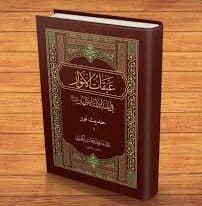
Mir Hamid Husayn and Scholarly Methods in Critiquing Sunni Arguments: How Can Truth Be Separated from Distortion?
Abstract
This article analyzes critical thinking in ʿAbaqāt al-Anwār, the major work of the late Mir Hamid Husayn, and examines his scholarly critiques and arguments against opposing views, especially those of Dihlawi. It stresses the importance of research principles and scholarly debate, particularly in the criticism of religious hadith. Comparing the methods of research and argument in ʿAbaqāt al-Anwār with Dihlawi’s critiques of such reports as the Hadith of Thaqalayn and the Hadith of Light reveals fundamental differences in adherence to scholarly rules and fair principles of analysis. Mir Hamid Husayn uses reliable sources, precision, scholarly transparency, and acceptance of truth in both proof and refutation. By contrast, Dihlawi is presented as often treating hadith selectively and one-sidedly, without fully examining Shiʿi arguments. The article emphasizes precision, respect for reliable sources, and comprehensive analysis in religious research and criticism.
Introduction
In the world of scholarship and research, observance of the etiquette of debate and scholarly ethics must be among every researcher’s foremost concerns. These practices help preserve fairness in discussion and criticism, advance knowledge, and exert a positive influence on the scholarly community. Faithfulness in reporting, respect for different views, and commitment to truth are likewise fundamental pillars of research. They matter both for a scholar’s intellectual development and for creating a sound, constructive setting for the exchange of ideas.
Mir Hamid Husayn, the great author of ʿAbaqāt al-Anwār, was among those who observed these principles with precision and scruple in his works. In scholarly debates and critiques, he remained committed to courtesy and respect for his interlocutor and did not cross the boundaries of fairness and ethics. Owing to his deep commitment to truth, he neither distorted statements nor views, and he gave special attention to accuracy and fidelity in transmission. These qualities raise the scholarly and ethical value of his work and display a scholarly and cultural character that can serve as a model for researchers in religious debate. The following considers some principles to which he adhered in his method of discussion and argument.
Commitment to Debate Etiquette and Research Rules
Commitment to Scholarly Etiquette in ʿAbaqāt al-Anwār
In ʿAbaqāt al-Anwār, Mir Hamid Husayn not only carefully critiques the claims and arguments of his opponents, but also maintains this precision and fidelity throughout scholarly debate. Correct transmission and preservation of trust in presenting information are the foundation of every valid scholarly inquiry. In religious debates, which commonly involve particular sensitivities, conclusions built on incorrect or distorted information undermine the scholarly credibility of the research and the work itself.
Why Is This One of the Most Important Scholarly Principles?
Accurate reporting and fidelity in criticism are foundational principles of epistemology. If a researcher or debater distorts claims or uses false information to establish an opinion, even indirectly, the scholarly and ethical credibility of the research disappears. This is especially important in religious studies and in criticism of opponents’ views. In ʿAbaqāt al-Anwār, Mir Hamid Husayn reports Sunni arguments carefully, with complete sources and details; in criticizing each report, he considers its origins and soundness and clearly identifies scholarly weaknesses in the sources.
Its Scholarly and Ethical Importance
Faithfulness in reporting makes scholarly discussion and exchange proceed on the basis of facts. Without accurate transmission and sound documentation, scholarly debates move toward distortion and error; public trust in scholarly sources declines, and many conclusions are built on false information.
In religious debates among groups with differing views, precision in reporting claims and arguments both increases a work’s credibility and strengthens the legitimacy and ethics of debate. When a researcher observes scholarly principles in criticism, this shows that the aim is truth rather than distortion of reality for victory in debate.
Commitment to scholarly etiquette, especially in examining opponents’ arguments, is conspicuous in ʿAbaqāt al-Anwār. It increases the work’s scholarly standing and also has special importance as an ethical principle in religious debate. By observing these principles, Mir Hamid Husayn critiques opposing views effectively and with documentation while remaining committed to debate ethics.
The Author’s Ethical Traits
The author of ʿAbaqāt al-Anwār possessed forbearance, patience, and self-control. He answered abuse with courtesy, responded to transgressions with gentleness, and confronted injustice with justice and fairness.
Rules to Which Mir Hamid Husayn Adhered
First Rule: Accurate Transmission and Fidelity in Research
The Need to Report the Opponent’s Words Precisely
One rule of research is that the investigator must report the other party’s statements on the question under discussion accurately and faithfully, without addition or omission. After presenting those statements fully and correctly, the investigator should offer the best possible response and identify weaknesses and points open to criticism.
The Method of the Author of ʿAbaqāt al-Anwār in Reporting and Criticism
Shiʿi scholars have likewise used this method in their research. At the beginning of his discussion, the author of ʿAbaqāt al-Anwār quotes a complete passage from Dihlawi, author of al-Tuḥfa al-Ithnā ʿAshariyya, without abridging or interrupting it. He also notes the explanations Dihlawi added in the margins of his text, whether argument, evidence, exposition, or clarification.
Using Refutational and Resolving Responses
Mir Hamid Husayn then employs various methods, including refutation, objection, and resolving replies, to invalidate and reject arguments. The article holds that Sunni writers did not adhere to this rule.
Second Rule: Using the Opponent’s Authoritative Sources
Failure to Observe Research Rules
In criticizing the Hadith of Thaqalayn, Dihlawi seeks to answer the Shiʿi argument based on the report in which the Prophet, peace be upon him and his family, said: “I leave among you two weighty things: the Book of God and my progeny, the people of my household; if you hold fast to them, you will never go astray.” Yet he neither addresses how Shiʿis argue from this report nor closely examines its meaning. Shiʿis emphasize adherence to the Ahl al-Bayt alongside the Qur’an and regard it as evidence of their authority and special rank before God and the Prophet.
Nevertheless, Dihlawi makes no reference to this Shiʿi argument. The article regards this as failure to follow sound and fair rules of research. Selective use of a hadith and disregard for the opponent’s reasoning undermine scholarly fidelity and call the validity of the critique into question. Such an approach departs from the foundations of scholarly and religious debate and advances particular aims without considering the other side’s facts and evidence.
This is presented as disregard for the principles of scholarly debate and an implicit distortion of claims. Such critiques may fail to advance scholarly discussion and instead produce endless conflict, contaminating the scholarly atmosphere rather than reforming and elevating thought.
Failure to Address the Shiʿi Argument in the Hadith of Light
In the Hadith of Light, the Prophet, peace be upon him and his family, said: “Ali and I were created from one light.” Dihlawi says in criticism: “This hadith is not evidence for what the Imamiyya claim.” However, he does not mention how Shiʿis reason from it. Shiʿis regard it as evidence for the special walāya of Imam Ali, peace be upon him, and his distinctive spiritual relation to the Prophet, and as testimony to the greatness of the Ahl al-Bayt’s station.
Dihlawi merely rejects the report without addressing the way Shiʿis rely on it. This is described as neither scholarly nor a serious effort to understand and examine the opponent’s argument; rather, it is a general simplification and rejection.
Failure to address the Shiʿi argument in the Hadith of Light shows that superficial and one-sided treatment in religious and scholarly discussion can lead to misunderstanding and false preconceptions. Critiques that do not reach the depth of a subject and look only from their own viewpoint do not advance religious or scholarly knowledge and only increase error.
The Need to Use Sources Accepted by the Opponent
A fundamental principle of research and scholarly debate is the use of sources accepted by the opposing party. This means that a researcher should examine an issue or hadith through sources the other party itself considers authoritative, not only through sources of the researcher’s own choosing. In Shiʿi-Sunni religious debate, this helps make critiques fair and precise.
For example, if Sunnis cite a particular hadith, Shiʿis should use those same sources and present their analysis on the basis of those texts. This method gives Shiʿi critiques greater credibility and prevents accusations of distortion and improper selection of sources.
Using sources emphasized by the other party helps create an atmosphere of respect and fairness in scholarly and religious discussions. It demonstrates respect for research principles and scholarly thinking. Neglecting this rule can widen divisions and mistrust and lose opportunities for mutual understanding and common reflection.
Third Rule: Stating and Accepting Truth in Both Proof and Criticism
Accepting Truth in Both Affirmation and Refutation
In ʿAbaqāt al-Anwār, its author seeks with scholarly precision and transparency to state truth in all its dimensions. This matters both in dealing with opponents and in examining texts and hadith. When arguing with an opponent, he does not refrain from presenting reports fully and correctly, and he carefully supplies their details. Accurate transmission of chains and sources reflects respect for scholarly principles and commitment to seeking truth. When the other side brings a hadith, he also reports it fully with its references. This allows readers to examine sources and gain a sounder understanding. His documented critiques display a deep, non-partisan scholarly outlook and enable comprehensive, fair analysis of hadith.
Acknowledging Sunni Hadith Chains
A prominent trait of the author of ʿAbaqāt al-Anwār is that he does not overlook facts at any stage of criticism. He does not avoid mentioning sound chains of reports cited by Sunnis. For example, while criticizing Dihlawi’s use of the hadith “Follow the two after me, Abu Bakr and Umar,” he neither ignores nor distorts it; rather, respecting all its chains, he identifies it as reported from five reliable Companions. This displays honesty and transparency toward sources. Such an approach can be a standard for evaluating religious texts, since scholarship should rest on truth and available evidence and avoid unscholarly omission or alteration. By clarifying sources and transmitters, he also improves readers’ knowledge and understanding.
Accepting Facts and Refuting Arguments
By accepting facts, the author of ʿAbaqāt al-Anwār analyzes and refutes opponents’ arguments through a scientific and precise method. After accepting sound hadith chains, he evaluates them more closely. For example, in criticizing a Sunni hadith, he uses their authoritative sources, including Ibn Abi Shayba’s al-Muṣannaf, Ahmad’s al-Musnad, Ṣaḥīḥ al-Tirmidhi, and al-Ḥākim’s al-Mustadrak. These are among the principal Sunni hadith sources, used to analyze the chain and text precisely. This both lends credibility to his critiques and lets readers recognize the soundness and careful selection of the sources. His chain analysis and refutation thereby produce a precise scholarly perspective and prevent distortion and serious error in criticism.
Criticism of Sunni Arguments and Failure to Observe Research Rules
In Sunni critiques, the author of ʿAbaqāt al-Anwār finds that some writers did not adhere to research principles. For example, Dihlawi, in criticizing the Hadith of Thaqalayn, quotes only part of it and omits the number of its transmitters. He avoids mentioning that it was transmitted by more than twenty Companions. Disregarding authoritative chains and transmitters prevents correct recognition of the hadith and distorts its real understanding. In hadith studies, all aspects, including the number of transmitters and reliability of chains, must be analyzed. Compared with the precise method of ʿAbaqāt al-Anwār, which transparently gives all chains and details, this makes the methodological difference clear.
Those Who Transmitted the Hadith of Thaqalayn
The soundness and authority of the Hadith of Thaqalayn are evident through its numerous transmissions from different Companions, including Imam Ali, peace be upon him, Jabir ibn Abd Allah al-Ansari, Zayd ibn Arqam, Abu Saʿid al-Khudri, Hudhayfa ibn Usayd, and Khuzayma ibn Thabit. The number of these transmitters is considered tawātur by both Shiʿis and Sunnis. When so many transmitters report a hadith, it is no longer merely an individual narration but is recognized as certain through tawātur. This should have been seriously considered in Sunni critiques, but is often overlooked. The author of ʿAbaqāt al-Anwār cites this evidence and the names of reliable transmitters to show that the Hadith of Thaqalayn is mutawātir in various Sunni sources and admits no doubt as to its soundness.
Textual Distortions in Sunni Transmissions
An important feature of the author’s criticisms is attention to possible distortions in Sunni transmissions. Dihlawi, when quoting the Hadith of Thaqalayn from certain sources, deliberately or mistakenly omits part of the text. In authoritative Sunni sources such as Ṣaḥīḥ al-Tirmidhi and Musnad Ahmad, the report appears in full and includes: “my household; and these two will never separate until they come to me at the Pool.” Omitting this important part appears to be textual distortion and diminishes the report’s precise meaning and central concepts. Through scholarly analysis of such distortions, the author makes readers aware of problems in textual transmission and demonstrates the importance of precision and fidelity in hadith transmission and textual analysis.
Critical Thinking in ʿAbaqāt al-Anwār: Lessons from Mir Hamid’s Scholarly Critique of Dihlawi
Analyzing the Text through Critical Thinking
Critical thinking means careful, fair, and non-partisan analysis of information and sources. It plays a key role in criticizing and analyzing hadith and religious texts because it enables the researcher to examine various aspects of a subject without preconception and to avoid truncating or distorting information. This text compares two approaches to hadith criticism and scholarly research: that of the late Mir Hamid in ʿAbaqāt al-Anwār and that of Dihlawi. Each approach illustrates the value and importance of critical thinking, or the lack of it.
The Late Mir Hamid’s Precise Scholarly Method
In composing ʿAbaqāt al-Anwār, the late Mir Hamid followed critical thinking and consistently used reliable sources precisely and transparently. He did not fear acceptance of truth and always reported chains and hadith fully and accurately. He introduces all sources clearly so that readers themselves can reach more exact analyses.
A basic principle of critical thinking is to use all available sources and evidence and analyze them carefully. Its primary purpose is to reach truth without acting on preconception or bias. By presenting all chains and scholarly analyses, the late Mir Hamid avoids distortion and falsehood and enables readers to investigate issues more precisely and reach their own conclusions.
Dihlawi’s Approach and Disregard for Critical-Thinking Principles
By contrast, Dihlawi clearly does not follow research rules and critical thinking in his criticism of the Hadith of Thaqalayn and other hadith from Sunni sources. In some cases, selective quotation and disregard for the other party’s argument leave his critiques without scholarly depth and precision. For example, he omits the numerous transmitters of the Hadith of Thaqalayn, although more than twenty Companions reported it, which adds to its high authority. Omitting such details weakens the critique and raises doubt about the soundness of Dihlawi’s arguments.
In critical thinking, overlooking authoritative chains or distorting information not only invalidates criticism but also misleads the audience and deepens divisions in understanding truth. Such conduct conflicts with scholarly and research principles, because all evidence and sources must be examined carefully and no important information should be omitted.
The Importance of Sources Approved by the Opponent
Another important principle of critical thinking is using reliable sources approved by the opposing party. In scholarly and religious criticism, careful examination of the primary sources and chains that the other party itself regards as authoritative demonstrates fairness and precision. In ʿAbaqāt al-Anwār, the late Mir Hamid respects Sunni sources and grounds his critiques in their reliable works, whereas Dihlawi is described as neglecting this principle and citing only sources compatible with his own view.
This shows the importance of impartiality and fairness in analysis. In critical thinking, one must use all available sources and ground criticism in documented, reliable evidence. This method advances knowledge and prevents bias and one-sidedness.
Conclusion
On the basis of the foregoing analysis, critical thinking is highly important as a scholarly and rational approach to analyzing hadith and religious texts. A school or method founded on its principles is trustworthy and worthy of study. Conversely, a school founded on distortion, selectivity, and deception will naturally face fundamental difficulties in thought and scholarly criticism. In ʿAbaqāt al-Anwār, the late Mir Hamid follows critical-thinking principles and employs scholarly precision in criticizing hadith and sources, offering exact and transparent analyses that advance scholarly and religious understanding. Dihlawi, by overlooking many principles of research and scholarly criticism, is unable to analyze hadith properly, and his critiques lack scholarly credibility and precision.
Supporting the Commander of the Faithful: An Invitation to Share the Truth
If this writing contributes to enlightenment and support for the Commander of the Faithful, Ali, peace be upon him, then publishing and sharing it is also support for him. Readers are asked to share this article with others and to express their views respectfully in the comments. Opponents are likewise invited to state their views so that a scholarly and constructive dialogue may form and help clarify the truth. Follow the subsequent sections as well.