
Allama Majlisi, the Neglected Reviver of Shi'i Culture
Author: Hamed Sarem
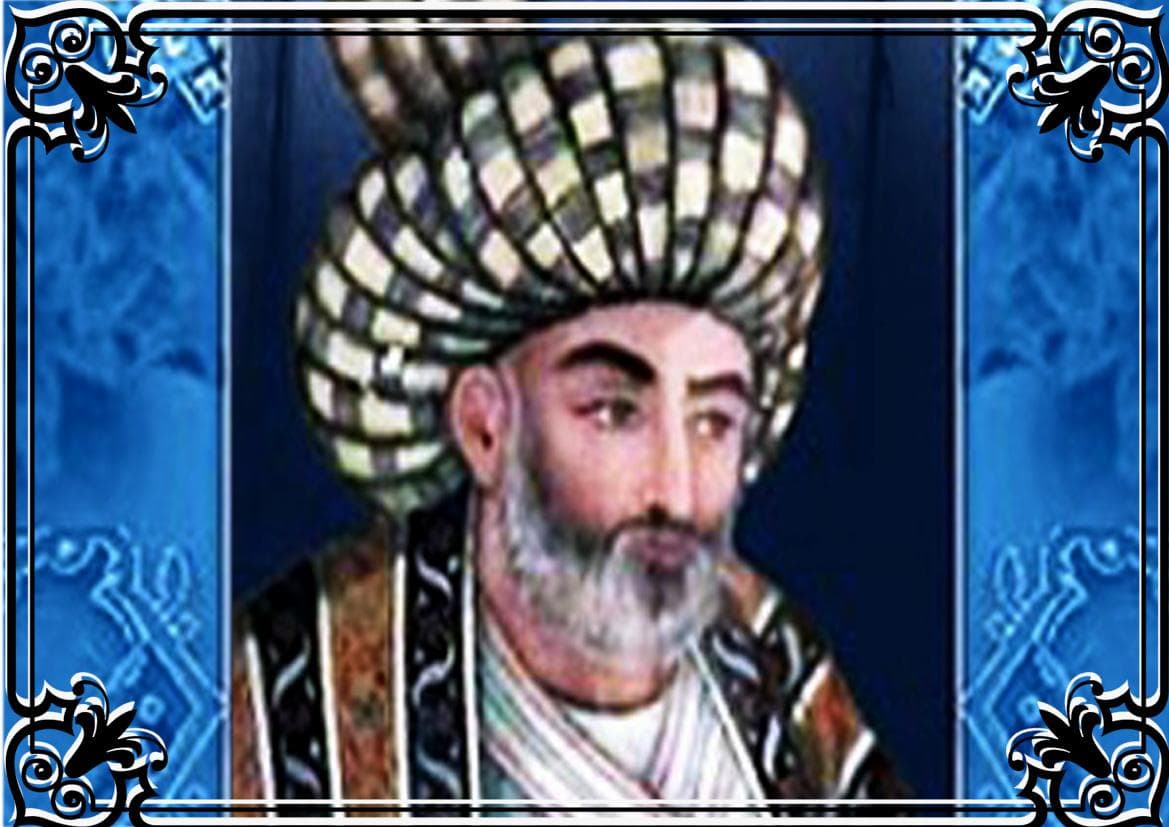
Majlisi was not a simplistic and superficial traditionist, nor merely a transmitter; rather, he was a critical scholar and hadith specialist who distinguished the sound from the unsound.
The Prophet’s Plan for Preserving and Safeguarding Religion
God Almighty praises His noble Messenger for knowledge and says of him: “...and He taught you what you did not know...” (1). Thus, the words of the Prophet of mercy were part of the divine knowledge taught to him. In order to preserve this divine knowledge and ensure that it reached future generations, the Messenger of God gave an emphatic command to write down hadiths, although some hypocrites during the Prophet’s lifetime prevented the Companions from recording hadith.
Abd Allah ibn Umar says: “I used to write down everything I heard from the Messenger of God and wanted to preserve it. A group from Quraysh stopped me and said that the Prophet spoke when pleased and when angry—this hypocritical statement indicates the disbelief of its speaker. I stopped writing until I presented the matter to the Prophet. The Messenger of God, peace be upon him and his family, said: ‘Write, for by Him in whose hand is my soul, nothing comes out of it [my mouth] except truth.’” (2) This report and other reports on this subject indicate that the Prophet strongly insisted that hadiths be written down, although some hypocrites prevented this during his lifetime; when they usurped power after the Prophet’s martyrdom, they formally issued an order forbidding the writing and transmission of hadith.
Compiling Books in the Era of the Pure Imams
After the Prophet, his successors attended to this matter and instructed their Shi'a to record Prophetic hadiths and the hadiths of the Pure Imams. This special concern of the Ahl al-Bayt, peace be upon them, led the Shi'a to undertake extensive authorship. The recording of hadith and Shi'i writing reached its peak in the time of Imam al-Baqir and Imam al-Sadiq, peace be upon them. So much so that after these two Imams, the Shi'a had a work or written record for everything they needed in their religious affairs. (3) Through the guidance and command of the Ahl al-Bayt, peace be upon them, and through the Shi'a’s special diligence, hard work, and endurance of exhausting hardships, the Shi'i school came to possess a vast body of writings and books in diverse fields of knowledge. On this subject, al-Muhaqqiq al-Bahrani writes: “The practice and method of the early Imamiyya companions in the era of the Imams’ presence, for more than three hundred years until the time of the Three Muhammads—Shaykh al-Kulayni, Shaykh al-Saduq, and Shaykh al-Tusi—was the tradition of recording hadiths and compiling them in the gatherings of the Pure Imams. They hastened to write down what they heard from the Infallibles, fearing the occurrence of error and forgetfulness.” (4) Therefore, during the presence of the Infallible, the Shi'i school attained scholarly and cultural richness through the blessing of many authored books. Since these sciences and teachings had been compiled and recorded through the Imams’ planning, this great culture endured in history, for one of the functions of books is to transfer culture and knowledge to later generations. The Pure Imams, peace be upon them, richly provided future generations with diverse Islamic teachings and sciences. The volume of these writings was so great that some Shi'i scholars began bibliographical work, and various catalogues were authored to list these books.
Books: Shi'ism’s Great Capital
Undoubtedly, the industrious Shi'i traditionists left the Shi'a an immense cultural inheritance: books and writings containing the luminous words and revealed sciences of the Pure Imams. Through the presence of the Ahl al-Bayt and the efforts of figures such as Zurara, Hisham ibn al-Hakam, Muhammad ibn Muslim, Ibn Abi Umayr, al-Bazanti, and dozens of eminent traditionists, the Shi'i school acquired such a great scholarly foundation.
One of the most important duties of all Shi'a during the occultation, especially scholars and the leading members of society, is to preserve and disseminate these precious and valuable books. Yet, regrettably, many of these books were lost throughout history. The domination of tyrants during the occultation and rival schools’ efforts to erase the Shi'i school were the principal causes of the loss of many of them. One example is the attack by extremist Hanbalis on Shaykh al-Tusi’s great library in Baghdad. During these assaults, Shaykh al-Tusi’s large library was burned twice, and many books were destroyed. Moreover, the passage of time caused many of these books to be covered by the dust of oblivion, leading to the decay and isolation of these valuable works.
Allama Majlisi, Reviver of Books and Authentic Shi'i Culture
A great man of learning and hadith emerged in the eleventh century. At a time when this vast Shi'i cultural heritage was about to be consigned to oblivion, a distinguished scholar named Majlisi accomplished an immense achievement. To preserve Shi'i books, he began an unceasing, arduous, yet tireless effort. Making the best use of the resources available in his time, he set about gathering well-known, reliable, and renowned Shi'i books with great determination. He searched throughout the Islamic world and everywhere he thought a book from the Shi'i hadith heritage might be found. He succeeded in finding many reliable copies of the books of earlier generations. To preserve these works, he authored a vast and astonishing book entitled Bihar al-Anwar al-Jami'ah li-Durar Akhbar al-A'immah al-Athar.
Bihar al-Anwar is a comprehensive, rigorous, and reliable Shi'i encyclopedia. In addition to collecting the books of the era of the Imams’ presence, the late Majlisi preserved and revived the books of earlier generations by organizing them into categories and chapters in his encyclopedia. This made the Shi'i intellectual system appear in Bihar in a coherent form, supported by reliable hadiths. It also made access to hadiths concerning a particular subject much easier for future hadith researchers. Moreover, this compilation preserved and revived the scattered works of earlier generations within this encyclopedia.
Through his diverse and important books, foremost among them Bihar al-Anwar, Majlisi was able to revive authentic Shi'i culture and its books and safeguard them from oblivion and destruction for future generations.
The author of Bihar experienced seventy-three springs, and more than three hundred years have passed since his eternal journey. Yet his table of scholarly bounty and blessing still sustains researchers of religion, and until the appearance of the Proof, his books—including Bihar—will nourish seekers of knowledge, just as he wrote in the introduction to Bihar al-Anwar: “I hope, through His grace toward this servant who hopes for His mercy and favor, that this book of mine will, until the rising of the Qa'im of the Family of Muhammad, upon whom be prayers, peace, greeting, and honor, be a reference for noble scholars, a source for everyone who seeks the sciences of the illustrious Imams, and a humiliation for vile atheists....” That is, I hope that God Most High, through His grace toward this servant hopeful of His mercy and favor, will make this book a reference for the learned and scholars until the rising of the Qa'im of the Family of Muhammad, peace be upon them; that it will be a source for everyone seeking the sciences of the Ahl al-Bayt; and that it will humiliate vile atheists.
Majlisi, the Neglected Reviver of Shi'i Culture
Majlisi is greater than can be portrayed in such a short note; nevertheless, he is among the most neglected figures in our scholarly and cultural society.
Among the injustices done to Majlisi are the unfounded accusations made against him. Most regrettably, these accusations and falsehoods have become accepted as fact in the minds of many people, and even among students of knowledge.
Among these accusations is the claim that truth and falsehood, correctness and error, were mixed in Bihar al-Anwar. It is portrayed as though the late Majlisi collected hadiths blindly and that his sole purpose was to compose and compile hadiths; consequently, the book is said to contain many mistakes and errors. Some thinkers have even written: “Majlisi’s purpose in gathering Bihar was to preserve these hadiths, not to state whether they were sound or unsound. For this reason he named it Bihar. Just as the sea contains pearls and jewels, it is not devoid of worthless pottery; it is the jeweler who must separate pearls from pottery.” Yet, regrettably, this writer overlooked that Majlisi’s book is not called merely Bihar, meaning ‘seas’; rather, its name is ‘Seas of Lights, Compendium of the Jewels of the Reports of the Imams.’
Another group claims that the late Majlisi stated in his book’s introduction that he collected both trusted and unreliable hadiths in Bihar. Yet Majlisi never wrote such a statement, or anything similar to it, either in the introduction to Bihar or elsewhere. Rather, he writes in the introduction:
“O my brothers in religion and friends of the Pure Imams, peace be upon them! If you are truthful in expressing your love, hasten toward the table that I have spread; take it with hands of acknowledgment and certainty, and hold fast to it with confidence and assurance ...”
“My brothers! I bring you glad tidings of a book that encompasses aims and possesses unparalleled points whose goodness and clarity time has not produced, and stars that have shone from the horizon of the unseen, whose brightness and radiance the eyes of servants have not seen; it is a compassionate companion whose equal in truthfulness and fidelity no one has previously remembered.... Since this book contains varieties of sciences, wisdoms, and secrets, and makes one independent of consulting all books, I named it ‘Bihar al-Anwar’—the Seas of Lights—comprising the jewels of the reports of the Pure Imams, peace be upon them.” (5)
Majlisi’s Special Attention to the Reliability of the Hadiths in Bihar al-Anwar
Majlisi was not a simplistic and superficial traditionist, nor merely a transmitter; rather, he was a critical scholar and hadith specialist who distinguished the sound from the unsound. Explaining this requires another occasion, but it is enough to note that Majlisi was not concerned merely with collecting hadiths. He regarded some books as lacking credibility and did not transmit from them, while he did not fully trust certain other books; therefore, he transmitted from those books only reports for whose reliability he had evidence, such as their conformity with Qur'anic verses and other reliable hadiths. For example, concerning Misbah al-Shari'ah, he writes in the introduction: “There are matters in Misbah al-Shari'ah that cause a skilled intelligent person to doubt. Its style does not resemble the other words, hadiths, and reports of the Ahl al-Bayt, peace be upon them. Shaykh al-Tusi, in his book Majalis, transmits some reports from Misbah al-Shari'ah as follows: ‘A group transmitted to us from Abu al-Mufaddal al-Shaybani, with his chain, from Shaqiq al-Balkhi, from a person among the learned who narrated it to him.’ This manner of transmitting indicates that Misbah al-Shari'ah existed with Shaykh and in his time and that he transmitted from it, but he did not have complete confidence in it, and the attribution of its reports to Imam al-Sadiq, peace be upon him, was not established for him, because its chain ends with Sufis, namely Shaqiq al-Balkhi. It therefore includes Sufi terminology and expressions and is based on narration from their shaykhs and those upon whom the Sufis rely in their reports.” (6)
Similar expressions concerning some books appear in the introduction to Bihar. Therefore, the late Majlisi paid attention and exercised care regarding the trustworthiness and reliability of the reports in the noble book Bihar al-Anwar. One cannot, on baseless grounds, question the credibility of Bihar al-Anwar or diminish the value of the late Majlisi’s great work. (7)
Notes
1- Qur'an, al-Nisa', 13.
2- From Abd Allah ibn Amr, who said: “I used to write down everything I heard from the Messenger of God, peace be upon him [and his family], desiring to preserve it. Quraysh forbade me from doing so and said: ‘You write while the Messenger of God, peace be upon him, speaks in anger and satisfaction?’ So I stopped until I mentioned this to the Messenger of God, peace be upon him [and his family], and he said: ‘Write, for by Him in whose hand is my soul, nothing comes from it except truth.’” Tahdhib al-Kamal, al-Mizzi, vol. 31, p. 39.
3- Al-Kafi (Islamiyyah edition), vol. 1, p. 57.
4- “It was the practice of our early companions contemporary with them, peace be upon them, until the time of the Three Muhammads, over a period exceeding three hundred years, to record hadiths and compile them in the gatherings of the Imams, and to hasten to write down what they heard for fear that error and forgetfulness might intervene.” Al-Hada'iq al-Nadirah, al-Muhaqqiq al-Bahrani, vol. 1, p. 9.
5- Bihar al-Anwar, vol. 1, p. 5.
6- Bihar al-Anwar, vol. 1, p. 32.
7- This does not mean that the late Majlisi was infallible. Every researcher has the right to investigate or criticize, even the book of the late Majlisi, provided that the researcher has an acceptable familiarity with the principles of authentication, the history of Shi'i hadith, and Shi'i hadiths.
Author: Hamed Sarem
Related articles

Comments
No comments yet.
